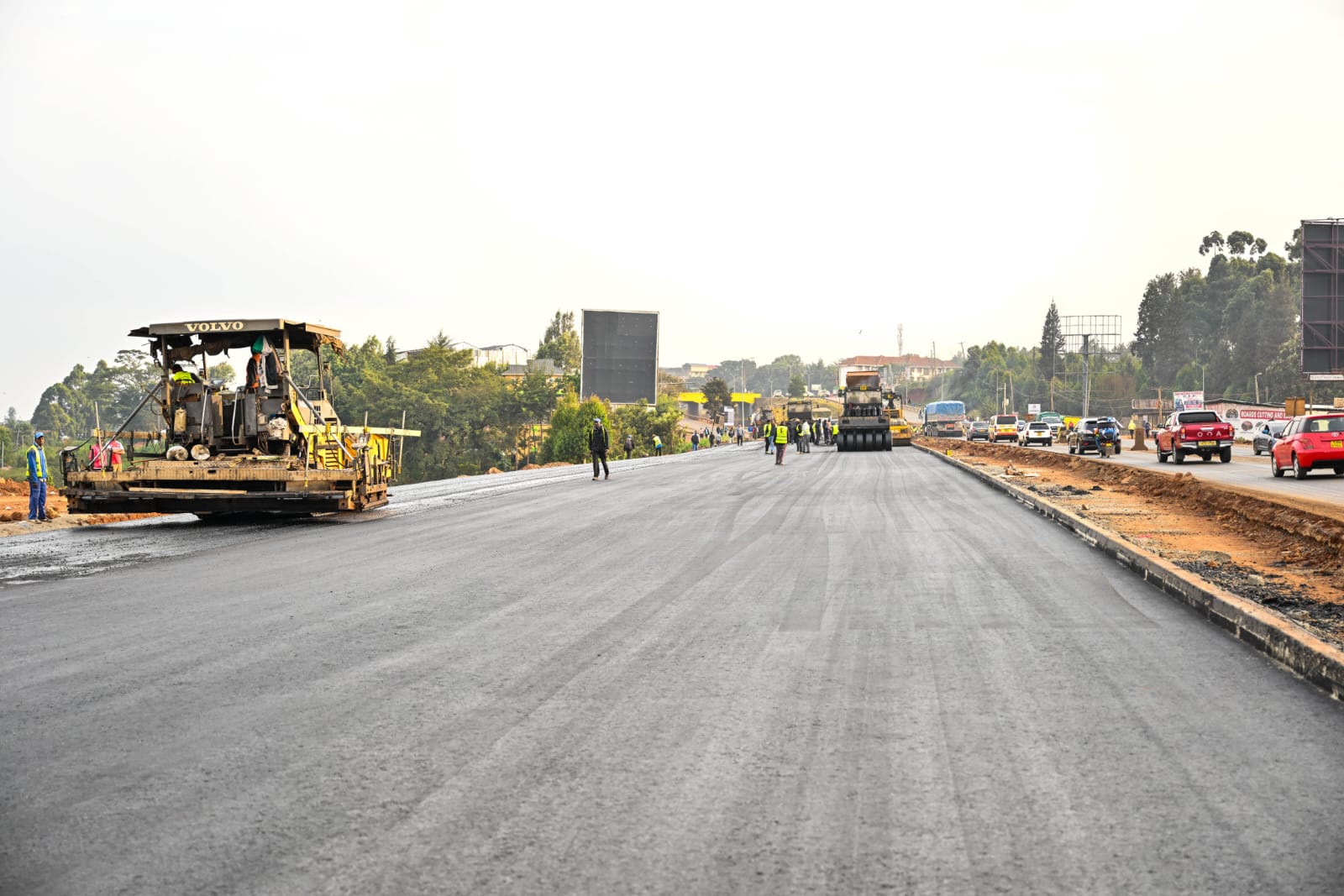
The Motorists Association of Kenya (MAK) has raised strong concerns over plans to upgrade the Rironi–Mau Summit Highway under a Public-Private Partnership (PPP), warning that the move could turn a vital national road into a long-term toll route, placing a heavy financial burden on ordinary Kenyans.
In a statement released on October 5, 2025, the association argued that everyday citizens, whom it named Wanjiku, Atieno, Nekesa, and Chepkurui, will bear the cost of a project presented as national development but primarily designed to generate profits.
“It is the ordinary citizen, the Wanjiku, Atieno, Nekesa, and Chepkurui who will ultimately carry the burden of these profit-driven roads,” the statement said. “Many do not yet understand the true cost of freedom of movement until that freedom is taken away and sold back to them through Public-Private Partnerships (PPPs). When that day comes, they will remember that MAK spoke, but lacked the power to stop it.”
MAK criticized the government for framing the PPP deal as an improvement to the A8 Northern Corridor, which links Nairobi to Nakuru and onward to Western Kenya, while in reality forcing Kenyans to pay for access to a road that has historically been public.
“What is being proposed here is not development, it is dispossession,” the association said. “Kenyans should not be forced to pay to use their own public road.”
The association accused influential lobbyists and government agencies of intentionally delaying the highway’s construction for almost two decades to pave the way for privatization.
“Since 2009, lobbyists have funded meetings, allowances, and even influenced decisions at the highest levels of government,” the statement claimed.
MAK also dismissed claims that the Rironi–Mau Summit project is similar to the Thika Superhighway or the Kenol–Marua Road, which were completed using public funds.
“They now peddle yet another falsehood that Thika Road and Kenol–Marua were built under the same PPP model. This is a lie,” the group said. “Those projects were financed by taxpayers and serve the public interest. That’s exactly what we advocate for on the Rironi–Mau corridor and beyond.”
The association warned that tolling the highway would increase transport costs, driving up the cost of living for ordinary Kenyans.
“Our fight is not for transport companies, they can adjust their prices. Our concern is for the ordinary Kenyan who will pay more for everything that moves on these roads,” MAK said.
It proposed a model where new parallel toll roads are built while existing highways remain free for public use.
“Had KeNHA not stalled the upgrade 20 years ago, Kenya would already have the modern highway we deserve, built with public funds and serving all,” MAK added.
This comes after the Kenya National Highways Authority (KeNHA) clarified that the Nairobi–Nakuru–Mau Summit (A8) and Rironi–Maai Mahiu–Naivasha (A8 South) projects have not yet been officially awarded, with negotiations ongoing between the Authority and the preferred bidders.
In a statement, KeNHA said discussions are underway with the China Road and Bridge Corporation (CRBC) and the National Social Security Fund (NSSF) Board of Trustees Consortium, which were selected following a rigorous evaluation.
While the National Treasury’s PPP Committee has approved the evaluation results, formal approval to execute the projects has not yet been given.
“The concurrence granted only allows KeNHA to commence negotiations with the Preferred Proponent in line with the PPP process. This is the process that is currently ongoing,” KeNHA said.
The Authority confirmed that once upgraded, the highways will operate under a toll system to ensure maintenance and sustainability.
“Road users will be required to pay toll fees determined through an approved tariff framework, with rates regulated to ensure affordability, transparency, and sustainability,” KeNHA stated.