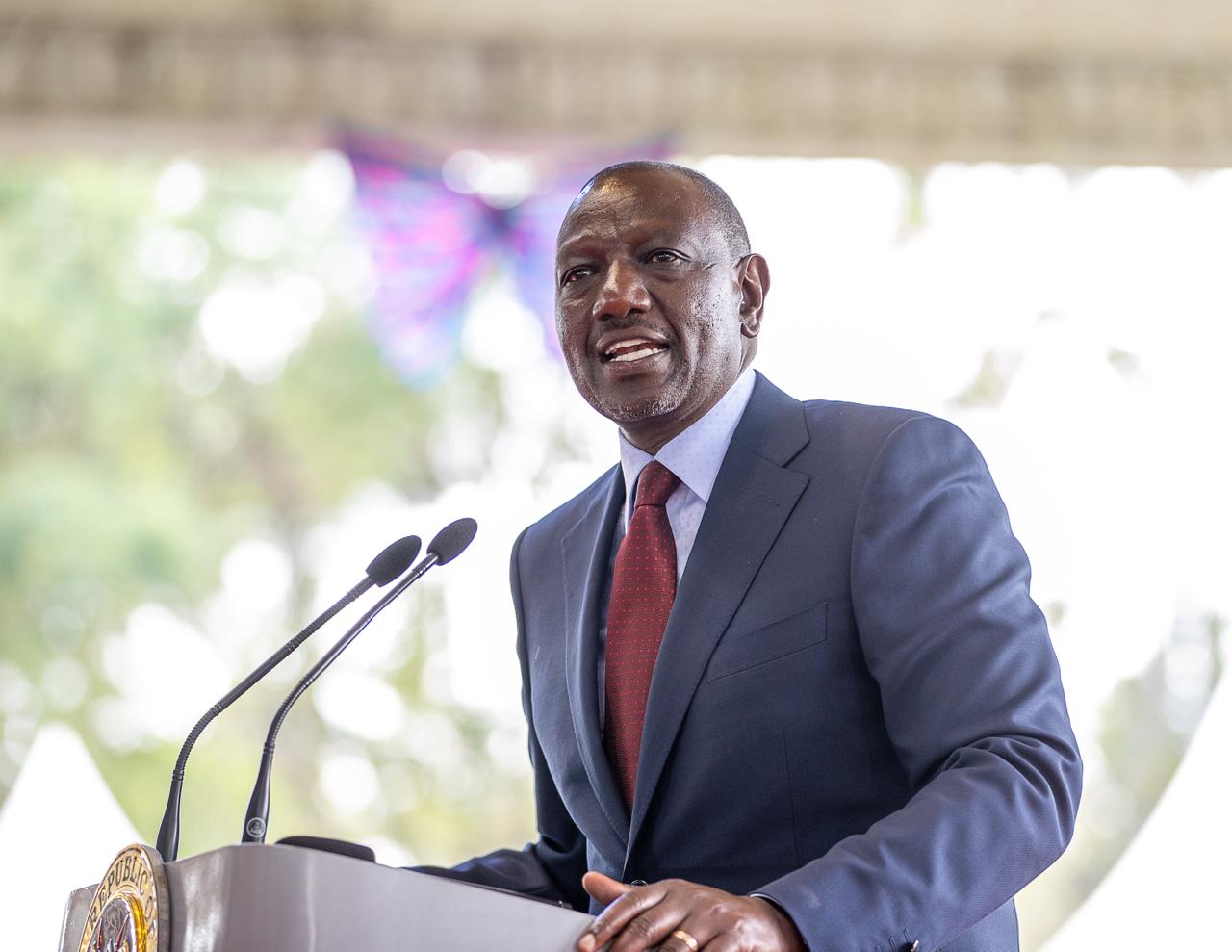
President William Ruto has unveiled an ambitious roadmap anchored on four national priorities that he says will propel Kenya into a globally competitive, industrial and knowledge-driven economy.
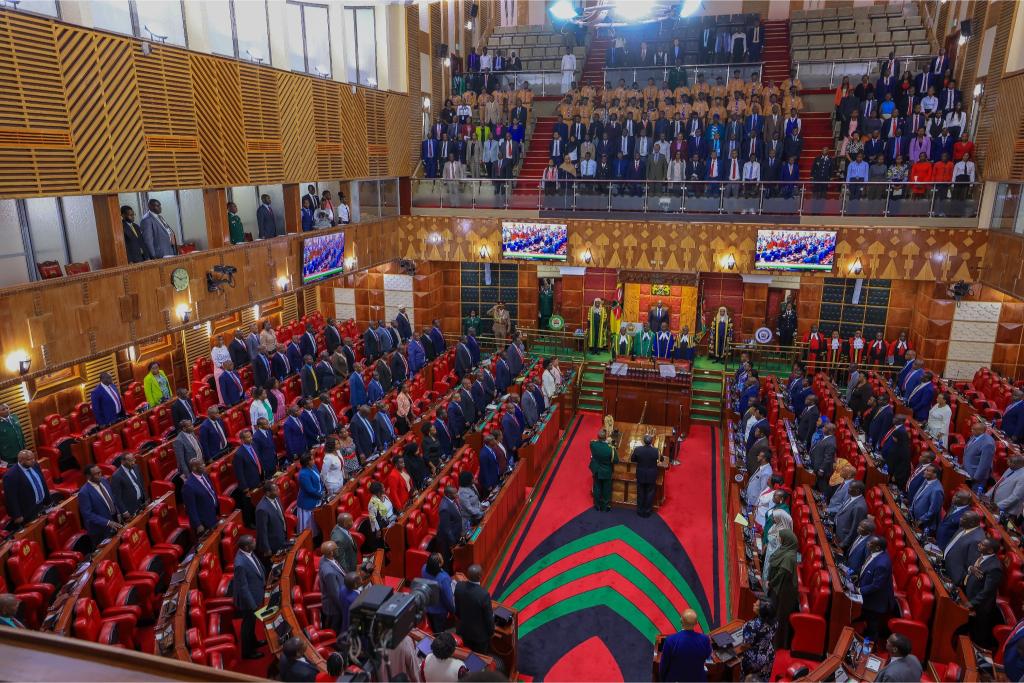
Speaking during his State of the Nation Address, Ruto framed the plan as a transformative agenda that will require bold policy shifts, significant investment and strengthened partnerships between government, industry and citizens.
Ruto said the priorities — human capital development, economic transformation through expanded agricultural production, massive investment in energy generation and a modernised transport and logistics network — are essential for securing Kenya’s long-term prosperity.
The president began by underscoring the centrality of investing in people as the foundation of national progress.
He pointed to recent reforms in the education sector, including a rise in the national education budget from Sh490 billion in 2021 to more than Sh700 billion this year.
The increased allocation, he said, has expanded learning infrastructure, increased teacher numbers and boosted funding for colleges and universities.
“We must invest relentlessly in our people; in their education, skills development, scientific training and innovation capacity,” Ruto said.
To strengthen Kenya’s scientific and technological output, Ruto has reorganised government structures to create a State Department for Science, Research and Innovation.
The department is tasked with scaling up STEM training, promoting research and helping Kenya achieve a 2% research spending target. Currently, the country invests 0.8% of GDP in research, leaving a Sh180 billion funding gap.
Ruto said the long-term objective is to grow the national research fund to Sh1 trillion in the next decade through domestic resources, private investment, venture capital and other financing.
He also called for a stronger culture of enterprise to support companies aiming for global expansion, citing Safaricom and M-Pesa as examples of local innovation with international reach.
The second priority, Ruto said, is transforming Kenya from a net importer to a net exporter of food and manufactured products.
He noted that the country spends Sh500 billion annually on food imports, a trend he wants reversed through expanded irrigation and modernised agriculture.
“We can no longer allow the clouds to determine whether our people eat or not,” he said.
Only 15% of Kenya is suitable for rain-fed agriculture, yet 85% of the landmass can be productive through water harvesting and irrigation.
Ruto announced a plan to build at least 50 mega dams, 200 medium and small dams and thousands of micro dams to bring 2.5 million acres under irrigation within seven years.
He said the Ministry of Water has already mapped out dam sites across the country — from Mandera and Embu to Kisumu, Kilifi and Bungoma — noting that water storage is both a food security imperative and an investment in agro-industrial growth.
The expanded irrigation, he explained, will supply steady raw materials for Special Economic Zones, Export Processing Zones and County Aggregation and Industrial Parks.
Energy security forms the third pillar of the roadmap. Ruto said Kenya’s firm power capacity of 2,300MW — despite an installed capacity of 3,300MW — is insufficient for the demands of a modern, industrial and digital economy.
To drive manufacturing, e-mobility, AI technologies and large-scale industrialisation, Kenya intends to generate an additional 10,000MW in the next seven years.
He said Kenya will tap into geothermal, wind, solar, hydro and nuclear resources to ensure abundant and affordable energy for national growth.
The fourth priority focuses on transport and logistics, which Ruto described as the backbone of national competitiveness.
Kenya plans to dual 2,500 kilometres of highways and tarmac 28,000 kilometres of new roads over the next decade.
The president also announced major upgrades to the Jomo Kenyatta International Airport, Mombasa and Lamu ports through public-private partnerships.
The Standard Gauge Railway will be extended from Naivasha to Kisumu and eventually to Malaba beginning January 2026.
Ruto acknowledged that the four priorities will require at least Sh5 trillion, but said the investment is necessary and “worthy.”
To finance the plan sustainably, the government will establish a National Infrastructure Fund and a Sovereign Wealth Fund, supported by reforms to government-owned enterprises and enhanced public-private partnerships.
“We cannot continue funding essential infrastructure through unsustainable borrowing,” Ruto said. “But neither can we postpone these imperatives without risking our future.”
He framed the plan as a generational assignment, saying Parliament and the country must rise to meet the challenge.