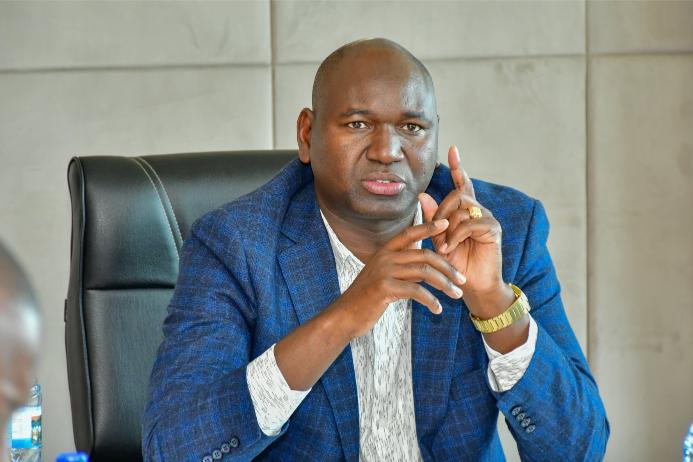
State corporation leaders have been put on notice as Felix Koskei, head of Public Service, condemned ongoing violations of government directives and governance protocols.
Koskei outlined a series of actions that he described as undermining accountability and proper management across several parastatal organisations.
“There has been a disturbing trend of blatant disregard for lawful directives and governance protocols within state corporations,” he said on Tuesday.
The official detailed widespread infractions, highlighting how some agencies continue to operate beyond the limits of their legal authority.
Koskei specifically called out the unauthorised extension or renewal of CEOs’ contracts, done without his office’s required consent. Other irregularities include hiring staff into unapproved positions and forming parallel organisational structures without any legal basis.
The Public Service chief also expressed concern over the routine neglect of circulars that regulate board activities, travel arrangements, and office allocations.
“These circulars are not suggestions,” Koskei said. “They are binding instruments meant to safeguard proper management and accountability. It is incumbent upon every leader to ensure their institution operates strictly within these parameters.”
He noted that some parastatal leaders ignore rules regarding travel by board members and CEOs, the use of official vehicles, office space assignments, and even the scheduling of board meetings.
Koskei also raised the issue of poor communication within agencies, where directives often fail to reach the staff responsible for implementation.
“Too often, circulars either remain at the CEO’s office without reaching the middle and lower cadres, where compliance actually happens,” he said. He called on parastatal chiefs to take responsibility for ensuring that all staff are aware of and follow these rules.
The Public Service head further highlighted board interference as a source of operational challenges. Instances of board members directing staff or meddling in daily management have caused confusion, delayed decision-making, and prompted some senior resignations.
“Without clear boundaries, CEOs and their teams are left navigating mixed messages that undermine confidence and slow critical decision-making,” Koskei said.
Koskei also pointed to serious weaknesses in internal audit systems, citing cases where audit units are weakened, denied information, or stripped of independence. Reports are sometimes ignored or withheld from boards, and risk registers are not maintained.
“This reflects a systemic design flaw that undermines accountability from the very beginning,” he said.
He warned that these violations may reflect a failure to enforce rules, weak HR structures, or reluctance to discipline errant staff. Koskei declared that the era of repeated warnings is over, signalling a shift to firm enforcement.
“We are moving from sensitisation to real enforcement; from reminders to action; from tolerance to timely corrective measures,” he said, marking a decisive approach to governance in state agencies.