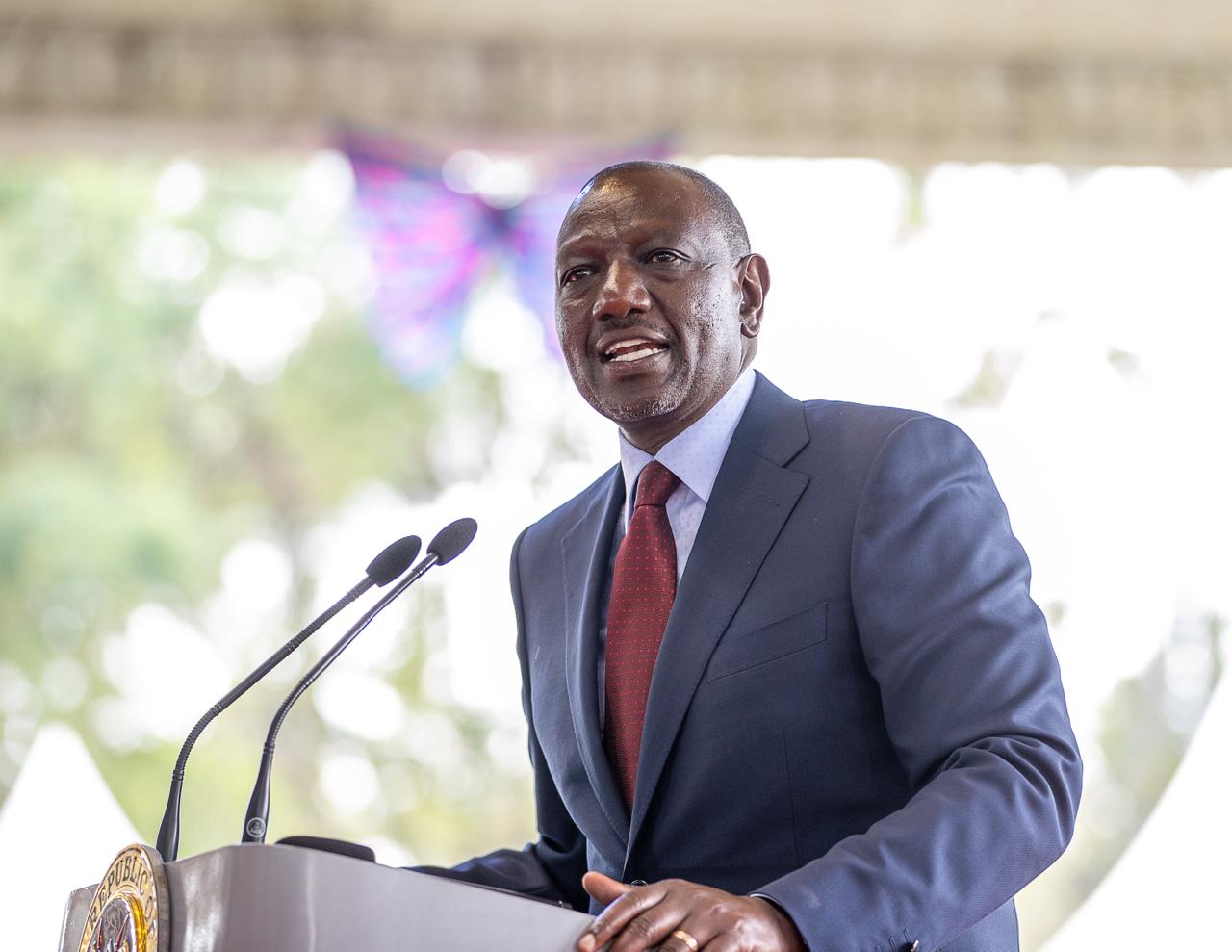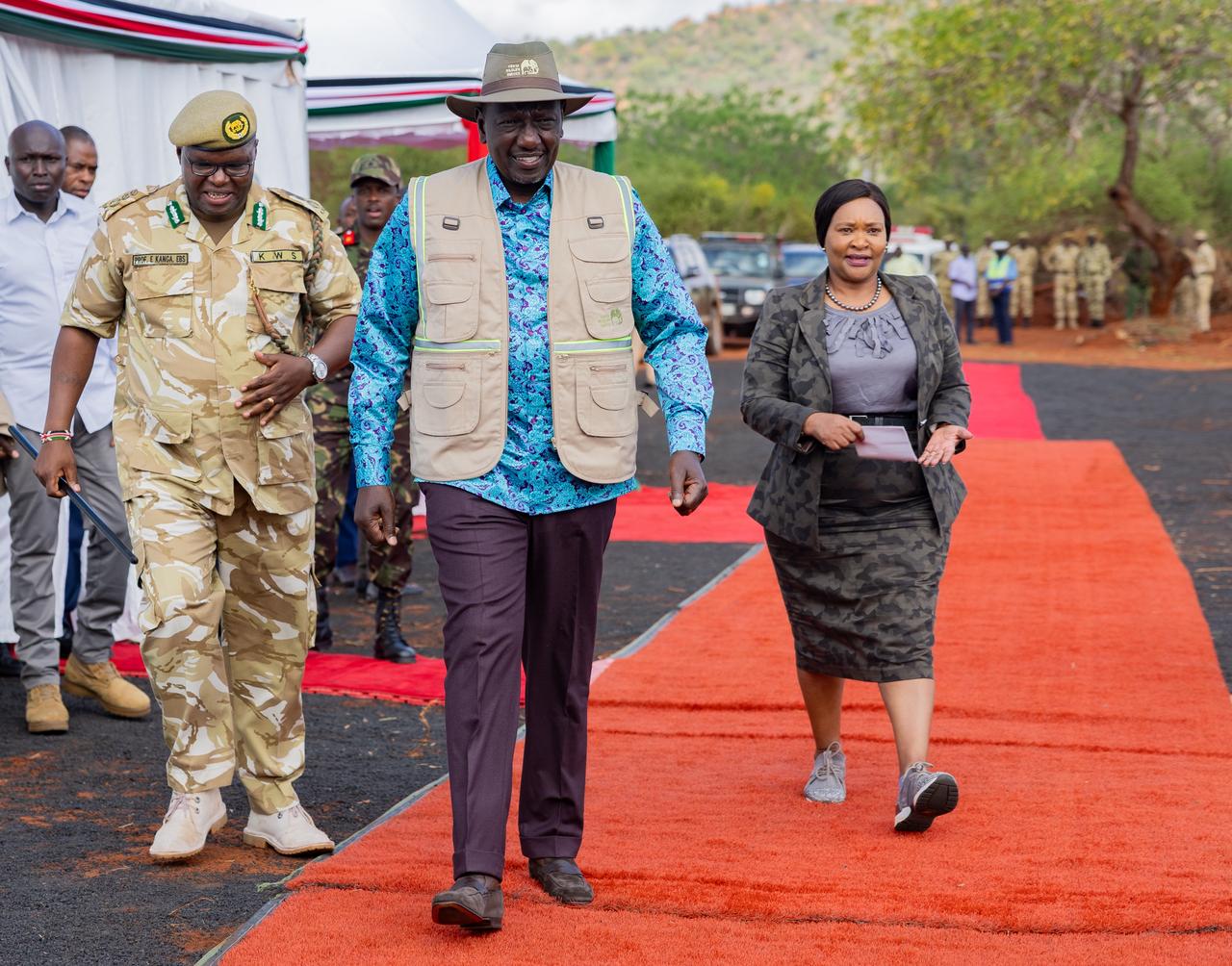
President William Ruto has announced that the long-awaited National Infrastructure Fund will be unveiled this week, marking what he described as a major step toward mobilising sustainable financing for Kenya’s development agenda.
Speaking during the launch of the Tsavo West Rhino Sanctuary in Ngulia, Taita Taveta County, on Tuesday, President Ruto said the fund is structured to attract significant private-sector participation—up to six times more than the government’s initial input.
“For a long time, we have had many plans, but we have not had the ability to actualise them because we lacked a strategy to secure the required financing. But now we have a new framework to fund our plans,” the President said.
He noted that the National Infrastructure Fund will prioritise the construction of 50 mega dams and 1,000 small and medium dams to supply water for domestic use, livestock, wildlife, and irrigation.
The move, he said, will help reduce human-wildlife conflicts, particularly in arid and semi-arid regions bordering national parks.
“We will begin using arid and semi-arid regions to grow food and keep more livestock,” he added.
Turning to conservation, President Ruto said the government has heavily invested in protecting endangered species, especially the black rhino.
He highlighted the expansion of the Tsavo West Rhino Sanctuary—now covering more than 3,200 square kilometres—making it the largest rhino sanctuary in the world.
The older Ngulia Sanctuary covered only 92 square kilometres but held nearly 150 rhinos, far beyond its ecological capacity.
The President said Kenya has invested $4.7 million (Sh606 million) to boost Tsavo’s protection capacity, including advanced surveillance systems and extensive fencing.
He added that the country has undertaken the world’s largest rhino monitoring and tagging programme.
“With more space, stronger security, improved genetics and lower density, Kenya is now ready to raise black rhino population growth from 5 per cent to 8 per cent annually. This will advance our national targets of 1,450 rhinos by 2030 and 2,000 by 2037,” he said.
Ruto emphasised that conservation must deliver direct benefits to local communities, saying the sanctuary is already generating employment in ranger services, surveillance, monitoring, fencing, construction, and logistics.
By 2030, the initiative is expected to create over 18,000 jobs and generate more than $45 million (Sh5.8 billion) in conservancy and tourism revenue.
Tourism Cabinet Secretary Rebecca Miano hailed the sanctuary’s launch as a globally significant milestone in conservation.
“This initiative is unmatched. It is a statement that Kenya is on the global map when it comes to conservation,” she said.
Taita Taveta Governor Andrew Mwadime welcomed public-private partnerships to address water shortages affecting both residents and wildlife, while Kenya Wildlife Service (KWS) Director-General Erustus Kanga credited recent reforms—including the hiring of 1,500 officers and revised conservation fees—with strengthening the agency’s financial sustainability.
“I can confidently say that with current tourism trends, KWS will not require funding from the National Treasury,” Kanga said.
Ambassador Monica Juma, former U.S. Ambassador to Kenya Meg Whitman, and several Members of Parliament attended the event.