The Communication Workers Union of Kenya (COWU-K) has petitioned Parliament to protect labour rights at Safaricom as the government moves ahead with plans to reduce its shareholding in the telecommunications firm.
The union has warned that the proposed divestiture could threaten job security and union representation, urging lawmakers to approve the deal only with binding safeguards, including mandatory union recognition and stronger labour protections.
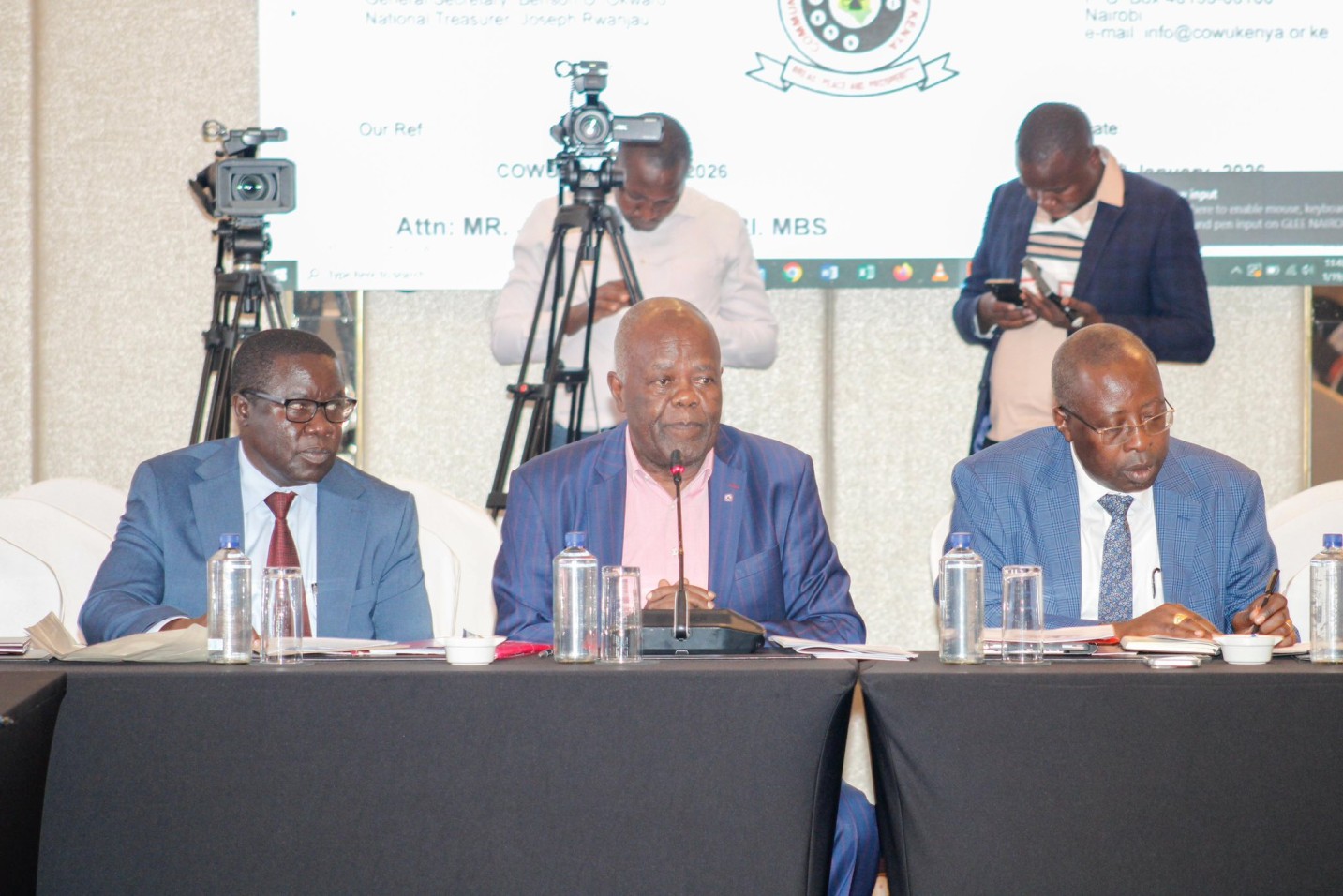
COWU-K officials appeared before a joint sitting of the National Assembly’s Departmental Committee on Finance and National Planning and the Select Committee on Public Debt and Privatisation, where they presented their views on Sessional Paper No. 3 of 2025.
The policy document outlines the government’s plan to partially divest from Safaricom as part of broader privatisation and public debt management reforms.
Addressing the committees, the union cautioned that the change in ownership must not come at the expense of workers’ rights. It argued that Safaricom has a long-standing representation gap that risks being worsened by the divestiture.
According to COWU-K, Safaricom employs about 5,041 unionisable permanent staff but has historically resisted formal recognition of the union.
Instead, the union alleged that management has relied on internal staff councils to bypass traditional trade union structures. This, it said, has left employees vulnerable, especially amid uncertainty surrounding the government’s plan to reduce its stake in the company to 20 per cent.
“There is significant concern among Safaricom’s 6,462 employees regarding job security and lack of representation as the government reduces its stake to 20%,” the officials told lawmakers.
The union’s submission also highlighted what it described as a disparity between the global labour practices of Vodacom, a major shareholder in Safaricom, and its operations in Kenya.
COWU-K noted that while Vodacom respects union rights in South Africa and Tanzania, similar standards have not been applied locally. It called for the uniform adoption of Vodacom’s global “Human Rights at Work” standards within Safaricom.
COWU-K argued that embedding labour guarantees in the Sessional Paper would promote sustainable corporate governance by providing predictable mechanisms for dispute resolution and reducing the risk of industrial unrest. To this end, the union asked Parliament to attach strict conditions to the approval of the divestiture.
Among the key demands is a requirement for Vodacom to sign a recognition agreement with COWU-K within three months of the transaction, followed by the negotiation of a Collective Bargaining Agreement within six months.
The union also wants legal assurances that no employee will be targeted or dismissed for participating in union activities during or after the ownership transition.
COWU-K also called for the formal adoption of the Vodacom Group Human Rights Policy into Safaricom’s internal operational manuals, saying this would offer long-term protection to workers as the company undergoes structural changes.