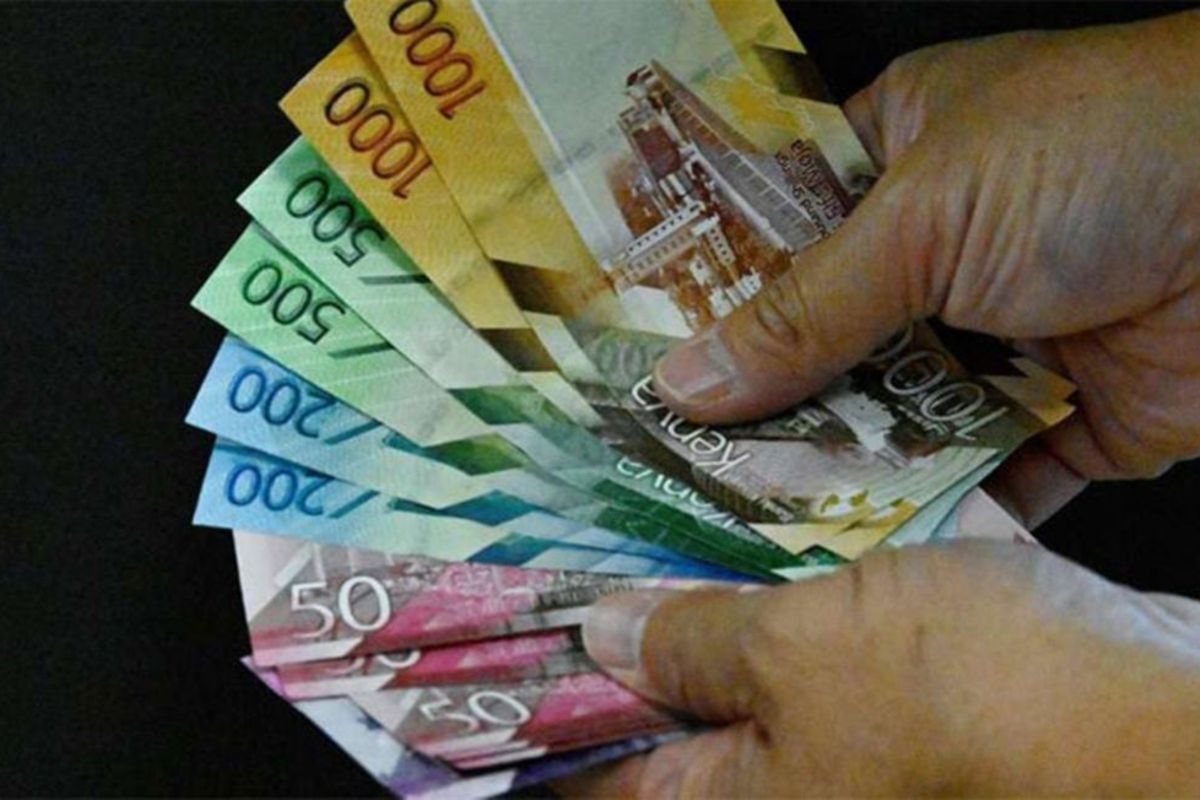
Kenya’s Financial Reporting Centre (FRC) has instructed all banks and financial institutions to immediately block access to funds and assets belonging to 13 individuals suspected of financing terrorist activities.
The move comes after the individuals were added to Kenya’s Domestic List under the Prevention of Terrorism (Implementation of UN Security Council Resolutions on Suppression of Terrorism) Regulations, 2024, mandating a full freeze on any resources connected to them.
According to the Centre, the decision followed a review by the Counter Financing of Terrorism Inter-Ministerial Committee, created under Section 40D of the Prevention of Terrorism Act (POTA), 2012.
The action implements United Nations Security Council Resolution (UNSCR) 1373 and Kenyan anti-terrorism laws, which require targeted financial sanctions against individuals believed to support terrorism.
The 13 individuals include Violet Kemunto Omwoyo, Juma Ambare, Zakariya Kamal Sufi Abasheikh, Jamal Abdi Mohamed, Abubaker Swalleh, Salehe Burhani Minja, Jerumami Usama Koja, Hadija Issack Ali, Abdiweli Dubat Dege, Ramadhan Hamisi Kufungwa, Robert Karani Nyokae, Zuena Nakhumicha Machabe, and Mohamed Siyat Ali.
The FRC ordered banks, microfinance institutions, and other reporting entities to identify and freeze any assets, property, or funds directly or indirectly owned or controlled by the designated individuals. Institutions are required to act within 24 hours and must include accounts held jointly or solely, along with any proceeds derived from these funds.
They are also barred from providing financial services or economic resources to the listed individuals or anyone acting on their behalf unless specifically permitted under UN resolutions or Kenyan law.
Entities must report any discovered assets or attempted transactions to the Committee through the FRC within 24 hours, following the prescribed format.
In cases where no matches are found, a “nil return” is required. The FRC clarified that these requirements do not replace the obligation to submit suspicious transaction reports under the Proceeds of Crime and Anti-Money Laundering Act (POCAMLA), 2009.
Failure to comply or attempts to bypass the sanctions are considered offences under POT-TFR regulations. The frozen assets include hundreds of millions of shillings across accounts belonging to ten Kenyans and three foreign nationals.
Investigations revealed some individuals received unusually large transfers from abroad, including from the United States. Two Tanzanians and one Ugandan are among those affected, with some funds reportedly moved as recently as November last year.
Regarding Violet Kemunto Omwoyo, the FRC says, “She is part of a cross-border facilitation network supporting Al-Shabaab operations in Somalia. She was also linked to the Dusit D2 Hotel 2019 attack.”
On Juma Ambare, the Centre notes, “He facilitates the procurement and delivery of military-grade equipment and other operational items such as communication equipment, drone components and digital watches for the benefit and/or on behalf of AlShabaab. His associates include Violet Kemunto Omwoyo.”
Zakariya Kamal Sufi Abasheikh reportedly helps acquire military-grade equipment for Al-Shabaab, while Jamal Abdi Mohamed is described as “an ISIS facilitator and online recruiter based in Puntland, Somalia.
He was responsible for the Latema Road Improvised Explosive Device (IED) incident carried out on January 26, 2019. He is responsible for the financial and logistical facilitation of recruits from East African countries to Puntland for the Islamic State of Iraq and the Levant (ISIS) training.”
Hadija Issack Ali is a key facilitator for the Islamic State network in Moyale, aiding the movement of recruits toward Ethiopia and Somalia. Abdiweli Dubat Dege transfers funds for the Allied Democratic Forces (ADF) and ISIS across East, Central, and Southern Africa. Ramadhan Hamisi Kufungwa runs a network that recruits fighters to join Al-Shabaab in Somalia and coordinated the 2014 Mpeketoni attack.
Robert Karani Nyokae recruits informants and fighters in Boni forest for Al-Shabaab and has been involved in IED attacks on security installations. Zuena Nakhumicha Machabe coordinates ISIS recruitment from East Africa to Somalia under Jamal Abdi Mohamed. Mohamed Siyat Ali transfers funds through cryptocurrency to associates connected to ISIS in Somalia, including affiliates of Bilal Al Sudani, Deputy Commander of ISIS Al-Karrar.
Investigations show that some transfers were routed from the United States through Turkiye and South Africa before reaching Nairobi. Two of the individuals also jointly own one of Nairobi’s largest mobile money transfer agencies. Banks holding assets linked to these individuals have been instructed to provide a complete inventory of funds and property within the coming days.
The sanctions took effect immediately, restricting access to Kenya’s formal financial system. FRC Director General Saitoti Maika, also Secretary to the Counter Financing of Terrorism Inter-Ministerial Committee, called on all institutions to comply without delay, highlighting Kenya’s commitment to disrupting terrorist financing networks.
“Following the decision by the Committee, the designated persons are now subject to asset freeze and prohibition measures as stipulated in Regulation 15 of POT-TFR,” the notice reads. Maika emphasized, “This measure is critical to safeguarding Kenya’s financial system and ensuring it is not exploited by terrorist networks.” He added, “Delays or attempts to circumvent the law will not be tolerated.”
Explaining the preventive nature of the sanctions, Maika said, “The objective is to cut off financial support to suspected networks before resources can be used for harmful purposes.” He urged reporting entities to remain vigilant, adding, “It is essential that all reporting entities actively monitor their systems and take immediate action when assets of designated persons are identified. Protecting Kenya’s financial sector is a shared responsibility.”
Kenya’s targeted financial sanctions implement UN Security Council obligations on terrorism financing domesticated through POTA and POT-TFR, allowing rapid action when credible intelligence emerges. The FRC is required to report to Parliament via the Departmental Committee on Finance and National Planning and submit periodic updates on its work.