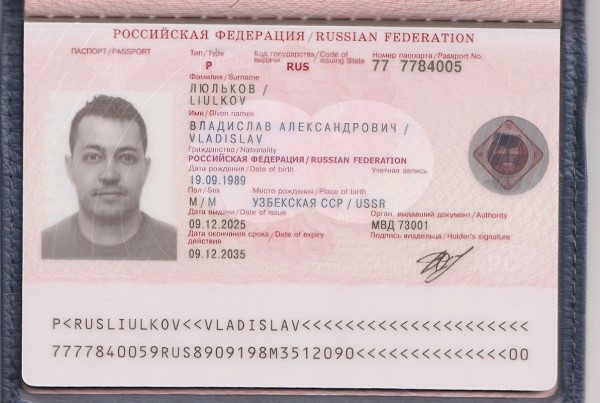
Ghana’s Minister for Communications, Samuel Nartey George, has released images of a Russian “pick-up artist” accused of filming and publishing intimate images of Ghanaian women.
The government says it will pursue the matter to ensure the suspect faces justice.
Ghana’s Foreign Minister has also summoned the Russian ambassador, Sergei Berdnikov, over the issue, with both countries agreeing to cooperate in tracking down the individual.
At a press conference in Accra on Wednesday, February 18, Minister for Communications Samuel Nartey George released the suspect’s passport, identifying him as Vladislav Liukov. This comes after earlier reports that the Russian ambassador could not confirm whether the suspect was a Russian citizen.
George said the Communications and Gender ministries have the suspect’s passport details and photographs and will share the information. He added that some victims have filed formal complaints with the cybersecurity authority, with the case now being handled by the police CID.
He noted that the police, together with the cybersecurity authority, will escalate the matter to Interpol to issue an international arrest warrant. The authority is also preparing to prosecute the suspect in absentia.
The case has sparked anger across the country, with many demanding justice, while others have controversially blamed the women involved.
Ghana’s Gender Minister, Agnes Naa Momo Lartey, says not all the women involved had intimate or sexual relations with the suspect.
She noted that some of the women are suicidal, especially those who had no sexual contact with him but are now being shamed.
The minister called for empathy, saying her ministry is providing counselling and psychological support to the victims, many of whom are traumatised by the publications.
She also stressed that Ghana will not allow anyone to violate its citizens and escape justice.
Investigations by the cybersecurity authority show the suspect recorded intimate encounters with some of the women and monetised the content online. Authorities are now tracing the digital and financial evidence linked to the case.
Under Ghana’s Cybersecurity Act of 2020, non-consensual recording and sharing of intimate images is illegal, with offenders facing up to 25 years in prison depending on the severity of the offence.