Why Jamhuri Day stands as Kenya’s most defining national holiday
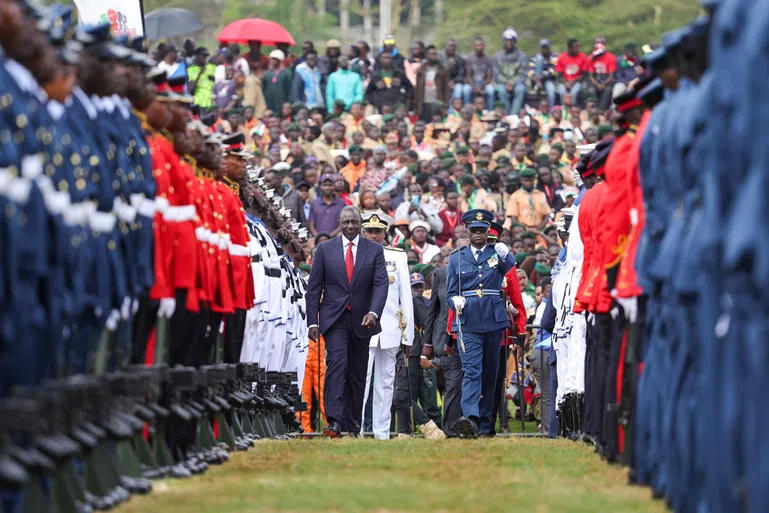
Trooping of the Colour is a military tradition where the President inspects the troops and receives the national salute. The ceremony begins at around 11:00 AM, with the massed bands stepping off to a slow match before moving into a quicker tempo.
Kenya’s path to independence is marked by several major national holidays, but none carries more historical weight than Jamhuri Day.
The day stands out as a turning point in the country’s journey to full freedom, highlighting the moment Kenya moved from colonial influence to complete self-rule.
Jamhuri Day is celebrated every year on December 12, and it is recognised as the country’s most defining national holiday. It was on this day in 1964 that Kenya became a republic, ending its status as a constitutional monarchy under Queen Elizabeth.
With this shift, Kenya gained full authority over its leadership and future, with Jomo Kenyatta taking office as the first president. From that moment, the roles of head of state and head of government were both held locally, signalling the end of British control.
The celebrations that mark this day remain grand and symbolic. The event features colourful parades, cultural dances, music, and displays that reflect Kenya’s unity and diversity. Among the highlights is the Trooping of the Colour, one of the most respected ceremonies held during Jamhuri Day.
Trooping of the Colour is a military tradition where the President inspects the troops and receives the national salute. The ceremony begins at around 11:00 AM, with the massed bands stepping off to a slow match before moving into a quicker tempo.
As the lone drummer steps forward, officers of the No.1 Guard take their positions, leading to the formal handover of the colour. At this moment, the first verse of the national anthem is played, marking the heart of the ceremony.
The event then progresses into a march to the tune of the British Grenadier Guards, a reminder of Kenya’s past while celebrating its freedom. Beyond its display of precision and discipline, Trooping of the Colour is a tribute to the Kenyan Defence Forces and honours those who sacrificed to secure the nation’s independence.
While Jamhuri Day marks the attainment of full independence and the birth of the republic, Madaraka Day, observed on June 1 signifies an earlier milestone.
Madaraka Day commemorates the moment in 1963 when Kenya achieved self-governance after years of resisting colonial rule. The term ‘Madaraka’ comes from the Swahili word meaning freedom or authority.
On June 1, 1963, Kenya was still under Queen Elizabeth as head of state, but the country now had Jomo Kenyatta as Prime Minister, placed in charge of running the government.
Even though full independence had not yet been achieved, this shift allowed Kenya to begin managing its own affairs and making decisions as a people.
Madaraka Day celebrations also include speeches, performances, and events that reflect on the struggle for self-rule and honour the achievements of those who led the push for independence.
Although the two holidays celebrate Kenya’s liberation journey, each marks a different phase.
Madaraka Day recognises the step toward self-governance, while Jamhuri Day celebrates the moment Kenya became a fully independent republic. Together, the two days show the country’s long and determined fight for freedom and sovereignty.




Comments
Sign in with Google to comment, reply, and like comments.
Continue with Google