Kenya recorded a steady rise in reported human rights violations over the past year, with complaints pointing to deep pressure on public services, growing concerns over police conduct and continued exclusion of vulnerable groups.
Data released by the Kenya National Commission on Human Rights shows that 2,848 complaints were filed between December 2024 and December 2025, reflecting widespread challenges in the protection of basic rights.
The annual review indicates that failures in economic, social and cultural rights formed the largest share of reported cases, followed closely by violations linked to civil and political freedoms.
According to the Commission, 1,381 complaints involved economic, social and cultural rights, while 1,171 related to civil and political rights.
An additional 299 cases concerned group rights, underscoring the struggles faced by marginalised communities across the country.
KNCHR said access to health care, education, food, housing and social protection remained fragile, even as public spending increased in some sectors.
In health, the Commission noted that despite a Sh138.1 billion allocation for the 2025/2026 financial year, many people continued to face barriers such as delayed treatment, detention over unpaid medical bills and weak protection within digital health systems.
Food shortages remained a serious issue in arid and semi-arid regions, where farmers and households were hit by low prices for produce and rising costs of production. The Commission warned that these pressures are undermining both household incomes and long-term food stability. Education challenges were also persistent, with high fees, congested classrooms and poor facilities limiting access to quality learning.
“The high cost of education, overcrowded classrooms, and inadequate infrastructure continue to deny children their right to quality education, particularly in marginalised areas. The Government must act urgently to close these gaps,” KNCHR chairperson Claris Ogangah said.
Concerns were also raised over housing rights, with KNCHR documenting cases of forced evictions, limited public knowledge of affordable housing programmes and minimal involvement of communities in decision-making processes.
Civil and political rights featured prominently in the complaints received. The Commission recorded 57 cases involving violations of the right to life, including deaths linked to protests, police custody and land disputes. Threats to personal freedom and safety were widespread, with 661 complaints filed, among them 15 cases of abductions allegedly connected to security officials.
“The resurgence of abductions, torture, and extra-judicial killings undermines public trust in security institutions and the rule of law,” Ogangah warned.
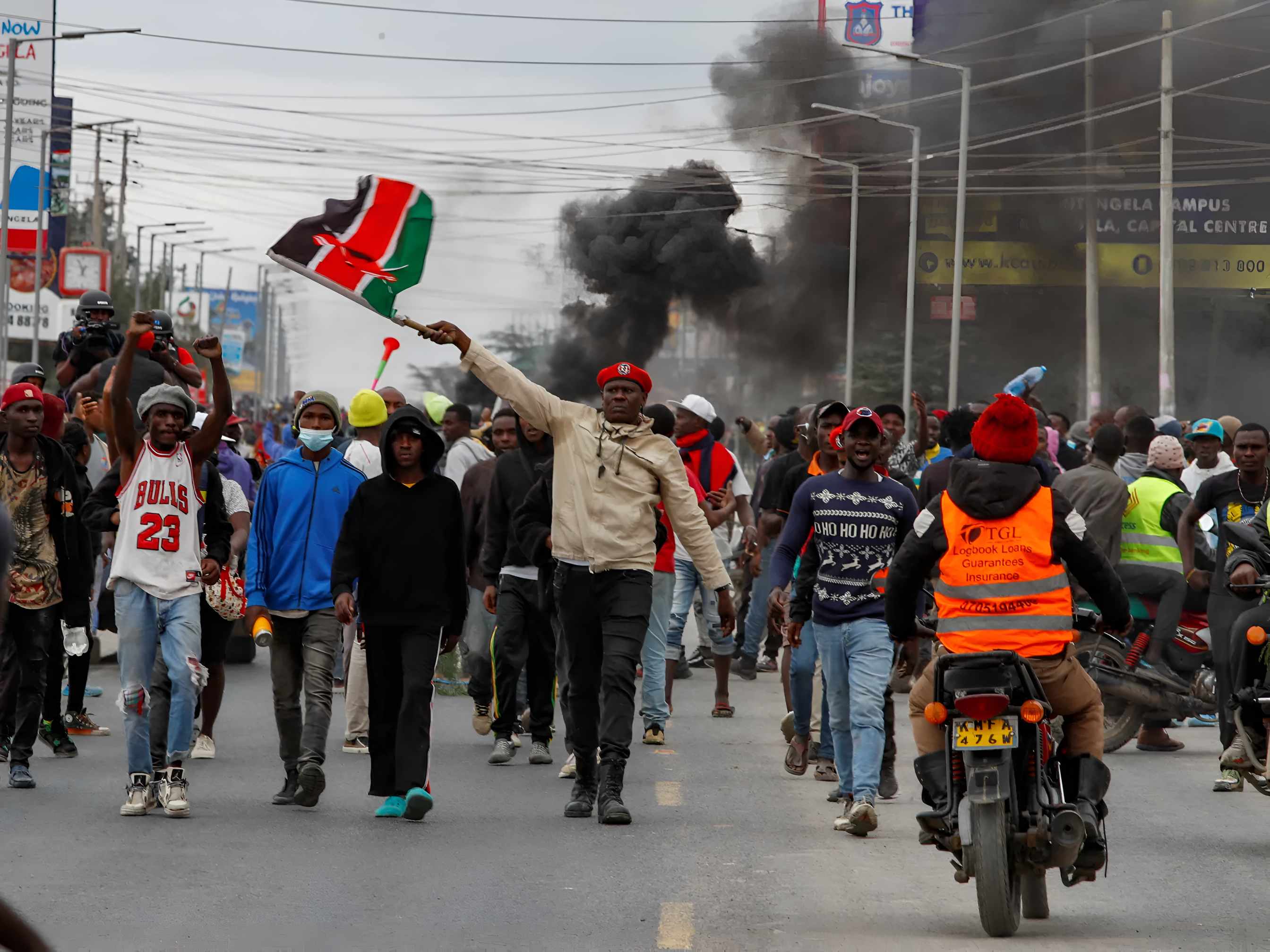
The report also drew attention to the handling of public demonstrations. KNCHR documented 661 injuries among protesters and 149 cases of arbitrary arrest. It faulted the use of masked officers, heavy security presence and vehicles without visible registration numbers, stating that such actions defy court rulings and weaken accountability.
Media freedom and freedom of expression faced mounting pressure during the review period. Journalists reported harassment, physical attacks, blocked access to events and temporary closure of media outlets. The Computer Misuse & Cybercrimes (Amendment) Act, 2025, was flagged as a law that limits digital expression and poses risks to online creativity.
The Commission also highlighted the continued exclusion of vulnerable groups. Children were exposed to unsafe schools and harmful practices such as female genital mutilation. Persons with disabilities faced limited access to inclusive education and poor enforcement of employment quotas.
Women continued to face increasing cases of femicide, while young people were affected by profiling, arrests without cause and restrictions in digital spaces. Intersex persons encountered legal and medical barriers, refugees struggled to secure labour rights and social services, and indigenous communities remained disadvantaged due to delays in land restitution and governance decisions.
“The rights of every Kenyan are non-negotiable. Urgent interventions are needed to protect lives, livelihoods, and dignity,” Ogangah said.
Corruption was identified as a major factor worsening inequality and weakening service delivery. KNCHR called for full enforcement of the Conflict of Interest Act, stronger safeguards for whistleblowers and recovery of stolen public resources through a human rights approach.
Internationally, the Commission said Kenya has made progress in meeting some treaty obligations but remains behind in submitting key reports, particularly on women’s rights and enforced disappearances. It urged the Government to ratify the International Convention for the Protection of All Persons from Enforced Disappearance and remove reservations under the Maputo Protocol.
While acknowledging improvements in laws and policies affecting health, housing, disability rights and refugee protection, KNCHR stressed that serious work remains. The Commission warned that inequality, youth exclusion, corruption, excessive force by security agencies and digital restrictions continue to threaten constitutional rights.
“All arms of Government, county governments, security agencies, civil society, and citizens must work together to safeguard the Bill of Rights and ensure that no one is left behind,” Ogangah emphasised.
The Commission called for stronger access to justice, open public participation, transparency and full application of laws meant to protect the rights of all Kenyans.































Comments
Sign in with Google to comment, reply, and like comments.
Continue with Google