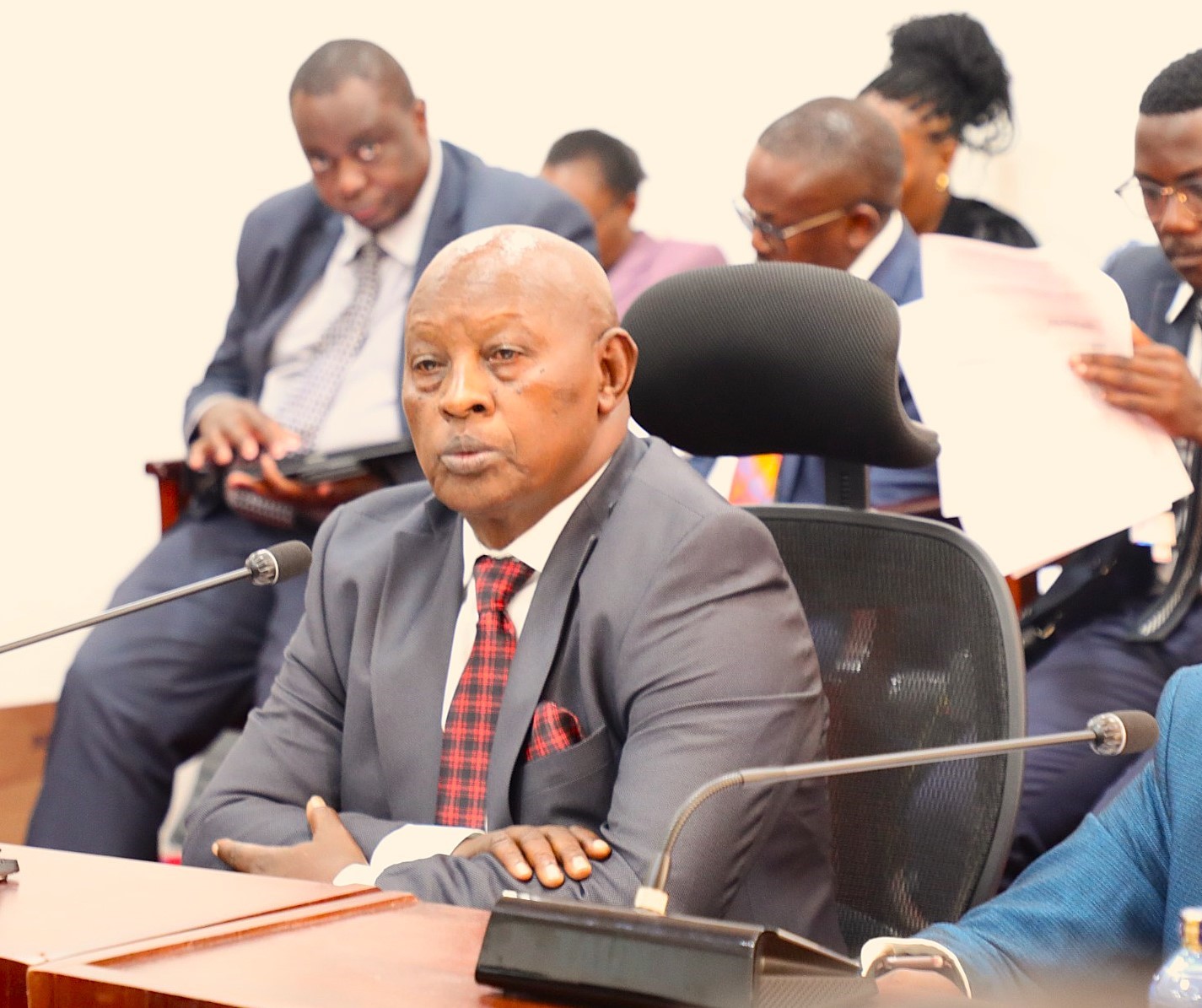
The Senate County Public Accounts Committee has firmly directed the County Executive of Nyeri to comply with the law and retain all funds collected from health facilities to help health services to residents.
When Nyeri Governor, Mutahi Kahiga, appeared before the committee chaired by Moses Kajwang, he discovered that the county had not kept the money at the locations where it was collected.
The Facility Improvement Financing (FIF) Act 2023 in Kenya empowers public health facilities (levels 1–5) with financial autonomy to retain, manage, and spend revenue generated from user fees and insurance, preventing its diversion by county treasuries.
The office of the Auditor General, in its reports, revealed that from Level 4 and Level 5 health facilities, seven health facilities collected a total of Sh722 million towards the health facilities' improvement, which was transferred to the Nyeri County Health Services Fund.
According to the OAG, the Fund reimbursed a total of Sh572 million to the health facilities, resulting in a deficit of Sh150 million, noting that this was contrary to Section 5 of the Facilities Improvement Financing Act, 2023, which requires that all funds received as revenue by or on behalf of all public health facilities be retained in the Hospital Facilities Improvement Financing Account.
The OAG told the senators, “The county was in breach of the law in the county audit report for the 2024/25 financial year.”
OAG added, “In addition, the failure to reimburse the total amount transferred by the facilities negatively impacted service delivery by the health facilities.”
Governor Kahiga, in his defence, told senators that health is an exclusively devolved function, and thus the national law touching on matters of health is not binding.
The former Council of Governors vice-chairperson cited the Facilities Improvement Financing Act, and the governor said Section 29 allows the county to enact legislation to give further effect to the provisions of the act.
“It is in this context that the Nyeri County Government decided to continue using its already established Nyeri Health Services Fund Act, 2021, and its regulations, which were enacted by the County Assembly and implemented in 2021,” said the governor.
Mutahi responded that the difference of Sh150 million is a result of the Nyeri County Health Services Fund Revenue Model, which states that 3 per cent will be set aside for fund administration, in which the remaining amounts are retained at a rate of 80 per cent by the collecting facility and 20 per cent to be shared equitably by all primary health facilities.
The sessional chairperson and the committee’s vice chairperson led the senators in rejecting the governor’s explanation, saying it violated the principles of the constitution and, therefore, the county was in breach of the law.
A seasoned advocate and the Nyamira Senator, Okongo Omogeni, argued that since the Facilities Improvement Financing Act is a national law, its provisions supersede county legislation and maintained that the county was in breach of the law.
Omogeni quoted Article 191 of the constitution, insisting that Mutahi must comply with the law as the facilities apply uniformly across the country.
Article 191 governs conflicts of laws between national and county governments, ensuring that national legislation prevails if it applies uniformly, prevents unreasonable county action, or is necessary for national security, planning, or standards.
Kahiga was left with no choice but to acknowledge the force of the law, pleading with the Senate to intervene and save counties from being emasculated by the State, arguing that jurisprudence governing laws where there is conflict on exclusive functions is not well developed.
“Yes, it is a national law but I also know that I am talking to senators whose mandate is to defend and protect counties and their governments. Change the law because we are being emasculated,” said Governor Kahiga.
“You are safer complying with the law as it is, and Kenya is a unitary state with devolved functions,” Omogeni said.
The executive acknowledges challenges in revenue collection and reporting but attributes them to ongoing reforms aimed at strengthening internal controls and sealing loopholes.
Kahiga indicated that measures have been implemented to improve revenue automation to enhance oversight and ensure that all collections are accurately captured and promptly remitted to the County Revenue Fund.































Comments
Sign in with Google to comment, reply, and like comments.
Continue with Google