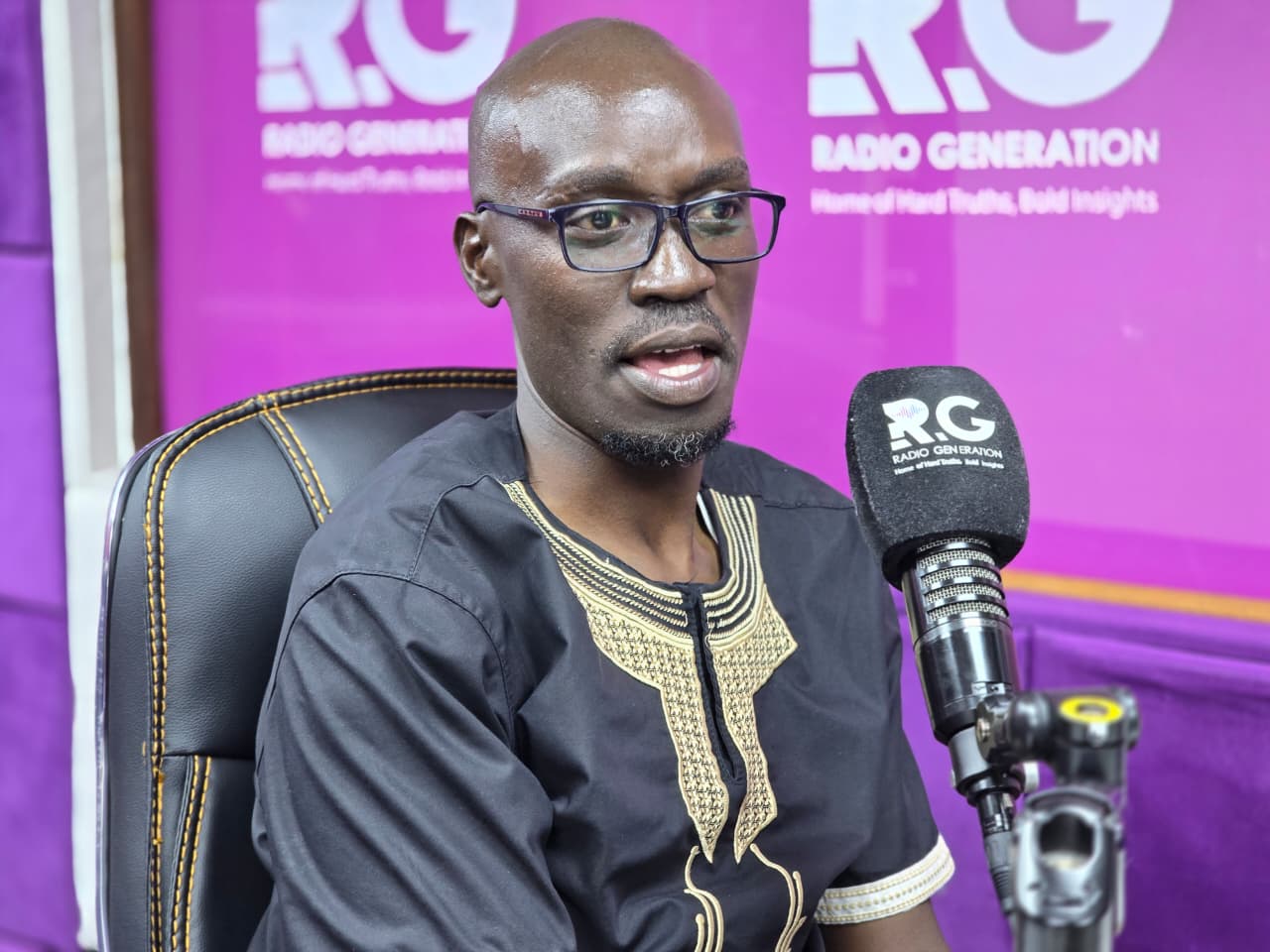
Kenya’s struggle to properly track, support and educate learners with autism and related developmental conditions has exposed deep gaps in diagnosis, data collection and specialised services, a special education expert has said, while urging stronger coordination between health and education systems to address growing needs.
Calvince Omondi made the remarks during a Radio Generation interview on Thursday, where he broke down autism as a brain-based condition that affects development in communication, behaviour and social interaction, and stressed that misconceptions around its causes continue to delay proper support for families.
He explained that autism is no longer treated as separate categories in modern medical classification, but grouped under autism spectrum disorder due to its wide variation among individuals.
“Well, it is a neuro biological, biological disorder, meaning that it stems from how our brain is wired,” he said, adding that the condition “manifests itself from the manner in which the brain is wired.”
According to him, the condition mainly disrupts three key developmental areas in children, especially how they relate with others, how they communicate, and how they behave in different environments.
“It could be in terms of social interaction,” he said, adding that “a child would be struggling with what we call social engagement, social reciprocity,” meaning they may have difficulty “basically generating and sustaining conversation.”
He noted that communication barriers are common, especially where children struggle with spoken language, expression or understanding verbal cues.
He also pointed to behavioural patterns that may include repetition, strict routines, or strong attachment to specific interests, which are often misunderstood in everyday settings.
“So the long and short of it is that it is a neurodevelopmental issue that manifests itself in a number of social, behavioral and communication deficits,” he said.
Omondi said one of the key defining features of autism is its spectrum nature, where no two learners present in the same way or require identical support.
“What this means is that the profile of children within the autism spectrum disorder is so diverse,” he said. “You would see two learners with completely two different autistic profiles.”
He explained that this wide variation led to the consolidation of earlier classifications such as Asperger’s syndrome into autism spectrum disorder under updated diagnostic standards like DSM-5.
In Kenya, experts say Autism spectrum disorder (ASD) remains poorly mapped, with estimates suggesting about 2.2 million people may be affected, representing roughly 4% of the population. However, this figure is widely viewed as uncertain due to weak screening systems and limited national reporting.
Other studies place recorded prevalence at about 0.63% among adolescents and young adults, reflecting how many cases go undetected rather than actual differences in occurrence.
Families across the country continue to face daily struggles linked to stigma, lack of awareness, high cost of therapy and shortage of trained professionals.
In many regions, especially outside urban centres, children with autism are unable to access appropriate schooling due to a lack of specialised teachers and inclusive learning environments.
Misconceptions linking autism to curses or spiritual punishment also remain common, contributing to late diagnosis and social isolation of affected children and their families.
Government institutions such as Kenya Institute of Special Education and National Council for Persons with Disabilities have rolled out initiatives aimed at improving assessment services, training caregivers and promoting inclusive education in schools.
Policy discussions are also ongoing around strengthening disability laws and developing a structured autism framework to improve early intervention, awareness and long-term support.
On the question of what causes autism, Omondi was clear that genetics plays a central role, dismissing widely held myths linking the condition to vaccines or spiritual forces.
“Autism is largely hereditary,” he said, noting that “scientific studies agree that it is 60 to 90% hereditary,” meaning that most cases are strongly linked to genetic inheritance passed within families.
He added that environmental influences such as premature birth or older parental age may increase risk, but do not directly cause autism.
“There are also environmental factors, what we call epigenetics, but these environmental components do not necessarily lead to autism,” he said.
He also addressed ADHD, describing it as a neurodevelopmental condition that affects attention control and activity levels in children.
“ADHD is attention deficit hyperactivity disorder, so it manifests itself in terms of deficit in attention,” he said, noting that affected learners may struggle to maintain focus or appear overly active and easily distracted.
He linked the condition to brain development and hereditary factors, pointing to research showing a strong genetic influence.
On cerebral palsy, Omondi explained that it is mainly a medical condition affecting movement and brain function, though it also affects learning and school participation.
He said some learners with cerebral palsy may experience seizures and require immediate medical response within learning institutions.
He stressed that intervention approaches must be personalised depending on each child’s developmental profile and support needs.
He highlighted Kenya Institute of Special Education as central in assessing learners and building individual support plans based on their needs.
“KISE is involved in the assessment so that we have a profile of the child,” he said.
He added that interventions may include “speech therapy, occupational therapy, structured routines and sensory management strategies,” depending on the learner.
He also emphasised that structured and predictable classroom environments are important for autistic learners, helping reduce stress and improve learning outcomes.
Omondi further raised concern over the lack of reliable national data on autism, saying the gap continues to weaken planning and resource allocation.
He urged experts, including statisticians, to help build a stronger national database that can guide policy decisions.
“We do not have cogent statistics on that, which is a serious gap in our country,” he said.
Despite the challenges, he noted ongoing reforms in disability legislation and emerging proposals for an autism-focused policy framework aimed at improving inclusion, awareness and access to services.































Comments
Sign in with Google to comment, reply, and like comments.
Continue with Google