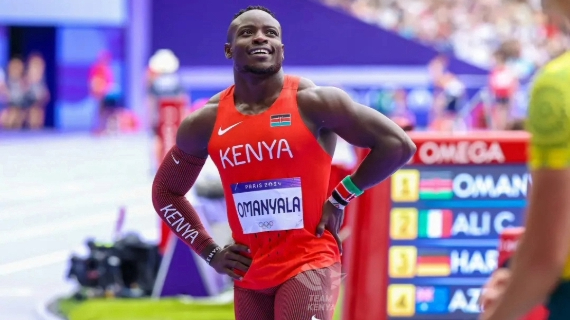
Africa’s fastest man, Ferdinand Omanyala, has drawn a firm line between spectacle and sport, explaining why he turned down a high‑profile race challenge from YouTuber and streamer iShowSpeed.
Speaking during a motivational visit to Crawford International School on January 19, 2026, morning, the Commonwealth champion used the moment to teach students about discipline, self‑worth and the professional responsibilities that come with elite performance.
Sport Versus Entertainment
Omanyala made it clear that sprinting is his livelihood, not a viral stunt. He argued that once an athlete reaches the top, every appearance must be weighed against long‑term goals and obligations.
“Once you get to a level where you are doing your job, nobody can come to your office and start doing pranks on you. You are doing what you do because you earn from that place,” he told the students.
Brand, risk and responsibility
The sprinter explained that the Omanyala brand has been carefully built, and every engagement must make professional sense. He questioned the fairness of trading months of intense preparation for a few moments of online fame.
“Imagine me putting in seven hours a day of training, three to four months before a season, and 44 weeks a year, for someone to come and pay me with streams and likes. Is it fair?” he asked.
Omanyala also highlighted the physical risks. A casual race might be entertaining to viewers, he said, but for an elite athlete it is an input that requires preparation. Stopping training for a novelty event could lead to injury—and derail scheduled competitions. “What happens when I go race him and then get an injury, God forbid? And then I have races in like two weeks,” he warned.
“When you get to a place where you know your value, that is the most important thing you can ever carry with you. Nobody can ever joke with your name because you understand the value that you bring to the table.”
Sponsors, schedules and accountability
Omanyala stressed the practical fallout of such stunts: sponsors, managers and event organizers plan months in advance, booking flights and appearance fees. He asked how he could justify risking those commitments for a social‑media spectacle. The timing of the proposed race, he said, made it even more impractical.
The wider context
The iShowSpeed phenomenon has become a recurring headline in athletics, with the streamer staging adrenaline‑charged matchups against elite sprinters.
His 2024 50‑metre race with Olympic champion Noah Lyles and subsequent boasts about other world‑class athletes drew attention and reactions from across the sport. Even sprint legend Usain Bolt engaged with the saga, offering coaching banter and a playful on‑track meeting later that year.
A lesson for young athletes
Omanyala’s message to the Crawford students was simple and sharp: know your worth and protect your craft.
For him, professionalism means choosing opportunities that respect the years of training, the obligations to stakeholders, and the fragile nature of peak performance. In a world where viral moments can eclipse measured careers, Omanyala chose the long game—and used his refusal as a teaching moment.































Comments
Sign in with Google to comment, reply, and like comments.
Continue with Google