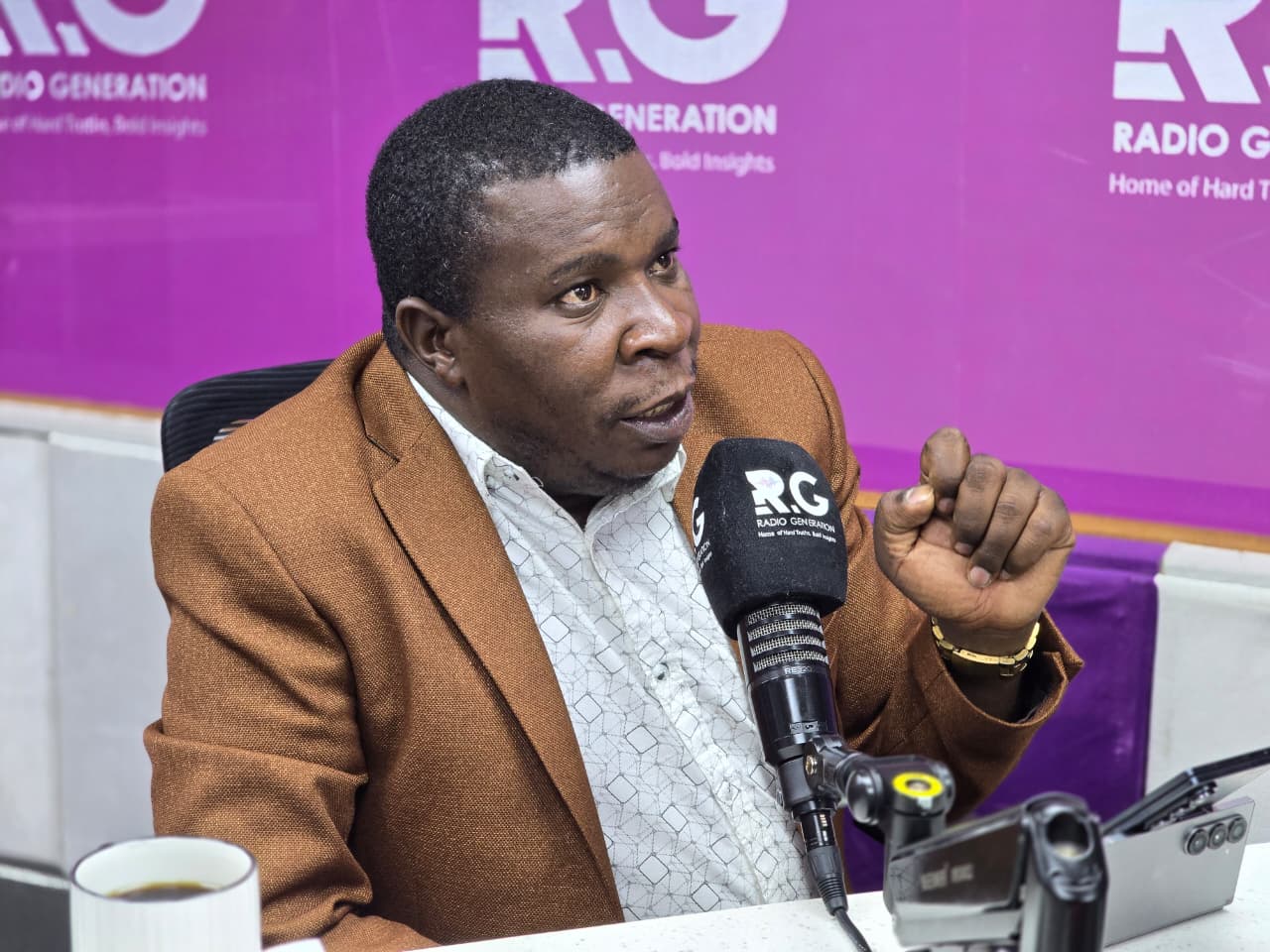
Governance Expert Peter Mucendu says ODM remains legally bound to Azimio despite cooperation with government, arguing coalition agreements can only be dissolved through formal legal processes.
He likens ODM to a majority shareholder whose exit would collapse the coalition, raising questions about power, identity and succession in Kenyan politics.
In an interview on Radio Generation on Friday, he defended ODM’s continued legal place within the Azimio coalition, insisting that politics cannot override the law governing political parties and coalitions.
“Without ODM, Azimio cannot exist,” he said, arguing that ODM’s role was akin to that of a majority shareholder in a company. “If the largest shareholder has withdrawn, that company goes down.”
Mucendu dismissed claims that ODM had exited Azimio simply by entering into a working relationship with the ruling administration.
This comes amidst ODM leaving Azimio coalition and entered the ruling arrangement through a broad-based government without signing fresh legal agreements, a move party leaders say was driven more by political pragmatism than coalition formalities.
ODM’s departure from Azimio followed the end of the 2022 election cycle and the coalition’s gradual loss of operational relevance after Raila Odinga’s defeat.
With Azimio lacking a binding post-election coalition framework, ODM officials argued that the alliance had effectively become dormant, allowing member parties to pursue independent political strategies.
The decision to work with President William Ruto’s administration was framed as a response to national crises, including economic pressure, public unrest and the need for bipartisan cooperation.
ODM leadership maintained that the broad-based government was not a merger or formal coalition but a political accommodation aimed at stabilising the country and advancing governance reforms.
By avoiding rigid legal agreements, ODM preserved its institutional autonomy while gaining space to influence policy from within government.
The party has consistently stated that its participation is issue-based, not unconditional, and does not dissolve its identity as an opposition-rooted political movement.
The expert stressed that cooperation with government did not amount to a formal coalition under the Political Parties Act. “For now, it is just a working arrangement,” he said, adding that it had not been legally deposited with the Registrar of Political Parties.
According to him, the only binding document remains the pre-election coalition agreement filed before the 2022 polls.
“As far as the Registrar of Political Parties is concerned, that pre-election coalition that ODM signed with the rest of the parties is still in place,” he said.
The expert argued that coalition agreements are not dissolved by political convenience but by strict procedures set out in law.
“When you want to disengage, the disengagement process is also part of the agreement,” he said. “That process has not been done. If ODM wanted to leave, they would have to follow what they wrote in the coalition agreement.”
Using an analogy, he likened the situation to marriage without divorce. “If you want me to leave, you would need to do the right thing, and that is to file for divorce,” he said, adding that without such formal steps, separation claims remain invalid.
The governance expert said ODM’s legal position effectively prevents other Azimio partners from claiming the coalition’s identity without it.
“They want to retain the identity of Azimio,” he said, warning that attempts to kick out ODM would face legal obstacles. “They are going to make sure that nobody holds that identity.”
He noted that recent rulings on parliamentary majorities had shown how decisive post-election coalition agreements can be, pointing out that those agreements are what validated majority claims in the National Assembly.
Turning to succession politics, he said the debate was unfolding in a changed landscape following the death of Raila Odinga. “I don’t think if Raila were alive today we would have seen this kind of change,” he said, suggesting that long-standing internal party dynamics were now exposed.
He also questioned the continuing political role of former President Uhuru Kenyatta. “I find it curious,” he said, adding that while there was nothing wrong with a retired president remaining active, “politicians don’t do anything without reason.”
Addressing commentary about the ruling party’s national appeal, Mucendu dismissed media claims that UDA’s growing list of aspirants was an illusion of numbers. “There is no single piece of evidence,” he said, accusing commentators of writing for optics, not facts.
He argued that President William Ruto was attempting something unprecedented in Kenya’s recent history, defending power using the same political party.
“Since President Moi left, no singular party has defended its leadership through the same outfit,” he said. “The President wants to show that a political party can survive without needing to rebrand.”
Mucendu defended the use of public political party funding to strengthen party structures, saying such funds were meant to popularise policies and build grassroots support, not serve as a luxury fund.
On ODM’s internal leadership struggles, he questioned who truly holds authority. “Who are the decision-makers in ODM?” he asked, arguing that some figures had relied on Raila Odinga’s protection without investing in the party themselves.
As Kenya’s political realignments gather pace ahead of 2027, Mucendu’s intervention reaffirms a central argument, that beyond boardroom deals and public optics, coalition politics ultimately rests on law, documents and procedure.































Comments
Sign in with Google to comment, reply, and like comments.
Continue with Google