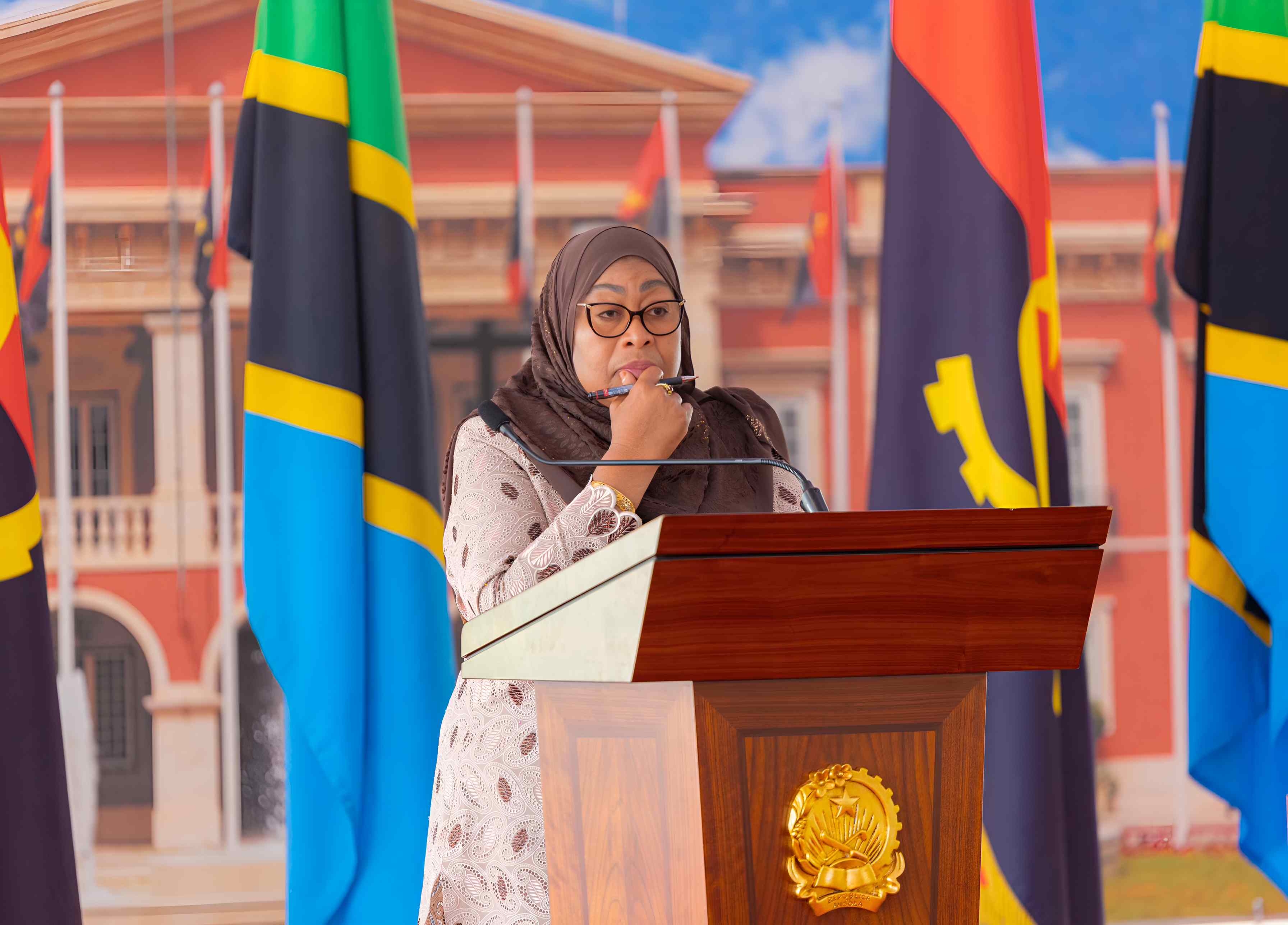
Tanzania goes to the polls today (Wednesday) in a high-stakes presidential election that could see the country elect its first female leader.
More than 37 million registered voters are set to decide whether President Samia Suluhu Hassan, who assumed office in March 2021 after the death of John Pombe Magufuli, will secure a full term.
The vote, while historic, unfolds amid debates over the fairness of the electoral process and the treatment of opposition candidates.
Justice (Rtd) Jacobs C.M. Mwambegele, chair of the Independent Electoral Commission of Tanzania (INEC), called for widespread voter participation, highlighting the generally peaceful conduct of the campaigns. “I commend all Tanzanians for the maturity shown throughout the campaign period.
To a large extent, campaigns were conducted peacefully, and where minor hitches occurred, local teams addressed them successfully,” he said. Despite these assurances, opposition parties and rights groups maintain that peace during campaigns does not guarantee genuine democratic competition.
Seventeen political parties are contesting the presidency, but several have faced hurdles. ACT-Wazalendo’s candidate, Luhaga Mpina, was repeatedly accepted and rejected, while Chadema, a leading opposition party, has been excluded entirely from all races—presidential, parliamentary, and local.
Party leader Tundu Lissu remains jailed on treason charges, and his deputy, John Heche, was recently arrested after attending Kenya’s former Prime Minister Raila Odinga’s funeral. Lissu reported in an X post that he is under round-the-clock camera surveillance in solitary confinement.
“For weeks, I’ve been in total isolation. Fellow inmates sentenced to death were removed; I’ve been left completely alone,” Lissu said. “This is a blatant violation of human rights and breaches the UN Standard Minimum Rules for the Treatment of Prisoners.”
Human rights advocates argue that detaining opposition figures casts doubt on the credibility of the election. Nairobi-based activists accused the Tanzanian government of limiting dissent and blocking international observers from freely monitoring the polls.
Tanzania has invited election monitors from the African Union, East African Community, and Southern Africa Development Community, while Western embassies in Dar es Salaam have also pledged oversight. Yet Kenyan activist Martha Karua of the People’s Liberation Party criticized the process, saying it lacks genuine competition.
“Tanzania doesn’t have an election—it has a crackdown disguised as democracy. Injustice anywhere is a threat to justice everywhere,” Karua said. She was previously deported from Dar es Salaam while attending Lissu’s trial. Activists further claim that international journalists were barred and local media licenses revoked. “Samia Suluhu is preparing for her coronation. Her only opposition is her shadow. All major challengers have been detained or disqualified by INEC,” she added.
Global concern over rising political repression has grown, with the Vatican, US Senate, civil society groups, and other observers voicing alarm. Between April and October 2025, three Catholic priests—Fr Charles Kitima, Fr Jordan Kibiki, and Fr Camillus Nikata—faced attacks or disappeared under suspicious circumstances.
Police statements in each case attempted to discredit the priests, citing reasons such as drunkenness, staged abduction, or abandonment by a partner.































Comments
Sign in with Google to comment, reply, and like comments.
Continue with Google