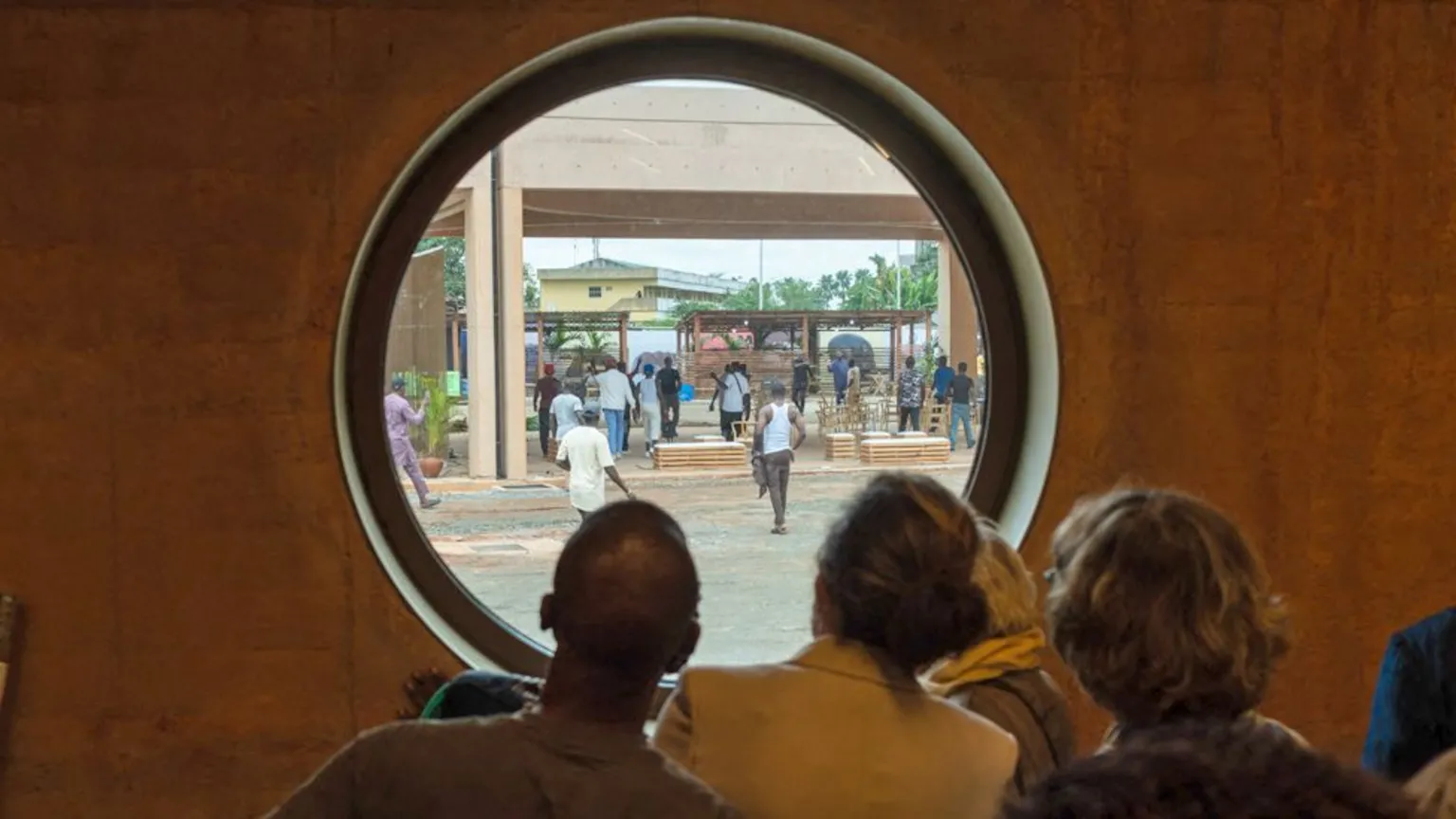
A $25 million museum designed to celebrate West Africa’s artistic heritage is caught in a political dispute in Benin City, threatening its highly anticipated public debut.
The Museum of West African Art (Mowaa) has been the centre of attention this week after Edo State authorities revoked its land allocation, days before staff were set to welcome visitors for the first time.
The museum occupies six hectares in the southern Nigerian city, incorporating an archaeological dig and architecturally striking buildings by British-Ghanaian designer Sir David Adjaye, renowned for the National Museum of African American History and Culture in Washington.
It was envisioned as a showcase for both historic artefacts, such as the famed Benin Bronzes, and contemporary creative work from across West Africa.
Over the past five years, staff have meticulously prepared the museum for its opening, unwrapping artworks, calibrating climate controls, and positioning pieces throughout the galleries.
“I want us to have a significant economic impact on communities around here,” said Mowaa Executive Director Phillip Ihenacho. “I hope to make Benin City a cultural destination.”
As a non-profit institution, Mowaa anticipates creating more than 30,000 direct and indirect jobs while contributing over $80 million annually to the regional creative economy through programming, partnerships, and exhibitions.
“What we have become is a museum that is really about creating an ecosystem to support creatives in West Africa,” Ihenacho added.
Funding for the project came from a variety of donors, including the French and German governments, the British Museum, and the Edo State government. The current land dispute stems from the museum’s decision to remove “Edo” from its original name, which had previously been the Edo Museum of West African Art.
Tensions escalated when protesters demanded that the museum be renamed the Benin Royal Museum and placed under the authority of Oba Ewuare II.
Foreign visitors at a pre-opening event were insulted and escorted away by police for their safety. President Bola Tinubu has intervened, establishing a high-level committee to manage the situation.
Political rivalries at the state level also play a role. The project had been strongly supported by former Governor Godwin Obaseki, while the new administration, aligned with the Oba, appears to want greater influence over the museum. The protests and subsequent land revocation reflect this struggle for control.
The debate surrounding the museum is inseparable from the ongoing discussion about the Benin Bronzes—treasured brass, ivory, and wooden artworks looted by British forces in 1897.
While some have been returned, their custodianship remains contentious. In 2021, the federal government confirmed the Oba of Benin as the rightful owner of repatriated bronzes, complicating the museum’s plans to host them.
Ihenacho emphasises that Mowaa was always meant to highlight contemporary creativity and not to claim ownership of the historical artefacts. “From the beginning, we said we would be about the modern and contemporary,” he said. “We are not the owners, nor do we have any legal title to the bronzes.”
The museum intends to inspire artists across disciplines, including film, photography, dance, music, and fashion. “Yes, we want to focus on the historical, but the purpose is to inspire the contemporary,” Ihenacho explained.
Mowaa has already become a collaborative hub for young creatives, including Nigerian and Ghanaian graduates and researchers. Sculptor Eweka Success, 23, said the museum offers an invaluable chance to study artistic techniques and history up close.
“Many of us have never seen the originals, but there we can study their design, technique and history more closely,” he said.
Cultural expert Oluwatoyin Sogbesan criticised the elite focus on the restitution debate. “The everyday person is concerned about making a living, going to work, and feeding their family. Many don’t even know about the bronzes,” she said.
She also argued for renaming the artefacts in line with Edo tradition, calling them “Emwin Arre,” meaning ‘Cultural Things’.
The museum’s inaugural exhibition, Homecoming, features works by artists such as Yinka Shonibare, Toyin Ojih Odutola, Precious Okoyomon, and Tunji Adeniyi-Jones. Shonibare’s Monument to the Restitution of the Mind and Soul features a pyramid of over 150 clay replicas of the Benin Bronzes.
“Creating a monument like this is acknowledging the trauma caused by the looting of those spiritual artefacts,” he said. “The work is about the meaning of absence and the spiritual significance of the bronzes.”
Other notable works include Ndidi Dike’s National Grid, which reflects on Nigeria’s frequent power outages and broader governance challenges, connecting the political and infrastructural realities of daily life with artistic expression.
Culture Minister Hannatu Musawa, chairing the presidential mediation committee, said: “Cultural institutions are pillars of our national identity and must be protected through collaborative approaches that respect both traditional custodianship and modern institutional structures.”
Despite the disputes, museum staff remain committed to realising the vision of Mowaa as a centre for innovation, creativity, and collaboration. Many hope the political wrangling will soon be resolved so that the museum can open and take its place as a landmark institution for Nigeria and West Africa.































Comments
Sign in with Google to comment, reply, and like comments.
Continue with Google