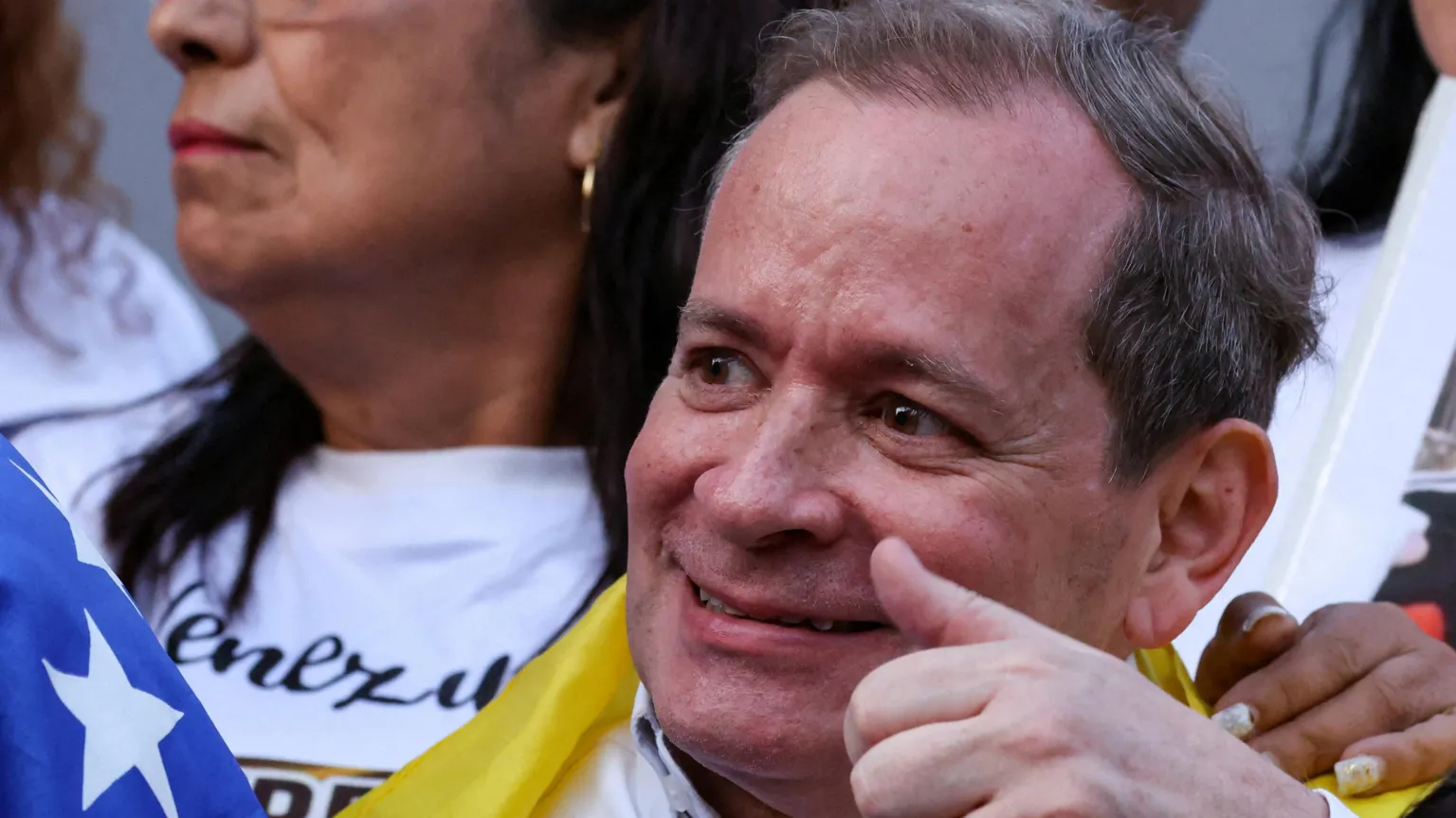
Juan Pablo Guanipa, a leading opposition politician in Venezuela, has regained his freedom after nearly nine months in detention, following the passage of a new amnesty law.
His announcement on social media came as the law, approved by the National Assembly and signed by interim President Delcy Rodríguez, could pave the way for the release of hundreds of people imprisoned for political reasons.
“After 10 months in hiding and almost nine months of unjust imprisonment, I confirm that I am now completely free,” Guanipa wrote, sharing an image of himself holding the Venezuelan flag. His release marks one of the most high-profile outcomes of the recent amnesty, which has drawn both praise and criticism from political observers.
Guanipa, who leads the centre-right Justice First party and previously served as vice-president of the National Assembly, had been in hiding following accusations of terrorism and treason tied to his rejection of the 2024 election results.
Security forces eventually located and detained him in May 2025.
Earlier this month, Guanipa had been temporarily freed, only to be re-arrested and placed under house arrest for allegedly violating the terms of his release. His latest liberation comes amid a wider wave of releases following the January 3 US operation that detained President Nicolás Maduro.
The amnesty bill, according to Rodríguez, is aimed at offering and receiving forgiveness, but Guanipa called it a “flawed document” that leaves many Venezuelans still imprisoned unjustly. He has urged the government to broaden its scope to include all political prisoners and allow those in exile to return.
Exiled opposition leader Edmundo González also weighed in, stressing on social media that “no lasting reconciliation without memory or responsibility” is possible, and added that a legitimate amnesty must include “truth, recognition and reparation.”
Human rights activists have similarly raised concerns over delays in applying the law and the lack of clarity about who is being freed.
Guanipa is closely allied with María Corina Machado, another opposition figure and Nobel Peace Prize winner, who recently pledged to lead Venezuela when the moment is right. Machado gifted her Nobel medal to US President Donald Trump last month, praising his support for Venezuelan freedom.
The recent wave of releases under the amnesty law has revived hope among political activists, but critics insist that real reconciliation in Venezuela requires transparency, accountability, and the inclusion of all those detained for political reasons.



























Comments
Sign in with Google to comment, reply, and like comments.
Continue with Google