Safaricom dealers have petitioned Parliament to safeguard local partners and small businesses ahead of the government’s proposed partial divestiture of its stake in Safaricom PLC, warning that any changes to the telecom giant’s business model could undermine decades of investment and threaten financial inclusion.
In a memorandum submitted before the joint committees on Finance and National Planning and the Public Debt and Privatization, the Safaricom Dealers Association opposed any unilateral alterations to the company’s shared-prosperity business model.
According to the memorandum before the lawmakers, the dealers operating as registered Safaricom channel partners said they have played a critical role in building the company’s national footprint, including the acquisition and servicing of more than 50 million customers across the country over the past 25 years.
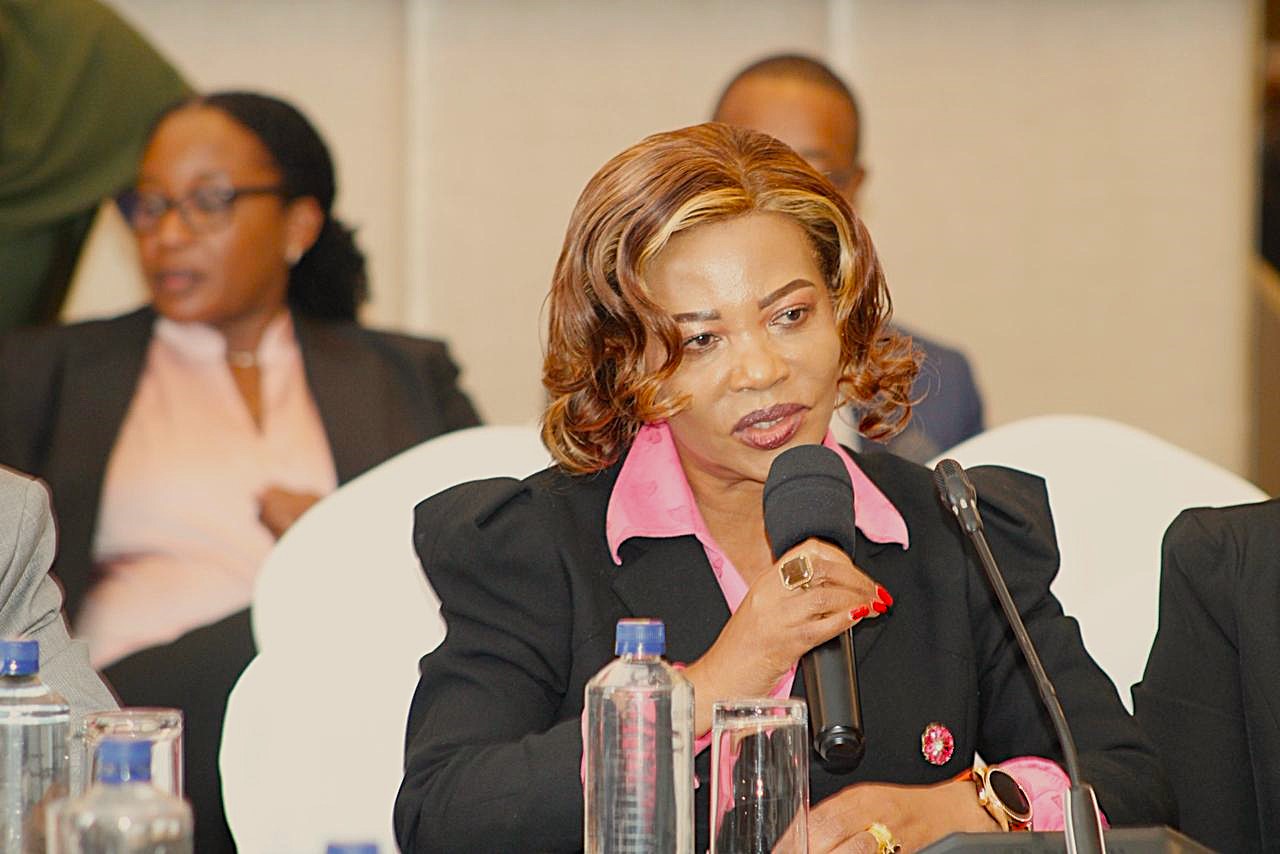
"The shared-prosperity business model, which encompasses payment of residual and commissions, has empowered Safaricom Partners to make and commit monumental long-term investments in the belief of the perpetuity of the shared-prosperity business model,’’ Esther Muchemi, the association's chairperson, told the MPs.
''As a key Safaricom partner and major stakeholder, we shall immediately and directly be affected by the divestiture should the majority shareholder unfavorably change the partner business model. Any unilateral alteration of this model post-divestiture would retroactively undermine investment decisions made in good faith over decades."
The government plans to sell approximately 6 billion Safaricom shares, valued at about Sh204.3 billion, as part of a broader strategy to mobilize non-tax revenue, reduce public debt, and fund critical infrastructure projects in energy, roads, water, and digital transformation.
While acknowledging the government’s intention to retain a 20 percent stake to preserve national influence in Safaricom’s governance, the dealers expressed firm concerns over the potential impact of the divestiture on small and medium-sized enterprises, which form the backbone of Safaricom’s distribution network.
''While we recognise the government’s objectives in the Sessional Paper to mobilise non-tax revenue for critical infrastructure sectors, reduce public debt, and enhance Safaricom’s competitiveness, we are concerned about the potential implications of the proposed 15 percent divestiture plus an upfront payment of Sh40.2 billion for dividends from Vodacom Group on small and medium-sized enterprises that form the backbone of Safaricom’s dealer network,'' Muchemi said.
The association also raised concerns about national security and digital infrastructure, noting that dealers are often the frontline agents in customer onboarding and service delivery, particularly for M-PESA and digital financial services that support financial inclusion.
''While the retained 20 percent stake safeguards national interests, we are concerned about data security and access to services in underserved areas. Partners play a frontline role in customer onboarding and service delivery,’’ she said.
"Any shift in favor of Vodacom’s international priorities could compromise these, particularly in M-PESA and digital services that are critical to Kenya’s financial inclusion."
On valuation, the dealers said the proposed pricing based on a six-month volume-weighted average price of Sh27.50 per share appears reasonable but called for independent audits to prevent undervaluation of what they termed a strategic national asset.
‘’The proposed valuation (based on a 6-month volume-weighted average price of Sh27.50 per share) and upfront payment structure appear reasonable, but we recommend independent audits to ensure fairness and prevent undervaluation of a national asset,’’ the memorandum reads.
The dealers urged the lawmakers to condition the approval of the divestiture on legally binding safeguards, including preservation of the current partner business model, ring-fencing part of the proceeds to support Small and Medium Enterprises, and granting Safaricom partners representation on the company’s board.
''Clause requiring Safaricom to preserve the shared prosperity business model in its entirety and the ring-fencing of a portion of divestiture proceeds for SME support programmes, including access to financing and capacity building for partners,'' the association stated.
The association also called for indemnity protections against disruptions that could arise if Vodacom Group becomes the majority shareholder and urged the retention of existing dealers as the primary customer and market interface for all Safaricom products and services.
The Memorandum further adds, “Ensuring major stakeholders in the business chain, Safaricom Partners, should be given one slot on the Safaricom Board for better representation and Safaricom Partners to be indemnified and protected against any loss or disruption which may arise from Vodacom Group acquiring a majority shareholder position after the transaction.’’
Parliament is expected to consider the dealers’ recommendations as it debates the future ownership structure of Kenya’s most profitable company and its broader implications for the economy and digital ecosystem.