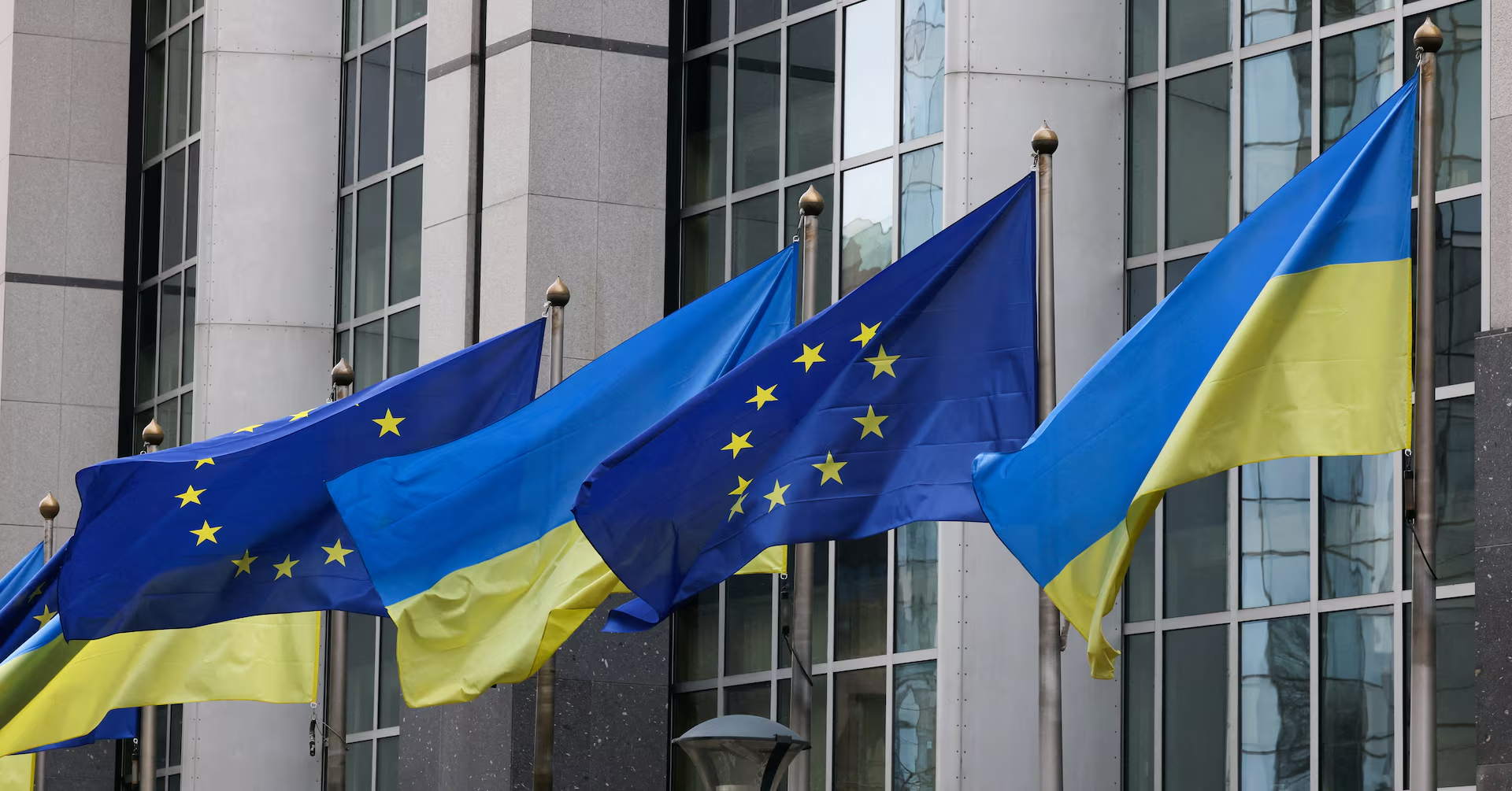
European Union leaders have confirmed their commitment to fund Ukraine for the next two years but put on hold a contentious proposal to release billions of euros in frozen Russian assets.
The plan, which would have allowed Ukraine to access around €140 billion held in a Belgian clearing house, was delayed until December after Belgium raised legal concerns about potential consequences. EU officials have described the matter as highly complex, citing the need for careful assessment before any funds are released.
The summit in Brussels came just before a London meeting where Prime Minister Keir Starmer is expected to urge European leaders to provide Ukraine with long-range missile systems.
Latest Stories
- NCIC condemns Bare Sahara Ahmed hate speech, confirms arrest
- DCI arrests three suspects in Nairobi robberies linked to fake police gang
- Gachagua withdraws bid to be reinstated, seeks compensation over impeachment
- President Ruto urges African leaders to own health financing and reforms
- DCP notifies IEBC it will hold Ol Kalou MP nominations on May 9
Ukrainian President Volodymyr Zelensky, NATO Secretary General Mark Rutte, Denmark’s Mette Frederiksen, and the Netherlands’ Dick Schoof are attending in person, with French President Emmanuel Macron and other leaders joining virtually.
European ministers spent hours discussing how frozen Russian funds could be turned into a so-called reparations loan to help Ukraine rebuild and continue its defence.
While many EU governments had anticipated a formal endorsement, the final statement only asked the European Commission to “explore options for financial support based on an assessment of Ukraine’s financing needs.”
The declaration stressed that “Russia’s assets should remain immobilised until Russia ceases its war of aggression against Ukraine and compensates it for the damage caused by its war.”
European Commission President Ursula von der Leyen said the discussions “highlighted the complexity of the issue” and noted that “further clarification is needed.”
European Council President Antonio Costa expressed optimism, stating that the bloc had “committed to ensure Ukraine’s financial needs will be met for the next two years.”
“Russia should take good note of this: Ukraine will have the financial resources it needs to defend itself,” Costa said at a press briefing. Zelensky welcomed the summit outcome as a clear sign of “political support” for proposals to use frozen Russian assets to sustain Kyiv.
Belgium’s caution has played a key role in the delay. Prime Minister Bart De Wever said Brussels needed “solid guarantees” before backing the plan, highlighting the untested legal and financial terrain.
“Can this plan be legal? That is a very good question… There are no clear answers. We will in any case be buried in litigation. That seems like a certainty,” he added. Belgium fears that approving the move could expose the Euroclear clearing house to lawsuits and potentially trigger a financial crisis.
Russia has condemned the EU’s proposal. “Any confiscatory initiatives from Brussels will inevitably result in a painful response,” said Maria Zakharova, a spokesperson for Russia’s foreign ministry.
The EU also announced new sanctions targeting Russian oil revenues and three Chinese companies involved in Russian crude trading. Estonian Prime Minister Kaja Kallas said the measures are aimed at “depriving Russia of the means to fund this war” and sending a clear signal that “Russia can’t outlast us.”
These measures followed US sanctions against Russian oil companies Rosneft and Lukoil, announced by President Donald Trump.
Trump also confirmed that a planned meeting with Vladimir Putin in Budapest had been indefinitely postponed, stating, “Every time I speak to Vladimir, I have good conversations and then they don’t go anywhere.”
Putin dismissed the sanctions, describing them as “unfriendly measures” that “will have certain consequences, but they will not significantly affect our economic well-being.”
Ukraine continues to seek long-range missiles to strike Russian energy infrastructure, but a request for Tomahawk cruise missiles from the US was denied due to the complexity of their operation, requiring extensive training over a year.
China criticized the EU sanctions, saying they “seriously undermine the overall framework of China–EU economic and trade cooperation.” The issue of frozen Russian assets is expected to return to EU discussions in December, when leaders hope to agree on a legal and practical way to channel funds to Ukraine.


Comments
Sign in with Google to comment, reply, and like comments.
Continue with Google