Ethiopia has set June 1, 2026, as the date for its 7th general election, a move met with caution from opposition parties citing security challenges and narrowing political space. Observers and critics warn that without safe campaigning and a level political field, holding a credible election may not be possible.
The National Election Board of Ethiopia (NEBE) released a draft timeline, noting that pre-election preparations will begin on October 30, 2025, but acknowledged that the schedule could change following consultations with political stakeholders.
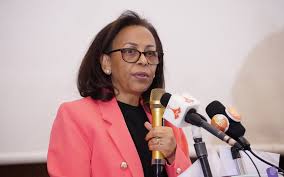
NEBE Chair Melatwork Hailu said the consultations are intended to incorporate input from all parties to foster transparency, fairness, and credibility throughout the electoral process.
She stressed that the Board seeks a shared understanding with political parties to ensure the election reflects the will of the people.
Political party representatives welcomed NEBE’s efforts but expressed serious worries about insecurity and restricted political space. They also highlighted practical difficulties, such as collecting candidate endorsement signatures under the current conditions.
Hailu confirmed that NEBE, constitutionally required to organise elections every five years, will continue engaging parties and relevant government agencies. She called on political groups to actively support voter education and other initiatives aimed at holding an open and fair poll.
The Board is also implementing several new measures, including opening additional regional offices, creating a digital map of polling stations, rolling out a technology-driven voter and candidate registration system, and recruiting field trainers to oversee preparations.
Despite these efforts, opposition leaders remain skeptical about the possibility of free and fair elections. Professor Merera Gudina, Chair of the Oromo Federalist Congress (OFC), told Addis Standard:
“The conditions necessary for a fair, free and credible election simply do not exist. For elections to be fair, free and credible, two basic conditions must be fulfilled: a political space that allows a level playing field for competing parties, and the necessary security for them to campaign peacefully. Under the existing situation, both are non-existent across the country.”
Gudina pointed out that five years ago, the OFC had 206 offices in Oromia, but now only maintains three, located in Finfinne, Ambo, and Assela, reflecting the shrinking space for political activity.
“The situation is no better for other opposition groups. In Oromia, Amhara and Tigray, there is insufficient security to field candidates, campaign, or protect ballot boxes. These areas represent roughly 70 percent of the population,” he said.
“Even if the government promises safety, forces like the OLA, Fano and Tigray militias must cooperate. Otherwise, campaigning in towns such as Sululta or Sebeta is impossible.”
He also noted that under current conditions, both domestic and international observers cannot be deployed effectively, a critical requirement for credible elections.
“The existing situation favors bullets over ballots. Unless the government is serious about elections, providing security and political space is essential,” Gudina said.
Earlier in June, the Caucus of Ethiopian Opposition Parties, a coalition including the OFC, condemned the election timeline, stating there are “no conducive conditions” for NEBE to conduct the vote.
In a statement released on June 9, the Caucus accused NEBE of partisanship and being overly aligned with the ruling party, noting that the Board is preparing to replace three-fifths of its leadership.
Despite these objections, President Taye Atske Selassie confirmed to lawmakers on October 6 that the election would take place within the current fiscal year (June–July 2026). He made the announcement during a joint session of the House of People’s Representatives and House of Federation, attended by 511 members.
Ethiopia’s previous general election in 2021 was marred by conflict in Tigray and insecurity in Oromia and Benishangul-Gumuz, preventing voting in some areas. While the Prosperity Party claimed a sweeping victory, observers and opposition groups criticized the process for being exclusionary, citing arrests, limited media access, and restricted campaigning.
The upcoming election is viewed as a key moment for Ethiopia’s political institutions, testing whether democratic norms can be upheld amid ongoing security concerns.
In July 2025, amendments to the Electoral, Political Parties Registration and Electoral Code of Conduct Proclamation were approved, adding 26 articles, including a digital ID requirement for candidates, a measure that sparked criticism from opposition groups.
NEBE also launched a mock debate exercise on October 21, 2025, aimed at preparing parties for media debates during the election campaign.
“This mock debate will position you to present your programs and policies effectively in the upcoming mainstream media debates that the Board will organise,” Hailu said.
The training, running from October 21 to 24, covers 16 topics with participation from two to four parties per session. At the conclusion, remaining parties vote secretly to select winners. NEBE said the initiative follows similar training held last year to strengthen political party engagement in Ethiopia’s democratic process.



























Comments
Sign in with Google to comment, reply, and like comments.
Continue with Google