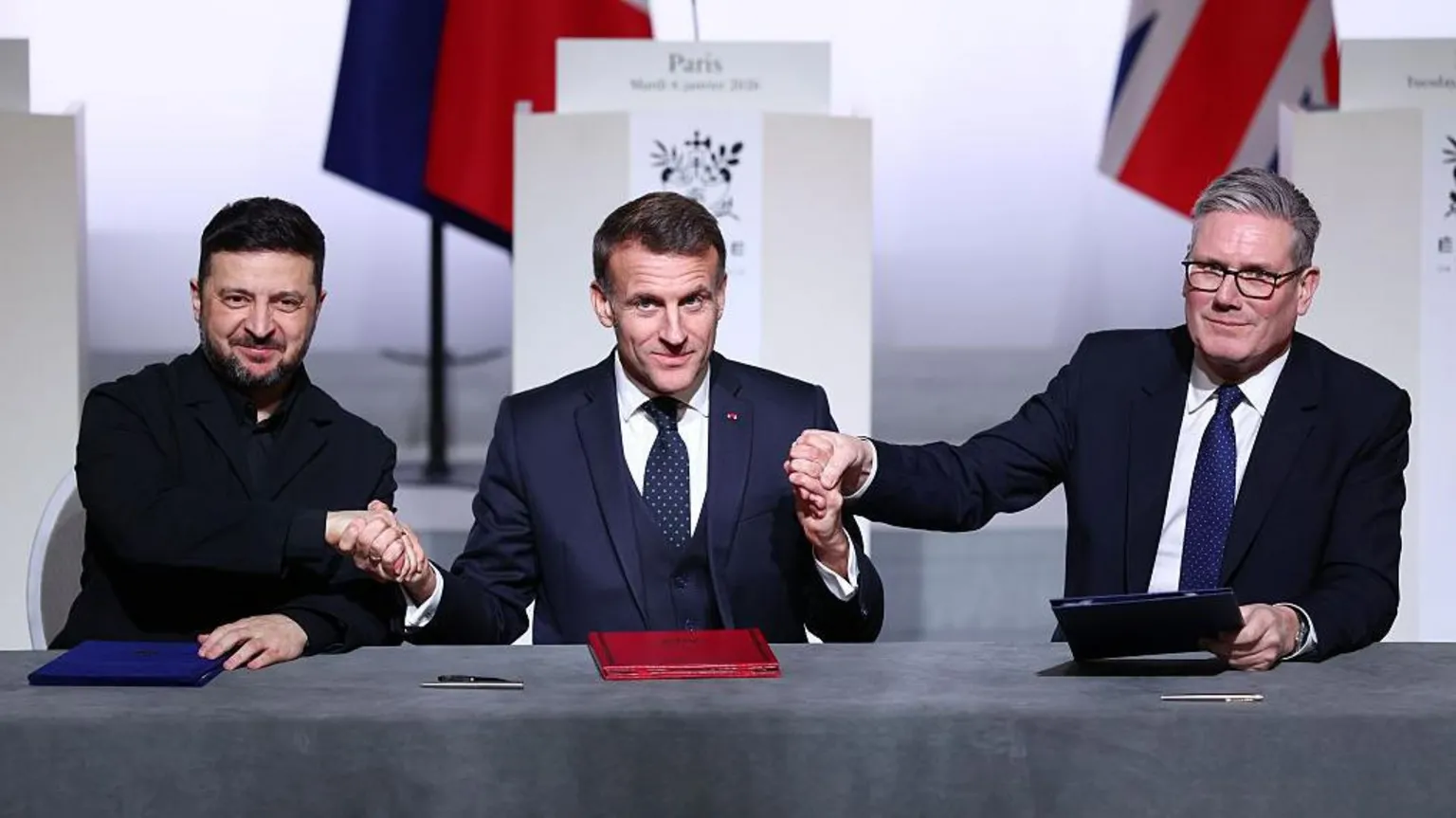
France and the United Kingdom have agreed to commit troops to Ukraine if a peace agreement with Russia is finalized, signaling strong backing for Kyiv as the war enters its fourth winter.
The announcement came after high-level talks in Paris, which brought together Ukraine and its main allies to discuss security measures and the future of the conflict.
UK Prime Minister Sir Keir Starmer said the countries had signed a declaration of intent that would allow forces to operate in Ukraine once a deal is in place. He added that military hubs could be set up across the country to protect its borders and prevent future invasions.
Starmer told reporters: "We signed a declaration of intent on the deployment of forces to Ukraine in the event of a peace deal.
"This is a vital part of our commitment to stand with Ukraine for the long-term.
"It paves the way for the legal framework under which British, French, and partner forces could operate on Ukrainian soil, securing Ukraine's skies and seas, and regenerating Ukraine's armed forces for the future."
President Emmanuel Macron said the plan could see thousands of troops sent to Ukraine. The Paris meeting included top leaders from the group called the Coalition of the Willing.
Officials also discussed strong security guarantees for Ukraine, with the United States expected to take the lead in monitoring any potential ceasefire. However, territorial questions remain unresolved, leaving major decisions pending.
Starmer confirmed that the UK would participate in US-led efforts to oversee any ceasefire that might be reached.
US negotiator Steve Witkoff said lasting peace requires both security and economic assurances. "Durable security guarantees and robust prosperity commitments are essential to a lasting peace," he said. He added that allies had "largely finished" work on security measures so that Ukrainians could be confident the war would truly end.
Jared Kushner, special envoy and son-in-law of US President Donald Trump, said that Ukrainians needed to see strong safeguards after a deal. He said they should know that "real backstops" are in place to ensure the conflict "will not happen again."
Macron described the talks as making "considerable progress," noting that allies had agreed on "robust" security protections in the event of a ceasefire.
Ukrainian President Volodymyr Zelensky called the results a "huge step forward" but stressed that real success would only come if the war ended.
Meanwhile, Russia continues daily attacks on Ukrainian cities and vital infrastructure. Moscow has warned that foreign forces on Ukrainian soil would be a "legitimate target" and has not responded publicly to the Paris announcements.
Zelensky sees the guarantees from the US and European allies as an important achievement, even though details on a ceasefire line and territorial compromises remain unclear.
Many Ukrainians may find any potential territorial concessions difficult to accept, especially as attacks persist and winter sets in. Still, Zelensky faces the risk that rejecting a ceasefire could mean another long and deadly season of fighting that would hit Ukraine harder than Russia.
The president hopes that foreign troops, monitoring by the US, and continued military support will reassure citizens that seeking peace is the right course.
Zelensky acknowledged at the press conference that the talks marked a "milestone" rather than a full resolution. Success depends on Russia’s participation, which has been quiet recently.
Putin is known to oppose a European-led force in contested areas and is unlikely to halt his troops unless Russian goals are met. Currently, Moscow holds about 20 percent of Ukraine’s land.
Last week, Zelensky said a peace deal was "90% ready" and that finalizing the remaining issues would "determine the fate of peace, the fate of Ukraine and Europe."
The key points still under discussion are territorial lines and security guarantees. Putin has demanded Ukrainian troops withdraw from eastern Donbas, threatening to seize the region. Zelensky has rejected ceding land but suggested Ukraine might pull back if Russia does the same.
Russia controls nearly all of Luhansk and about three-quarters of Donetsk, which together form the Donbas industrial area.
An earlier US-led 28-point plan was criticized by Kyiv and European allies for favoring Russia. This triggered intensive diplomacy to revise the proposal.
Zelensky said last month that Ukraine had submitted a 20-point plan to Washington, along with separate documents covering security guarantees and reconstruction efforts for when the war ends.

























Comments
Sign in with Google to comment, reply, and like comments.
Continue with Google