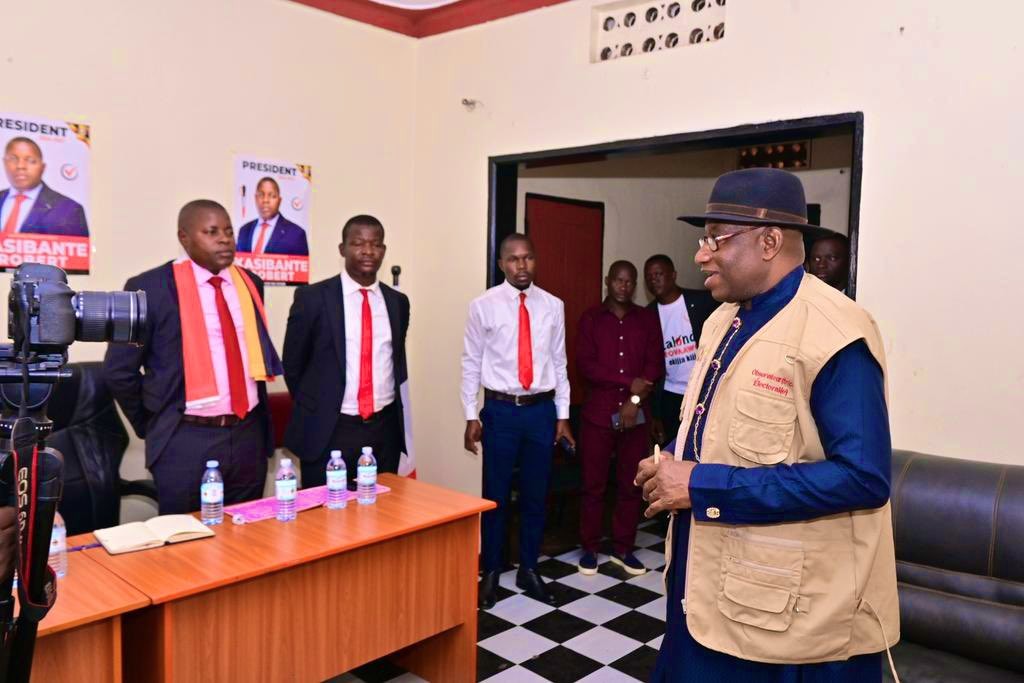
Voting in Uganda’s presidential election was calm and orderly at the polling stations visited by international observers, though broader issues continue to raise questions about the credibility of the process.
African Union (AU) officials, together with COMESA and IGAD, noted the smooth conduct at locations they monitored, but pointed to intimidation, arrests, and abductions affecting opposition figures and civil society, which they said “instilled fear and eroded public trust in the electoral process.”
In a statement released from Kampala on Saturday, the joint observation team highlighted that while election day procedures appeared proper, serious challenges persisted outside the polling stations.
The observers also criticized the nationwide internet shutdown, saying it “disrupted effective observation” and “increased suspicion” among voters and monitors.
Leading the AU mission, former Nigerian President Goodluck Jonathan explained the scope of the team’s observation.
"Well, to the best of our knowledge from our team, the African Union, COMESA, and IGAD mission, there was no evidence of ballot stuffing. We did not observe all the polling stations in the country, but based on the four or five stations we did observe, especially where we witnessed the closing, there was no evidence of ballot stuffing."
The statement underscored a contrast between orderly procedures at the polling stations and systemic challenges affecting the broader electoral environment. These included intimidation, restricted civil liberties, and a communications blackout, all of which contributed to diminished public confidence.
The East African Community (EAC) mission, led by Ambassador Edda Mukabagwiza, also weighed in on the process. She described Uganda’s electoral system as providing a strong foundation for democratic elections in line with regional and international standards, including the EAC Treaty.
"The electoral environment has been largely peaceful and conducive to the conduct of elections. Electoral campaigns were mostly calm and peaceful," Mukabagwiza said.
She noted that the elections were held in a competitive political climate, featuring eight presidential candidates alongside parliamentary and municipal contests, reflecting a growing political space for voters.
While praising the Electoral Commission’s preparation and engagement with stakeholders, Mukabagwiza highlighted ongoing challenges such as unresolved internal party disputes, weak dispute resolution mechanisms, and incomplete campaign financing regulations.