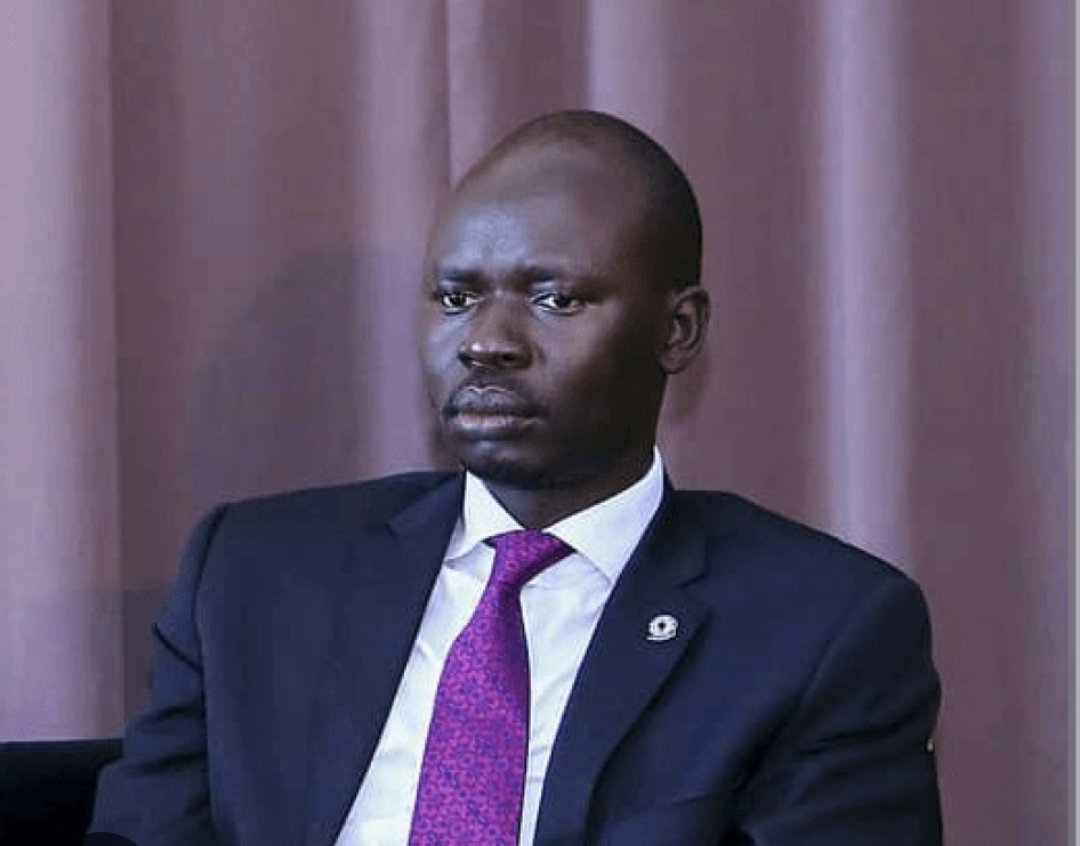
A United States federal court has sentenced South Sudanese activist Peter Biar Ajak to nearly four years in prison after concluding that he played a central role in a plan to illegally move large quantities of weapons from the US to South Sudan in an attempt to remove the current government.
The ruling comes after Ajak admitted to conspiracy charges tied to weapons export laws and follows the earlier sentencing of his associate, Abraham Chol Keech, who received a 41-month prison term on December 18, 2025, alongside three years of supervised release.
Court documents show that both men pleaded guilty to violating the Arms Export Control Act and the Export Control Reform Act, which strictly control the transfer of military equipment outside the United States.
Prosecutors told the court that between February 2023 and March 2024, Ajak and Keech worked together to secure and ship military weapons and ammunition worth close to $4 million (Sh516 million) to South Sudan without the required licences.
“Defendants sought to provide these weapons and ammunition, which included ten Stinger missile systems, two hundred grenade launchers, more than a thousand machine guns and rifles, and over 3.5 million rounds of ammunition, to opposition groups in South Sudan seeking to topple the current South Sudanese government. Defendants planned to install Ajak as the country’s new president after the regime change,” the DoJ said.
The court heard that the two were fully aware that South Sudan was subject to an arms embargo and that exporting such weapons without approval was unlawful, but they continued with the operation regardless.
“To facilitate their smuggling scheme, they discussed paying bribes and disguising the weapons as humanitarian aid. Defendants also created a fake invoice to conceal from financial institutions and others the source and purpose of the funds used to purchase and smuggle the illicit arms. As part of their plea agreement, defendants agreed to forfeit nearly $2 million (Sh320 million) they raised to pay for the weapons, which were seized by the US,” the DoJ added.
Ajak had previously left South Sudan in 2020 and later sought refuge in the United States, claiming that President Salva Kiir had ordered his killing or abduction while he was in Kenya, claims that authorities in Juba denied.
The Department of Justice said the case was handled through a joint investigation involving law enforcement agencies, the military, and the Federal Bureau of Investigation.
“By disrupting an attempt to unlawfully export advanced weapons systems, this investigation helped protect US forces from weapons that could potentially be utilised against them on future battlefields,” it stated.
John Helsing, the Special Agent in Charge of the Defence Criminal Investigative Service’s Western Field, said the outcome reflected the agency’s duty to prevent military equipment from being misused.
“As the investigative arm of DoD’s Office of Inspector General, DCIS remains fully committed to safeguarding DoD equities and ensuring that military-grade weapons do not fall into the hands of those who would endanger American service members,” Helsing said.
Ag Special Agent in Charge Matthew Murphy of Homeland Security Investigations Arizona said the case showed the wider danger posed by illegal arms transfers.
“As part of HSI’s core mission to investigate illicit transfers of arms to countries in turmoil, these conspirators attempted to destabilise national and international peace and security. HSI and our partners remain committed to pursuing charges against those who violate these laws,” Murphy said.































Comments
Sign in with Google to comment, reply, and like comments.
Continue with Google