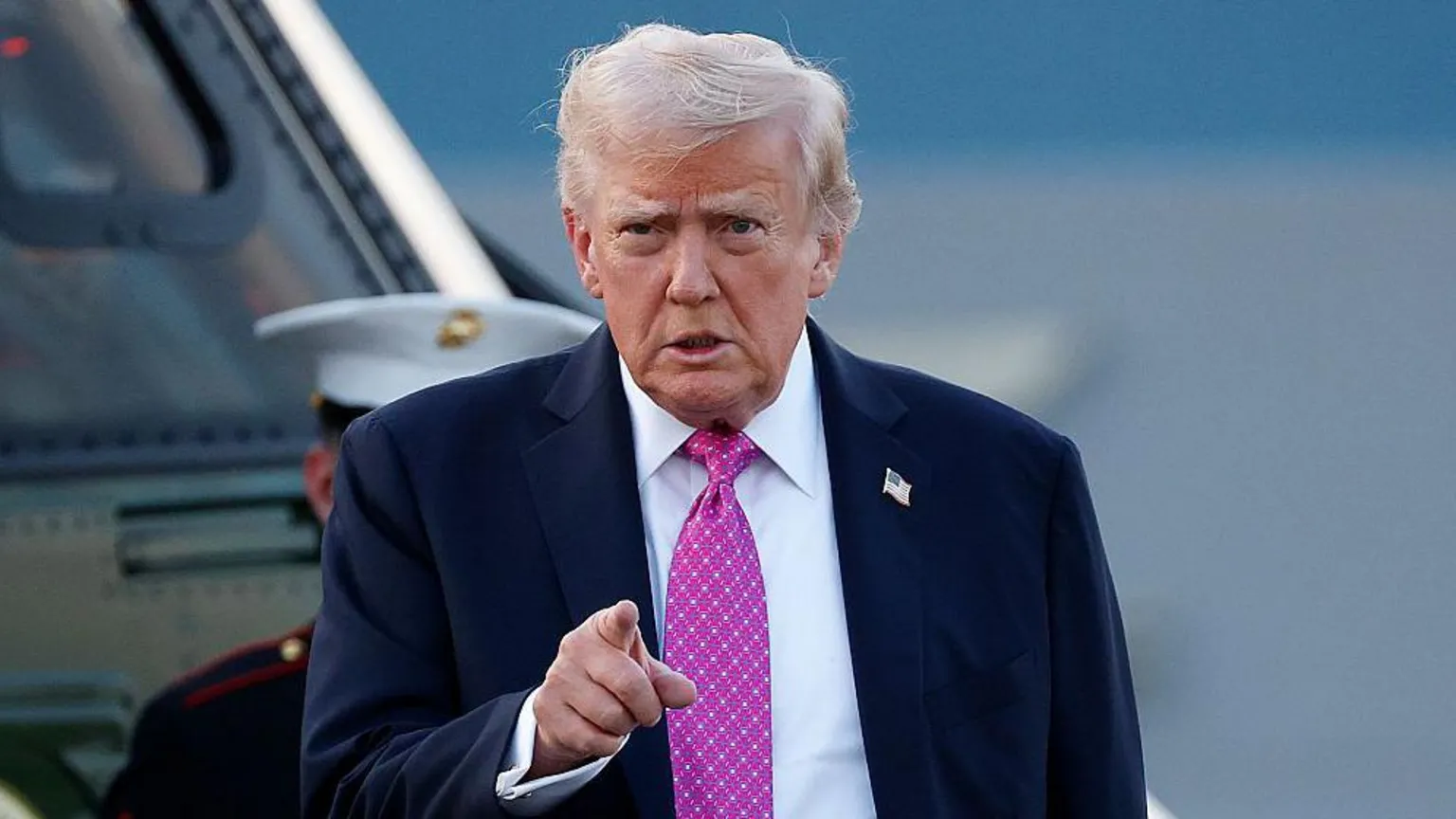
President Donald Trump has warned that countries standing in the way of his plans for Greenland could face trade sanctions, a statement that has heightened tensions with allies in Europe and raised concern among Greenlandic leaders.
Trump made the remarks during a White House meeting, saying he "may put a tariff on countries if they don't go along with Greenland," highlighting his determination to secure the Arctic territory under US control. He did not specify which nations could be affected or how such tariffs would be enforced.
The announcement coincided with a visit by a bipartisan delegation of US lawmakers to Greenland. The 11-member group, including Republicans and Democrats, met with Danish Prime Minister Mette Frederiksen, Greenlandic leaders, and local members of parliament. Senator Chris Coons, who led the delegation, said the goal was to understand local perspectives and report back to Washington “to lower the temperature”.
Trump has repeatedly argued that Greenland is critical for American security and suggested that the US would claim it “the easy way” or “the hard way,” implying a possible purchase or forced takeover.
"I may put a tariff on countries if they don't go along with Greenland, because we need Greenland for national security," he said during a discussion on rural healthcare.
Greenland, sparsely populated but rich in natural resources, is strategically located between North America and the Arctic, making it a key site for missile early warning systems and monitoring sea traffic in the region. The United States already maintains a permanent presence at its Pituffik base in north-west Greenland, where over 100 personnel are stationed.
Though US agreements with Denmark allow additional troops in Greenland, Trump has stressed that the country must “own” the territory to defend it against potential Russian or Chinese threats. Denmark has strongly opposed any military action, warning it could undermine Nato, the alliance founded on collective defense among allies.
European partners have backed Denmark’s position, emphasizing that Arctic security should be a shared responsibility. Several nations, including France, Germany, Norway, Sweden, Finland, the Netherlands, and the UK, have sent small reconnaissance deployments to Greenland, with French President Emmanuel Macron confirming that “land, air, and sea assets” will be involved.
Most Greenlanders have voiced opposition to Trump’s plan, whether through purchase or force. Greenlandic MP Aaja Chemnitz described the US lawmakers’ visit as encouraging, saying: “We need friends. We need allies.” She noted that resolving the dispute will take time: “It's a marathon, not a short sprint. The pressure from the US side is something that we've seen since 2019. It would be naive to think that everything is over now.”
Lisa Murkowski, a Republican senator, is among those sponsoring a bipartisan bill to block any attempt by the US to annex Greenland. At the same time, a Republican congressman has introduced legislation in favor of Trump’s plan.
Trump’s special envoy to Greenland, Jeff Landry, told Fox News that discussions should focus on Greenland’s leaders, not Denmark. “I do believe that there's a deal that should and will be made once this plays out.
"The president is serious. I think he's laid the markers down.
"He's told Denmark what he's looking for, and now it's a matter of having Secretary [of State Marco] Rubio and Vice-President JD Vance make a deal.
"The United States has always been a welcoming party. We don't go in there trying to conquer anybody and trying to take over anybody's country.
"We say, 'Listen. We represent liberty. We represented economic strength. We represent protection.'”
Earlier this week, Denmark and Greenland’s foreign ministers met Vance and Rubio at the White House. A Danish official said the US vice-president suggested finding a compromise that would satisfy Trump while addressing Denmark and Greenland’s concerns. The same official stressed that no discussion of a military takeover took place.
Despite this, Denmark is treating Trump’s statements seriously. “It is our working hypothesis that on this issue what he says is what he means,” the official said.































Comments
Sign in with Google to comment, reply, and like comments.
Continue with Google