Kenya is preparing for a new phase of agricultural expansion after President William Ruto announced a far-reaching water investment plan aimed at reducing the country’s heavy food import bill.
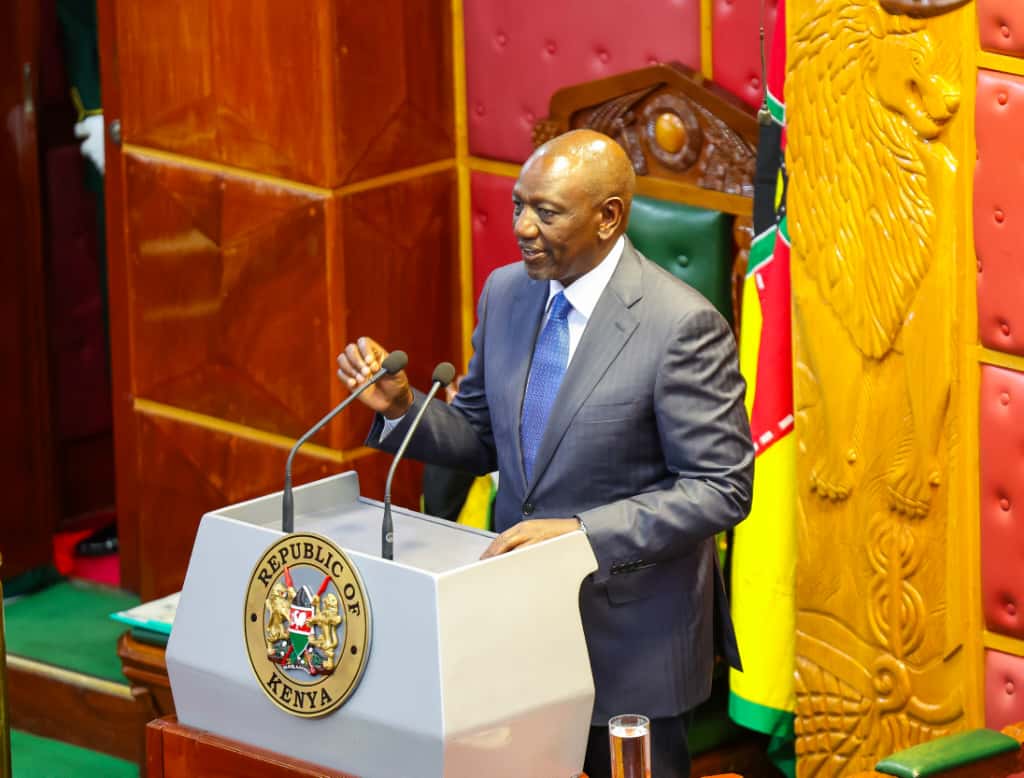
The President told Parliament that the government will move ahead with the construction of 50 mega dams, alongside hundreds of medium and small dams, to make irrigation the backbone of national food production.
He said the move is meant to stabilise farming across regions that have long depended on unreliable rainfall.
In his State of the Nation Address, the President said limited rainfall can no longer determine the country’s food supply. He noted that just a fraction of Kenya receives enough rain to sustain dependable food production, a situation he said has kept farmers vulnerable to drought cycles.
“We can no longer allow the clouds to determine whether our people eat or not,” he said.
“Expanded modern irrigation is the only path forward.”
The President said the Ministry of Water, Sanitation, and Irrigation has already mapped out sites nationwide for the new water structures. The targeted locations stretch across arid, semi-arid, and high-potential regions.
They include the High Grand Falls Dam on River Daua in Mandera, Isiolo–Barsalinga Dam in Isiolo, Yatta Dam in Machakos, Sigly Canal in Garissa, Soin–Koru Dam in Kisumu, Rumuruti Dam in Laikipia, Thuci Dam on the Embu–Tharaka-Nithi border, Lowaat Dam in Turkana, and Muhoya Dam near the Nyeri–Kirinyaga boundary.
Also planned are Narosura Dam in Narok, Arror Dam in Elgeyo-Marakwet, Ndarugu Dam in Kiambu, Kokwanyo Dam in Homa Bay, Rare Dam in Kilifi, and Tongaren Dam in Bungoma. Beyond these, the government intends to establish thousands of micro-dams in rural villages to help smaller farmers irrigate crops throughout the year.
The President said the country currently spends Sh500 billion every year on imported staple foods, including maize, sugar, rice, wheat, and edible oils. He said increasing irrigation coverage is central to reversing this trend by raising domestic output and turning agriculture into a reliable source of national revenue.
“The programme aims to bring 2.5 million acres of land under irrigation over the next five to seven years, unlocking the agricultural potential of arid and semi-arid regions,” he said.
Ruto said the initiative is among the government’s long-term investments intended to secure economic stability, improve rural incomes, and reduce the country’s dependence on weather shocks. He said Kenya has enough water sources that remain unused, adding that irrigation offers a sustainable way to harness them.
“We must never confuse lack of rain with lack of water,” he said.
He also pointed to the National Infrastructure Fund, which he discussed during a recent tour of Kitui, as one of the funding channels that will support the rollout. While the plan has been positively received, some sites lie on community or privately owned land, raising concerns about compensation and resettlement.
Past water projects such as Arror and Kimwarer faced setbacks caused by disputes, delayed payments, and environmental challenges. The Ministry of Water is expected to issue a detailed timeline and financing framework to guide the implementation of the new programme.































Comments
Sign in with Google to comment, reply, and like comments.
Continue with Google