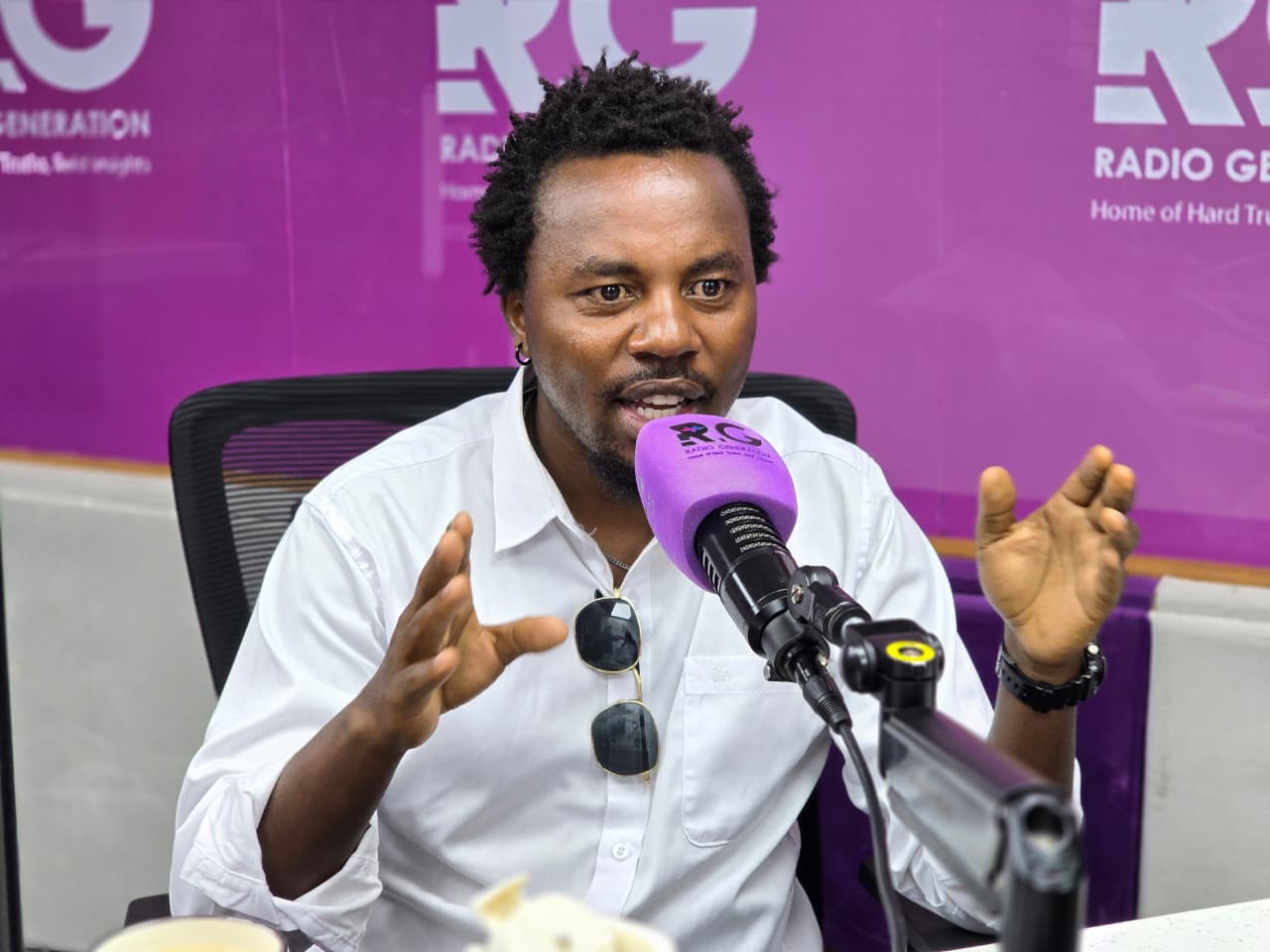
Kenya’s economic challenges are not primarily a result of poor policies but of widespread ignorance of the Constitution, according to constitutional and economic rights advocate Ng’ang’a Muigai.
Speaking on Radio Generation on Tuesday, Muigai said debates over economic growth, debt, and national development would be largely unnecessary if both leaders and citizens adhered to the Constitution.
He criticized political manifestos as repetitive promises, noting that most pledges on education, healthcare, manufacturing, and support for small businesses are already guaranteed under the law.
“All these stories of Mama Mboga and stories of education and how we’re going to revive sectors, are just empty rhetoric,” he said.
A central focus of the discussion was public debt and the proposals by some politicians to repudiate what they call odious debts. Muigai argued that the matter is not about radical politics but about legality.
“If a loan was borrowed without following the law, then it’s illegal,” he said. “Why would you pay for something that was not legally acquired?”
He referred to constitutional principles governing public finance, emphasizing that Kenyans are only responsible for loans whose benefits can be clearly traced.
“If we cannot trace the benefits of that loan in anything, it means it is not our burden,” he said, adding: “We can only pay for what benefited us.”
Muigai explained that borrowed funds are required to pass through the Consolidated Fund and be used for a declared purpose.
“When you borrow and say we are building a dam, we trace that money and ask, has it entered the consolidated fund?” he said. “The moment that billion did not go into the consolidated account, we never received it. If we didn’t receive it, why are we paying for it?”
He dismissed arguments that Kenya must honor all debts because they were taken in the country’s name.
“For anyone to transact with us, they have to be compliant with our laws,” Muigai said. “If you entered any deal claiming to represent the people of Kenya illegally, then we are not obligated.”
Muigai also stressed that the real problem is that most citizens lack understanding of the Constitution, which prevents them from holding leaders accountable.
“The Constitution is made for the common man,” he said. “But the very same people who vote know nothing about that Constitution.”
He noted that this lack of civic knowledge allows violations of the Constitution to be politicized and tribalized.
“Every time this Constitution is violated, they don’t know what to say,” he said. “That’s when they are thrown into tribal factions.”
Muigai highlighted the principles guiding his movement, which he calls “Kamau,” standing for Katiba, masomo, afya na uchumi, with the Constitution at the forefront.
“Before we think of anything, what are we saying about the katiba?” he asked.
He emphasized that Kenya’s Constitution is not flawed but poorly understood.
“The Constitution is very perfect,” Muigai said. “The only problem we have with it is we are ignorant of it.”
To improve awareness, Muigai’s team has produced a book that explains the Constitution article by article in simple language.
“So that even a grade two kid who can read will understand,” he said. Plans are underway to translate the Constitution into local languages. “If we have Kikuyu Bibles, why can’t we have the Constitution in Kikuyu?” he asked.
He suggested making constitutional education mandatory and examinable in schools, similar to religious education, predicting that by 2032 Kenya could have a generation of voters who fully understand the law.
Commenting on recent protests, Muigai argued that they were misinterpreted as political actions.
“Nobody went to the streets for political reasons,” he said. “What they wanted Parliament to do was reject the Finance Bill, and that is a constitutional process.”
He concluded that Kenya already has the institutions necessary to ensure these changes.
“Kenya is blessed with structures,” he said. “We have everything. We can make this thing happen.”






























