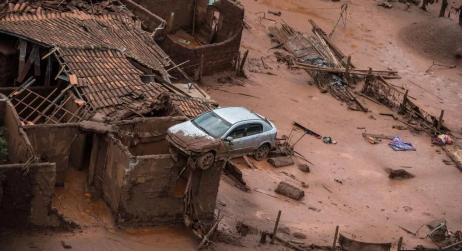
A London court has ruled that mining giant BHP is liable for Brazil's deadliest environmental disaster, the 2015 Mariana dam collapse, which killed 19 people, destroyed hundreds of homes, and poisoned the river with toxic waste.
The High Court’s decision comes after a civil lawsuit representing more than 600,000 claimants, including local residents, authorities, and businesses, valued at up to £36 billion. The ruling marks a major development in ongoing legal battles over the disaster.
The Mariana dam, located in southeastern Brazil, was operated by Samarco, a joint venture between BHP and Brazilian company Vale. When the dam burst, it released tens of millions of cubic metres of mining waste, sweeping through communities and causing widespread environmental and property damage.
Judge Finola O’Farrell said that the continued efforts to raise the dam height while it was unsafe “was the direct and immediate cause” of the collapse, establishing BHP’s liability under Brazilian law.
BHP said it intends to appeal the ruling and continues to challenge the lawsuit. The company stressed that many claimants in the London case “have already been paid compensation in Brazil.”
Brandon Craig, president of BHP Minerals Americas, added, “We believe this will significantly reduce the size and value of claims in the UK group action.”
The London lawsuit has been marked by disputes between BHP and the firm representing claimants, Pogust Goodhead. BHP has maintained that the case duplicates compensation and repair programmes already underway in Brazil. Together, BHP and Vale created the Renova Foundation to handle reparations, offering cash settlements or new homes to replace destroyed properties, including rebuilding the town of Novo Bento.
As of June 2025, around 130,000 Brazilians had reached agreements with the companies, but Pogust Goodhead claimed that settlements were encouraged at “far below their true value” and said it would pursue £1.3 billion in unpaid legal fees. The firm also criticized a $30.3 billion compensation deal signed by Brazil in October 2024 with BHP, Vale, and Samarco, saying it prevented claimants from discussing terms or paying legal fees. BHP rejected these allegations, calling them “without merit” and pledging to “vigorously contest them.”
Meanwhile, the law firm itself faced accusations in Brazil of taking advantage of vulnerable victims. A judge in Minas Gerais said Pogust Goodhead had allegedly included “abusive clauses” in contracts, misleading affected Brazilians and charging excessive fees that diverted critical resources. The firm denied the claims as “without merit.” Former Brazilian ambassador Rubens Barbosa said the London case “hinders efforts to resolve the matter locally” and misled “extremely vulnerable Brazilians” through contractual practices.
The case in London remains a pivotal chapter in the complex legal aftermath of Brazil’s worst environmental disaster, highlighting tensions between local compensation efforts and international legal action.




























Comments
Sign in with Google to comment, reply, and like comments.
Continue with Google