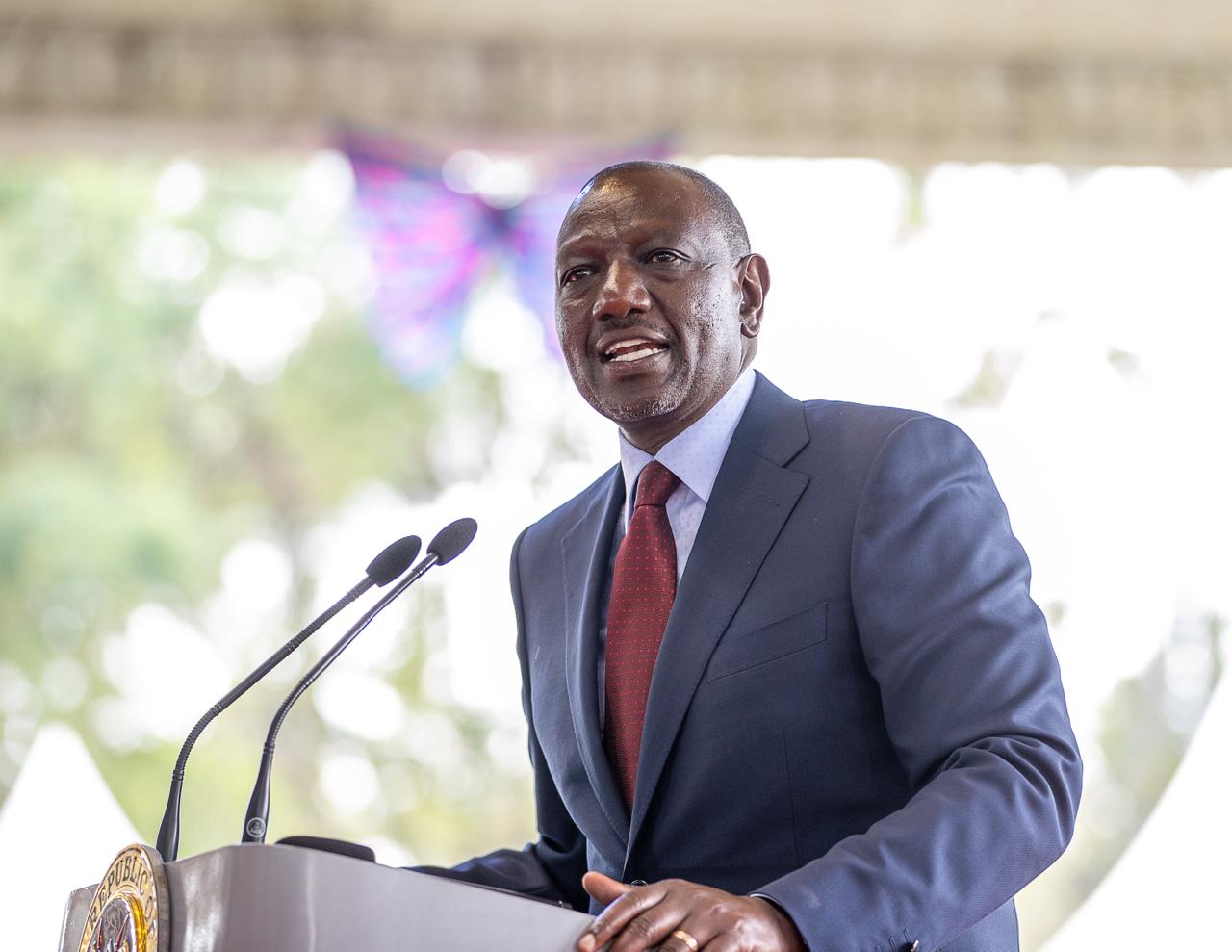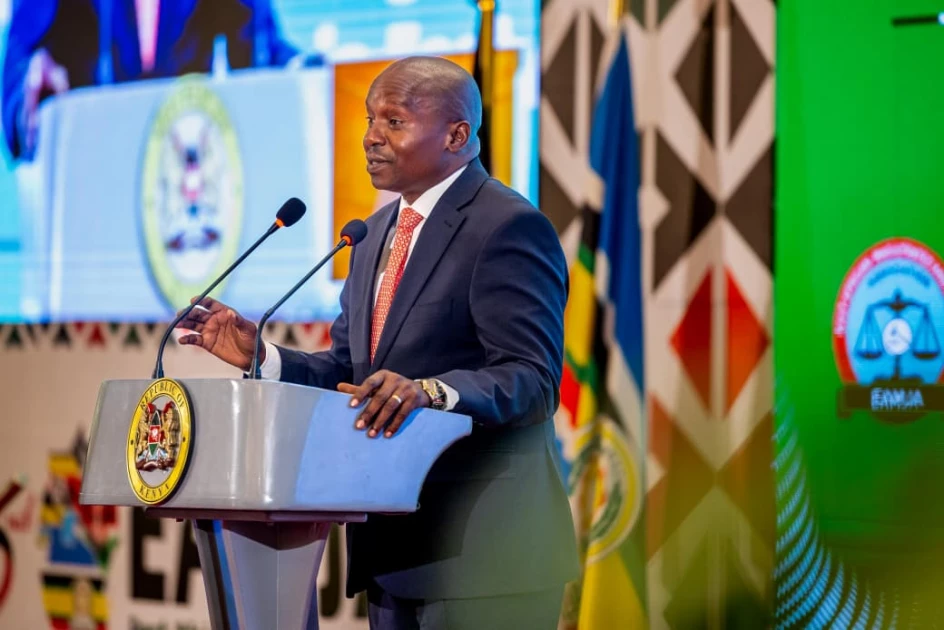
Calls for faster and more accessible justice across East Africa took centre stage on Tuesday as Deputy President Kithure Kindiki urged judicial officers to step up efforts to meet the needs of a changing region.
Speaking while opening the 22nd East African Magistrates and Judges Association Annual Conference in Nairobi on Tuesday, he said justice systems must evolve to support people and drive growth.
He warned that delays in courts continue to hold back progress, noting that justice is closely tied to social and economic wellbeing. Kindiki said when people struggle to access justice, it weakens trust, increases inequality, and slows down development.
“When justice is inaccessible, development stalls, inequality widens, and the promise of the rule of law becomes hollow. Our judicial systems must therefore function not as barriers, but as open doorways through which fairness, dignity, and economic opportunity can flow to every corner of our region,” he stated.
The Deputy President urged the region’s judges and magistrates to work towards systems that are easier to approach, friendlier to the public and more efficient. He noted that many people still find courts distant or overwhelming, making it hard for them to seek help or resolve disputes.
“Across East Africa, too many of our people still experience formal courts as distant, slow, costly, or intimidating spaces. For millions, especially women, youth, small entrepreneurs, and rural communities, the justice system appears more like a fortress than a support structure,” he noted.
Kindiki encouraged wider adoption of alternative justice routes that help settle cases faster and at a lower cost. He said options such as Alternative Justice Systems, Court-Annexed Mediation and Small Claims Courts should be used more to meet the needs of modern society.
“Justice cannot be confined to stone buildings or rigid procedures. It must instead travel to where people live, work, trade, and build families. These pathways offer quicker, more affordable, and culturally informed avenues for resolving disputes, enabling justice systems to adapt to the lived experiences of our diverse populations,” the DP added.
He reaffirmed Kenya’s backing for a stronger East African region built on fair, timely and people-centred justice. He said the region's stability and unity depend on systems that protect dignity and support peaceful communities.
Kindiki reminded the officers that justice, national cohesion, fairness and security form the backbone of stable nations. He said the region’s future is tied not only to infrastructure or trade but also to shared values grounded in fairness.
“The future we envision for East Africa is not only about expanding markets, building highways, or deepening inter-governmental relations; it is about cultivating shared values anchored in fairness, dignity, and institutional integrity. Justice is the glue that binds societies and the foundation on which peaceful, prosperous, and united communities are built,” he reiterated.
He also recognised gains made in protecting human dignity, uplifting women and safeguarding vulnerable groups but said the journey is not complete. He challenged the region’s judiciary to also take the lead in expanding social and economic freedoms.
“We have not asserted the place of individuals and communities to be free from want and poverty. This is equally important. Social and economic empowerment should go hand- in-hand with civil and democratic empowerment,” he said.