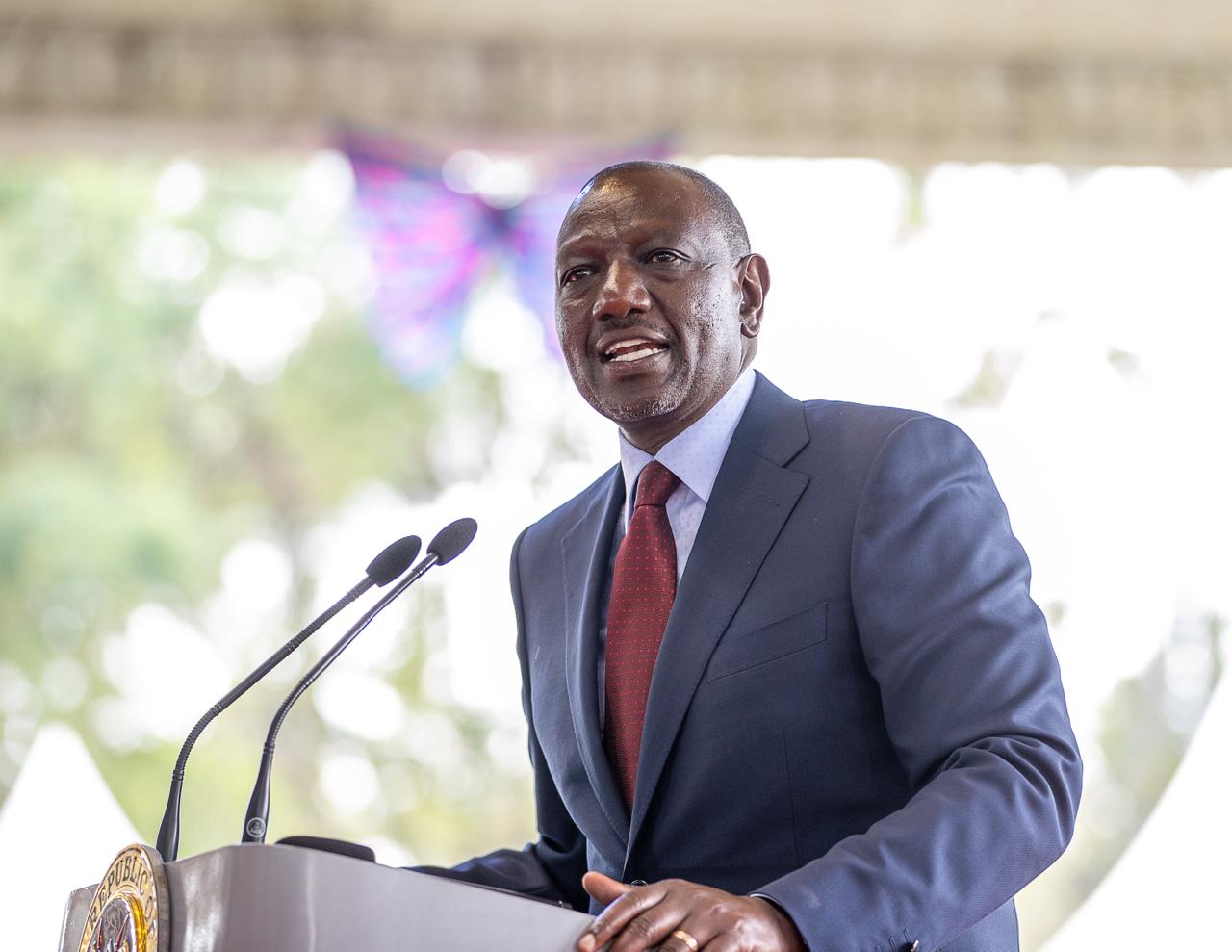
President William Ruto has firmly dismissed calls to repeal the levy charged on imported clinker, openly departing from an earlier assurance by the Trade ministry that the tax would be removed to ease pressure on cement manufacturers.
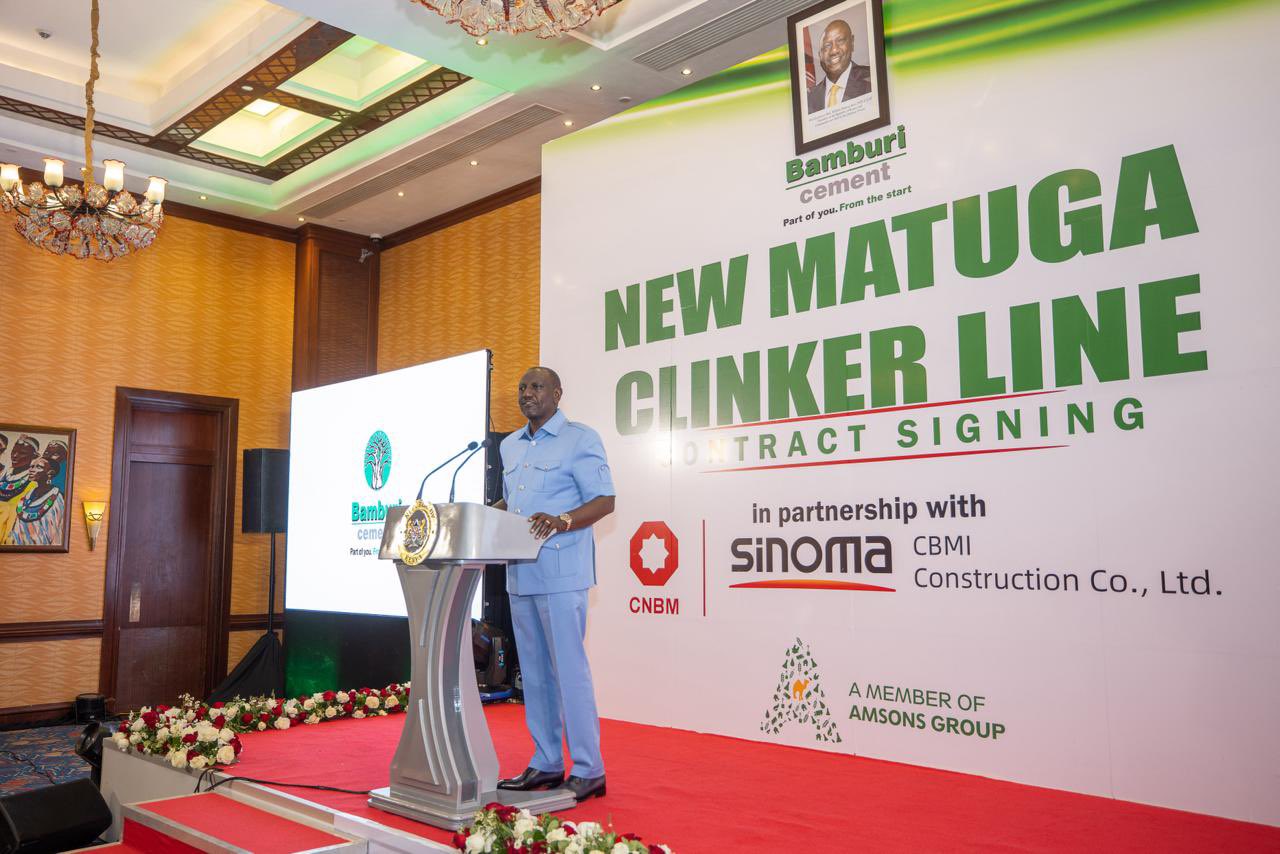
Speaking during the signing of a Sh32 billion ($250 million) agreement between Bamburi Cement and Sinoma CBMI Construction for a new clinker plant in Matuga, Kwale County, the President insisted that Kenya does not need to import clinker, arguing that the country has enough limestone and related raw materials to support local cement production.
The President questioned the logic behind importing clinker, which is produced from limestone, a mineral that is widely available locally. “We have limestone, we have all the other raw materials that are necessary for the production of cement here in Kenya,” Ruto said on Tuesday.
“Somebody needs to explain to me why we want to go and import stones, just stones. How can we spend our money to buy stones from other countries when we have our own stones?” he wondered.
His remarks place him at odds with Trade Cabinet Secretary Lee Kinyanjui, who in October said the government would seek parliamentary approval to repeal the 17.5 percent export and investment promotion levy on clinker and steel. Kinyanjui said the levy had produced unintended outcomes for companies operating in these sectors.
“We are currently charging 17.5 percent for anybody who imports clinker, yet we don’t have enough local clinker,” said Kinyanjui. “So, many of our cement factories are operating sub-optimally because they don’t have enough clinker, and the people who have clinker sometimes refuse to sell to them because they’re also competitors,” he added.
Despite these concerns, the President maintained that he is not “persuaded” that the country lacks the capacity to produce enough clinker locally. He said the government would continue restricting clinker imports, a policy that is enforced through the levy.
The levy was introduced by the Kenya Kwanza administration in July 2023 and caused major disruption in the cement industry. Following its introduction, clinker imports dropped sharply from 148,000 tonnes in 2023 to 10,300 tonnes last year. The decline in imports is also reported to have affected the construction sector, with cement consumption falling during the same period.
When the levy was first announced, it faced strong opposition from the Kenya Association of Manufacturers, which argued that it would fail to support local production and exports as intended.
However, the manufacturers’ lobby has since changed its position, now saying the levy has encouraged investment in clinker and cement plants and helped shift Kenya from being a net importer to a potential exporter.
“Repealing the 17.5 percent levy would reverse the progress achieved in attracting substantial investment in the sector,” KAM said in a statement yesterday.
One of the strongest supporters of the levy has been businessman Narendra Raval, a close ally of President Ruto, whose steel and cement businesses are among those that benefited most from the policy. Raval strengthened his ties with President Ruto shortly after he became Kenya’s fourth head of state.
The policy changes sparked alarm among several cement manufacturers, who feared that the levy would give Raval control over the clinker market. Rai Cement, Bamburi Cement, Savannah Cement, Ndovu Cement, and Riftcot Limited mounted a strong challenge against the levy, viewing it as a threat to competition in the sector.