The delivery of crucial government services in Kenya’s arid and semi-arid regions is under threat as the State Department for ASALs and Regional Development struggles with a Sh17.2 billion funding deficit, putting projects across the 2026/27 financial year at risk.
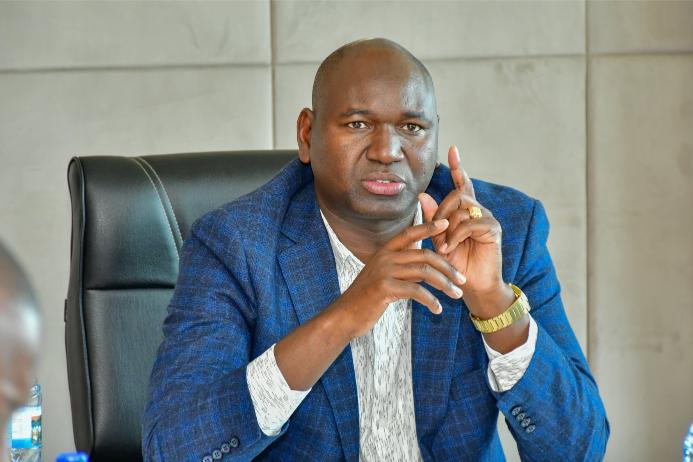
Principal Secretary Kello Harsama told the National Assembly Departmental Committee on Regional Development on Thursday that the department requires Sh28.4 billion to operate efficiently but has been allocated only Sh11.2 billion in the current budget.
He urged the committee to act swiftly to fill the gap.
“We urge the Committee to consider allocating additional funds to bridge the gaps,” Harsama said, warning that the funding shortage could hinder services in some of the country’s most vulnerable regions.
He noted that the department’s headquarters has not received any operational funding, despite needing Sh250 million for essential administrative functions, including the offices of the Cabinet Secretary and Principal Secretary. Critical requirements such as vehicle replacement, office furnishing, and foreign travel remain unfunded.
An additional Sh240 million shortfall affects the National Drought Early Warning Information System, which was recently moved to the department by Executive Order. Other areas, including monitoring and evaluation, communication, and staff training, are unfunded, contributing to a recurring deficit of Sh752 million.
Officials reported that seven semi-autonomous agencies face a combined gap of Sh1.7 billion to cover salaries and statutory obligations, with the Lake Basin Development Authority and Coast Development Authority among the worst affected. Development projects are similarly strained, with a Sh9.7 billion shortfall threatening flagship initiatives.
The Ewaso Ng’iro South Development Authority-led leather factory requires Sh478 million to complete critical infrastructure. Projects supporting pastoralist feedlots, fruit tree seedlings, and irrigation schemes also face severe financial constraints.
Committee chairperson Peter Lochakapong asked how headquarters-led initiatives, such as producing five billion tree seedlings, would be carried out, noting that these projects were originally assigned to Regional Development Authorities. He also sought clarity on the department’s role in managing the Equalisation Fund and the request for ARTECT resources under the Office of the President.
Harsama explained that ARTECT is based at State House and was created to restore peace in conflict-prone areas including Turkana and West Pokot counties. He said discussions are ongoing to transfer the office to the department to enhance efficiency.
The PS warned that prolonged underfunding has crippled Regional Development Authorities, forcing some to rely on bank overdrafts to pay staff after the National Treasury reduced allocations amid proposals for their dissolution.
He cautioned that continued budget cuts could derail the government’s Bottom-Up Economic Transformation Agenda in ASAL regions as the Committee finalizes its 2026 Budget recommendations.