Northern Kenya not marginalised but under-invested- Mandera DG
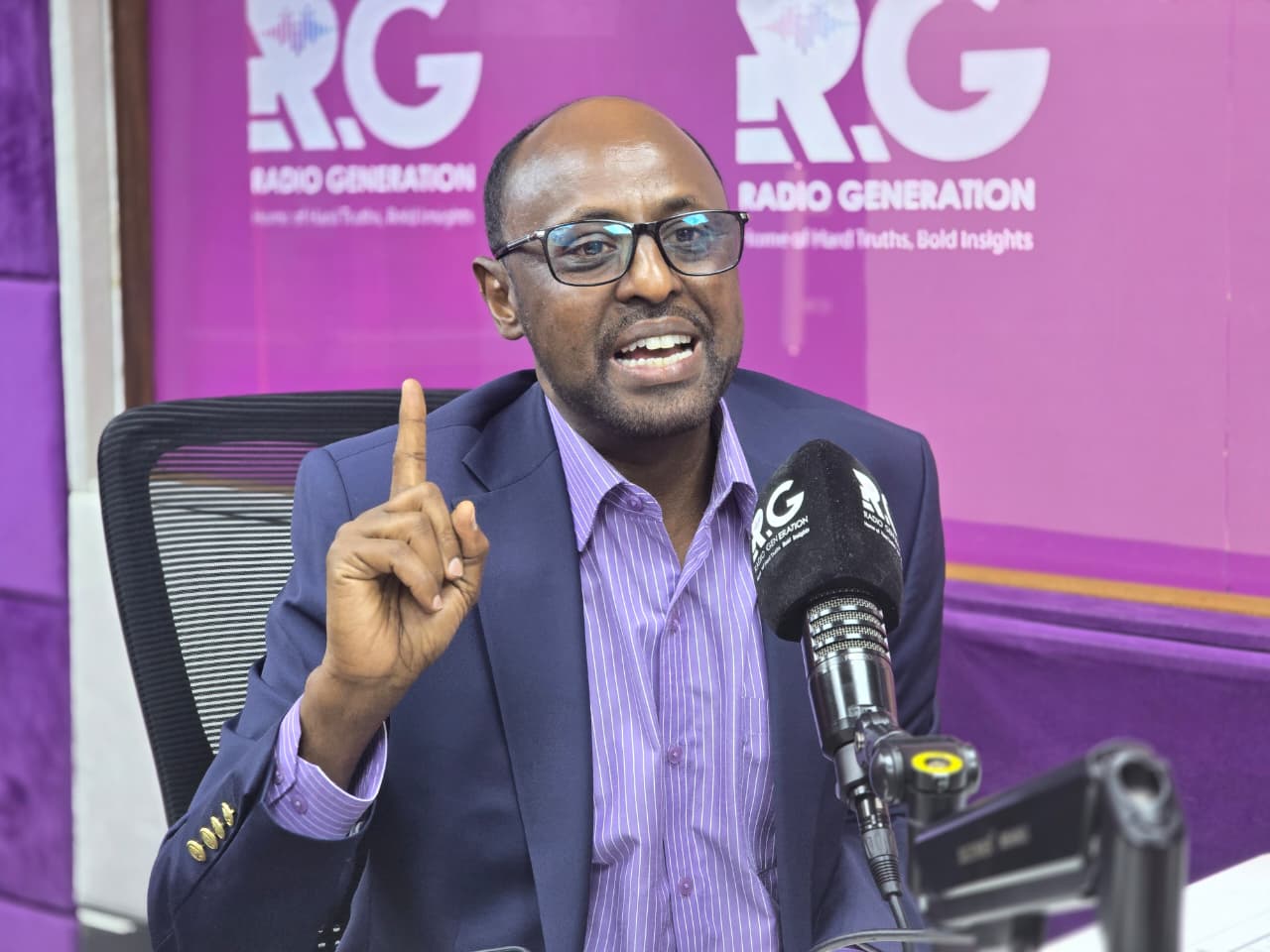
Mandera Deputy Governor Ali Maalim Mohamud says devolution ended legal marginalisation of northern Kenya but warns persistent under-investment and cultural bias are denying the region and country major economic opportunities.
Mandera Deputy Governor Ali Maalim Mohamud claims northern Kenya is no longer marginalised under devolution but remains under-invested compared with other regions.
Speaking on Thursday on Radio Generation, he said cultural attitudes and national funding priorities have slowed infrastructure development, warning that Kenya is losing major economic opportunities by neglecting more than half of its land mass.
Mohamud said the marginalisation of northern Kenya had been normalised over many decades, stretching from the colonial period through independence and into the post-2010 constitutional era.
“That is true, the issue of marginalisation of northern Kenya in general has been so normalised, from the 1900s when the colonial government took over Kenya, to independence, and even decades later,” he said.
He acknowledged that the 2010 Constitution and the introduction of devolution had eased some of the historical injustices, but said this had not translated into equal levels of investment.
“Because of devolution, we cannot say northern Kenya is marginalised, but northern Kenya is not getting the same investment as many parts of this country,” he said.
The Deputy Governor argued that the problem was no longer legal or constitutional but cultural, saying old patterns of neglect continued to shape decisions on where resources are directed.
“Sometimes cultures override the law. We are so used to not giving resources to a certain region that the culture of not investing there still persists,” he said, adding that a deliberate effort was needed to close the gap.
He rejected claims by some leaders, including former Deputy President Rigathi Gachagua, that northern counties had failed to deliver development, saying expectations ignored the scale and cost of infrastructure.
“In a period of 10 years of devolution, you cannot see strong, tangible infrastructure,” he said, citing a 740-kilometre road project whose construction alone could take up to five years.
“You cannot have roads, electricity, water infrastructure and major hospitals in 10 years with the amount of shared revenue counties receive.”
He said county governments collectively receive about 15 percent of national revenue, while 85 percent remains with the national government, which he argued still prioritises historically favoured regions.
Using Mandera as an example, he said the county receives about Sh12billion annually, but half of that goes to wages. From the remainder, significant funds are spent on free secondary education, healthcare, medicines and operations, leaving about Sh1bn for physical infrastructure.
“That is what people are making noise about,” he said, adding that development should not be measured only by visible projects.
“Development is also human capital,” he said, pointing to the county’s policy of fully funding secondary education for thousands of students. He said this would result in a highly educated population in five to ten years.
Mohamud said comparisons between northern counties and central Kenya were unfair, particularly on infrastructure such as electricity.
“Northern Kenya got the national grid in 2013 or 2014. Nyeri got it in 1960,” he said, adding that claims the region was too remote were hypocrisy.
He argued that neglecting northern Kenya, which covers more than half of the country’s landmass, was not just unfair but economically damaging.
“For you to ignore half of your country is not about us complaining. It is about Kenya losing an opportunity to invest in its people and land,” he said.
He also highlighted the region’s strategic position, bordering Ethiopia, Somalia and Djibouti, and its proximity to Gulf states.
“We are about 1,000 kilometres from the Gulf states. Physically, they are very close,” he said, arguing Kenya should face north, not just east or west, in its economic strategy.
He said investing in airports, roads and electricity in northern Kenya would allow livestock exports and trade with neighbouring countries and the Middle East.
“The government should invest not as a favour to people there, but as a favour to this country,” he said, adding that such focus could double Kenya's economy.
On criticism that northern leaders live in Nairobi, Mohamud said this ignored the reality of governance.
“Mandera is 1,000 kilometres from Nairobi. You elect an MP to work in Parliament in Nairobi,” he said, adding that much county work involved engaging national institutions.
“Fifty per cent of county government work is to engage the national government. We must be physically present,” he said.
The Deputy Governor concluded by urging Kenyans to move beyond ethnic and regional thinking.
“We must accept that we are all Kenyans. We have equal rights, equal needs, and one country,” he said, calling on leaders and citizens to walk the values of cohesion and integration, not just write them on paper.
https://twitter.com/RadioGenKe/status/2012050723739992507




Comments
Sign in with Google to comment, reply, and like comments.
Continue with Google