New study shows less than 2pc of Kenyans own majority of productive land
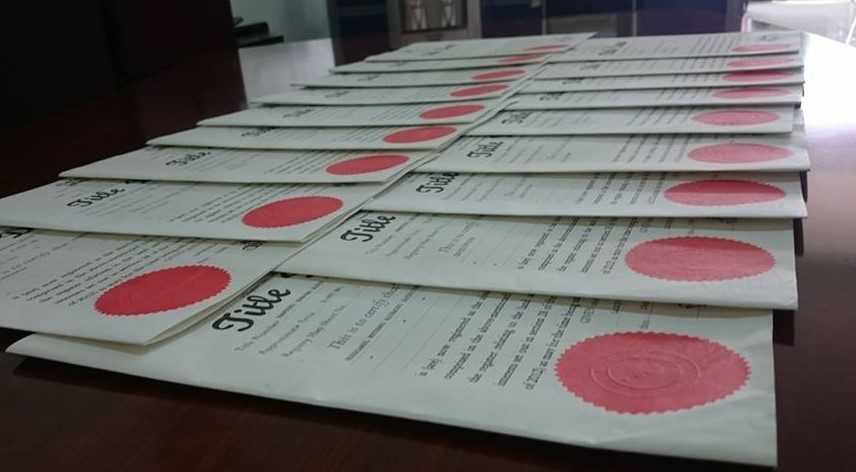
According to the report, smallholder farmers make up 98 per cent of all landholders but occupy only 46 per cent of cultivated land, with their plots averaging 1.2 hectares. By contrast, just 0.1 per cent of large-scale owners hold 39 per cent of all farmed land, with an average size of 77.8 hectares.
A new report by the Kenya Human Rights Commission warns that Kenya’s long-running land imbalance has reached a critical point, with a tiny fraction of the population controlling most of the country’s productive land while millions remain locked out of ownership and economic opportunity.
The report shows how this uneven distribution fuels food insecurity, slows agricultural output and deepens the economic hardships facing many households.
The study, titled Who Owns Kenya?, finds that less than two per cent of Kenyans own more than half of all arable land, much of it lying unused or acquired through irregular processes.
KHRC links this pattern of ownership to the wider economic stress facing the country, arguing that land remains the most valuable asset yet is concentrated in the hands of a small group.
According to the report, smallholder farmers make up 98 per cent of all landholders but occupy only 46 per cent of cultivated land, with their plots averaging 1.2 hectares. By contrast, just 0.1 per cent of large-scale owners hold 39 per cent of all farmed land, with an average size of 77.8 hectares.
The commission says this gap continues to deny millions a path to stable incomes, as limited access to land weakens productivity, worsens food shortages and makes it difficult for women and young people to secure land or use titles to access loans.
KHRC also links this disparity to the country’s hunger crisis, noting that 2.2 million people are currently facing acute food shortages and that Kenya’s score of 25 on the Global Hunger Index places it in the “serious” category.
The report highlights growing threats to community land, pointing to slow registration, fake titles, boundary changes and politically driven evictions that leave many groups exposed to abuse. The Coast is cited as one of the most affected regions, with over 65 per cent of people in Kilifi, Kwale and Lamu lacking formal documentation, leaving families trapped on land they have lived on for generations. “These counties consistently record below-average performance in health, education and income indicators,” reads the report.
KHRC notes that despite land’s huge economic value, county governments collect less than one per cent of their revenue from land-based taxes. The commission says large owners continue to benefit from weak tax systems, outdated valuation records, political interference and deliberate under-valuation of property.
The report singles out Karen and Muthaiga in Nairobi and Diani, Mtwapa and Watamu at the Coast as areas where property has been undervalued for years, allowing wealthy owners to pay far lower taxes than expected. It adds that this situation has created two economic realities: one that shields the wealthy through vast land ownership and low taxation, and another where ordinary citizens face heavy taxes on basic goods and income even as public services decline.
To address this gap, KHRC calls for a stronger land value tax that would discourage speculation, lower land prices, release idle land for productive use and boost county revenue. The report estimates that taxing wealth more effectively could raise about Sh125 billion, which is nearly double the current funding for social protection.
“Kenya needs economic decisions that put people first, protect rights and ensure fair distribution of national resources. This includes reducing waste and corruption, managing debt responsibly, strengthening transparency, reforming land taxation, and supporting communities that have been ignored or displaced,” KHRC executive director Davis Malombe said.
The report traces today’s land inequality to a long history of dispossession. It explains how colonial authorities forcefully removed communities, drew new boundaries and allocated vast land to settlers and those close to them. Those injustices persisted after independence, as political families and their networks took over land previously held by the colonial state.
According to the commission, land ownership remains the biggest source of wealth, influence and opportunity in Kenya. “Any conversation about fairness or economic justice must therefore begin with land,” reads the report.
The report adds that Kenya’s political and economic systems continue to favour a small group of landowners, while ordinary citizens bear heavy consumption and income taxes. It notes that “Land-related wealth remains largely untaxed, even though it forms the bulk of elite wealth”.
KHRC argues that land value taxation offers one of the fairest and most reliable ways to raise revenue if implemented well. “It would generate predictable funding for essential services including healthcare, education and social protection, while reducing reliance on regressive taxes such as VAT, which disproportionately burden low-income households,” KHRC said.
The commission further explains that a progressive land tax would curb speculation, push land into productive use, ensure that those with larger holdings pay fairly, strengthen county finances and support justice for affected communities.
It says fairer taxation would also increase transparency by forcing the disclosure of true land ownership, which would help address hidden wealth.
According to the report, only 20 per cent of Kenya’s land is arable, yet about 75 per cent of the population lives in these areas.
The limited supply of productive land, combined with unequal ownership, has long caused conflicts among individuals, families and communities seeking to secure a livelihood.
The study shows that landlessness stands at about 30 per cent nationwide and is closely linked to poverty and lower life expectancy.
It notes that small land parcels below five hectares are not economically viable under current farming practices, while larger and secure holdings are tied to higher incomes, lower poverty levels and longer life expectancy.
Attempts to regulate landholding sizes, including the Minimum and Maximum Land Holding Acreage Bill of 2015 and its 2023 version, stalled in Parliament after facing strong pushback. The National Land Commission has continued to push for reforms, but progress remains slow.




Comments
Sign in with Google to comment, reply, and like comments.
Continue with Google