High Court pauses new KEBS standards levy amid legal challenge
The temporary order ensures that the levy will not take effect until the court completes a full hearing of the petition, which raises questions about fairness, constitutional compliance, and the levy’s sudden expansion to new sectors.
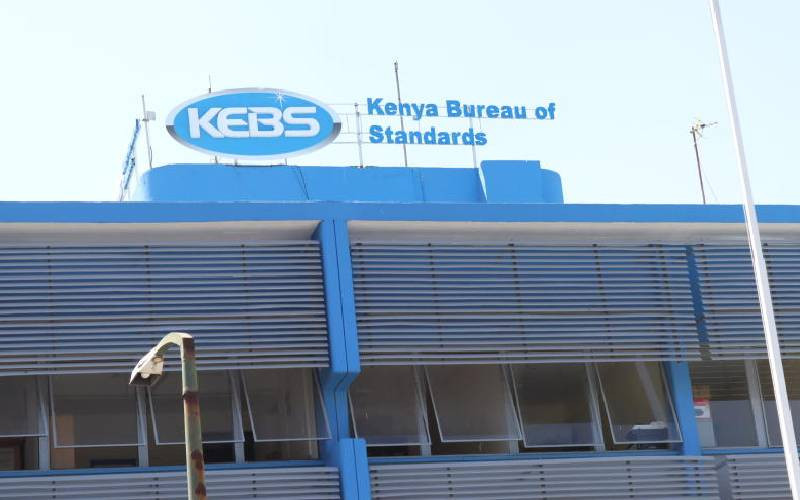
The High Court has intervened to halt the government from enforcing a new standards levy issued by the Kenya Bureau of Standards, following a legal challenge by the Green Thinking Action Party over its legality and impact on businesses.
The temporary order ensures that the levy will not take effect until the court completes a full hearing of the petition, which raises questions about fairness, constitutional compliance, and the levy’s sudden expansion to new sectors.
The case targets Legal Notice No. 136 of 2025, which sharply increased the monthly standards levy for certain manufacturers and extended its scope to include industries previously excluded.
These changes have sparked controversy, with critics arguing that the government is overstepping its regulatory authority and imposing burdens that were never intended under the original standards levy framework.
The petitioners claim that the Standards (Standards Levy) Order, 2025 imposes charges that are excessively high and inconsistent with its original purpose of supporting standardisation, quality control, and laboratory testing.
They say the notice unlawfully labels sectors such as energy generation, software development, computer engineering, and dry cleaning as “manufacturers,” a move they describe as arbitrary and punitive.
The petition challenges the levy increase, which ranges between 900 per cent and 1,400 per cent, asserting that it is unconstitutional, unreasonable, and discriminatory.
The party cites Article 201 of the Constitution, arguing that the legal notice shifts the levy from a tool for promoting standards to a mechanism for raising revenue.
In its interim ruling, the court instructed that the current situation be maintained, effectively preventing KEBS from collecting the new charges until the matter is decided.
“The interim status quo orders are hereby granted with respect to prayer number (b) of the Notice of Motion Application pending mention for further directions on January 16, 2029,” the ruling states.
GTAP also criticised the process behind the Legal Notice, noting it was enacted without proper public consultation or a Regulatory Impact Assessment, which they say violates Article 10 of the Constitution and the Statutory Instruments Act.
According to the petition, the new levy departs from the original 1990 Standards Levy Order, prioritising revenue over the intended goal of improving standardisation and quality management.
The party warned that the financial burden of the levy could devastate manufacturers and businesses now classified as manufacturers, potentially causing closures, widespread job losses, and serious harm to families dependent on these sectors.
They also argued that keeping the interim orders would not harm the government, as the existing legal framework remains enforceable.
The updated levy calculation is based on 0.2 per cent of monthly sales after deducting VAT, excise duty, and applicable discounts, compared to the previous system of 0.2 per cent of the ex-factory price, capped at Sh400,000 annually.
The new legal framework raises the cap to Sh4 million for the first five years and Sh6 million for the next five years, with payments to be made through KRA’s iTax platform by the 20th of the following month.
GTAP criticised the ministry for focusing solely on revenue, with little or no benefit for the industries paying the levy.
“This is unprecedented, illegal, unreasonable and irrational, and goes against the legitimate expectation that adjustments of such rates would be progressive rather than drastic,” GTAP deputy secretary-general Harrison Ochieng said.
He noted that KEBS’ revenue is expected to double from Sh700 million to about Sh1.4 billion under the new levy.
“Manufacturers would not benefit in any way from what is a punitive and illegal levy,” he added.
The party also condemned the ministry for deliberately widening the definition of manufacturers to include non-traditional sectors such as energy, software, computer engineering services, and dry cleaning.
GTAP said the government has deviated from the original purpose of Legal Notice No. 267 of 1990, which was meant to promote standardisation, measurement skills, quality control, and laboratory testing.
“KEBS has illegally and deliberately expanded the class of manufacturing industries to include well-performing non-manufacturing sectors, including activities in the primary, tertiary, and quaternary sectors,” Ochieng said.
The notice affects sectors including building and construction, textiles, mechanical and electrical engineering, food, agriculture, and chemicals.
The petition also noted that the government introduced fees for the sale of standards, laboratory tests, metrology services, certification marks, training, seminars, and royalties from contractors without a legal basis.
“As such, Legal Notice No. 136 of 2025 is materially defective, inconsistent, and misrepresents the objectives of the original 1990 enactment. It amounts to a dangerous statutory overreach designed to favour KEBS’ revenue-raising objectives,” the petition concludes.




Comments
Sign in with Google to comment, reply, and like comments.
Continue with Google