Kenya is moving with speed to build strong partnerships with development partners as it pushes to become a first-world economy within a generation under President William Ruto’s Bottom-Up Economic Transformation Agenda.
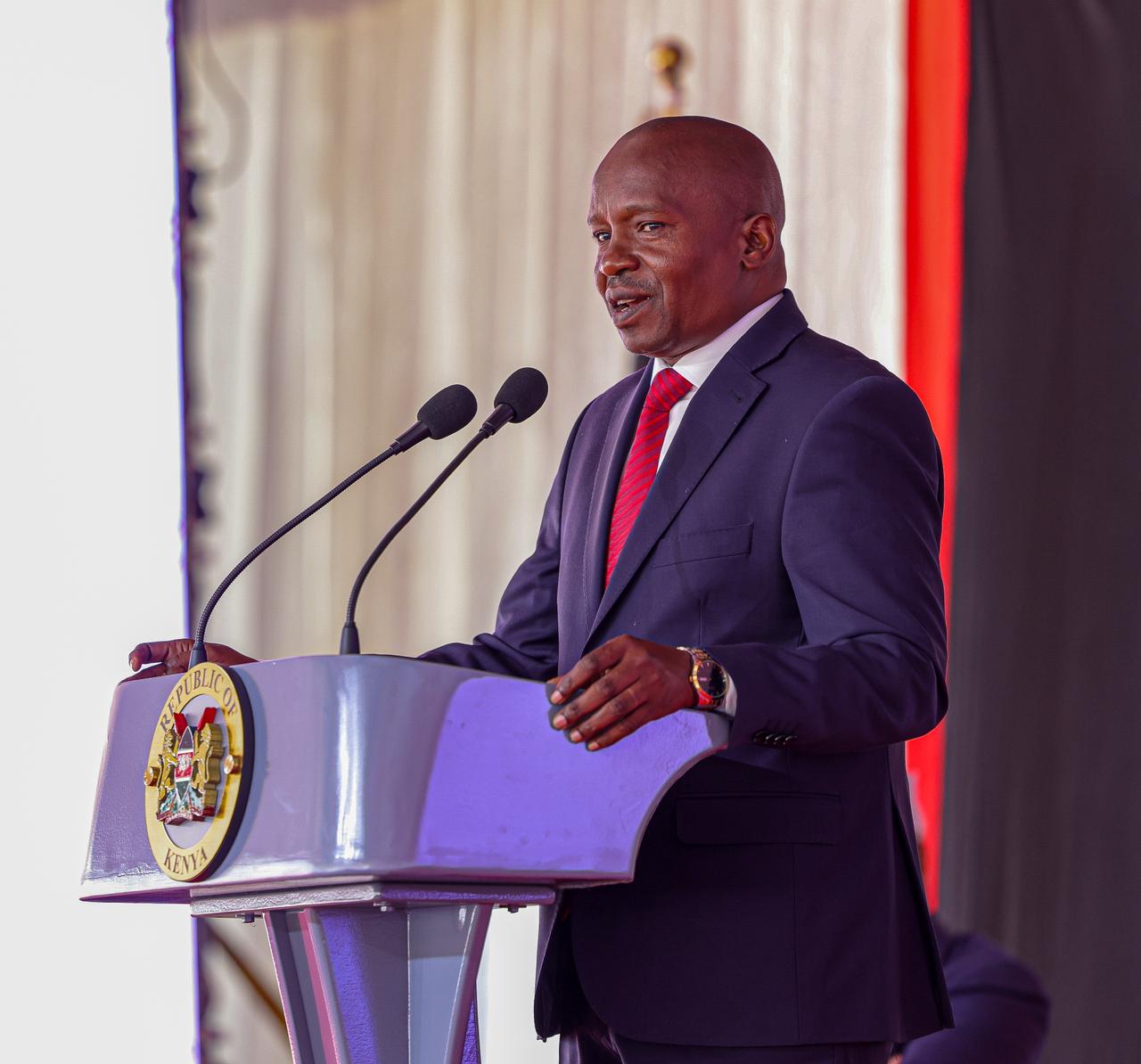
Deputy President Kithure Kindiki said the government is reshaping its development plans to bring all institutions, partners and resources together under one shared goal of national transformation. He spoke on Wednesday during the opening of the 14th Development Partners Forum in Nairobi.
Kindiki said the plan is centered on agriculture and water, infrastructure, and energy, and powered by people, technology and strong public-private partnerships. He noted that the government wants faster and more focused action to unlock growth across all sectors.
“Our next vision is clear: to transform Kenya into a first-world economy within a generation. We are persuaded beyond doubt that if other countries elsewhere have done it, Kenya has what it takes to do it as well,” Kindiki said, pointing to South Korea, Malaysia and Singapore as countries that made the journey. “There is absolutely no reason why Kenya cannot do it.”
He dismissed claims that the government has moved away from BETA, saying it remains the main guide for national development.
“We have not abandoned BETA. We want Kenya to move into first-world economic status within one generation, and the paradigm that will take us there is the Bottom-Up Economic Transformation Agenda,” he said.
The Deputy President said agriculture remains the quickest way to lift millions of Kenyans out of poverty, revealing that about 20 million people are still living below the poverty line. To address this, the government plans to invest heavily in water harvesting to support irrigation and make farming more reliable.
He said the plan includes the construction of 50 mega dams, 200 mid-sized dams and about 1,000 mini-dams across the country.
“This will make agriculture reliable, strengthen food production, reduce food imports and create millions of jobs across the value chain,” Kindiki said.
On infrastructure, he said the government will speed up the expansion of roads, railways, ports and airports using public-private partnerships and other new financing options. He noted that strong infrastructure is key to opening up the economy and supporting growth.
In the energy sector, Kindiki said Kenya is aiming to add 7,000 megawatts of electricity to support industry and job creation. He warned that slow progress would delay the country’s ambitions.
“If we go at the pace we are going, we will not reach where we want to reach,” he said.
To fund the wide-ranging agenda, the Deputy President said the government is close to completing the legal setup for a Sovereign Wealth Fund and a National Infrastructure Fund. He explained that the funds will help Kenya plan for the future while protecting the economy from shocks.
“The Sovereign Wealth Fund will secure resources from extractive industries to cushion the country against shocks such as climate change and pandemics, while investing in long-term infrastructure for future generations,” he said.
Kindiki also highlighted key foundations needed for success, including national security, integrity, the fight against corruption and investment in human capital. He said values and discipline are critical for lasting progress.
“Unless we instill integrity, patriotism and respect for the rule of law in ourselves and the younger generation, this transformation will falter,” he said.
He urged development partners to align their projects with Kenya’s priorities and to renegotiate or adjust programs that do not deliver results. He cited the World Bank-supported NYOTA youth program as a strong example because it focuses on jobs, skills, savings and entrepreneurship.
Kindiki said projects that are inactive or not aligned with national goals will be reviewed, restructured or retired to ensure faster and clearer impact for Kenyans.































Comments
Sign in with Google to comment, reply, and like comments.
Continue with Google