Turkana Assembly opens doors for refugee civic engagement
The revision aligns with Kenya’s broader refugee inclusion agenda under the 2021 Refugees Act, which promotes participation, integration, and access to services.
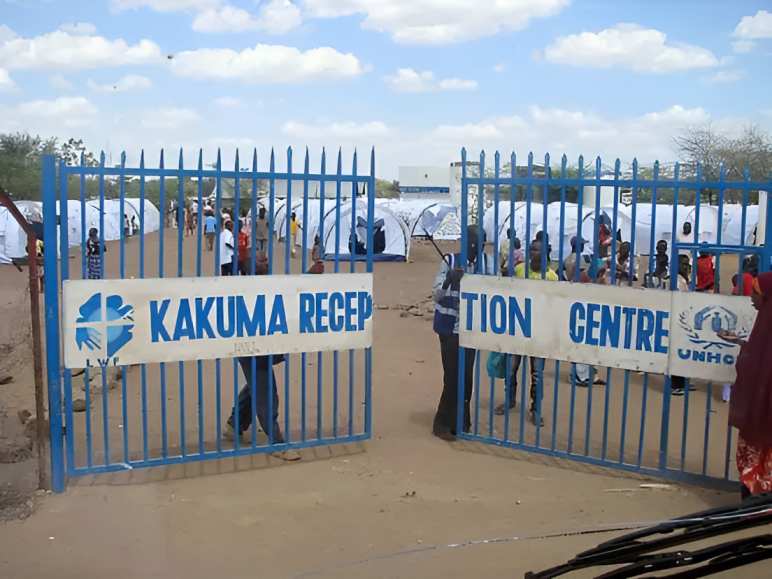
Refugees in Kakuma can now formally present petitions to the Turkana County Assembly, marking a major step toward their inclusion in local governance.
The move comes after amendments to the assembly’s standing orders, which now explicitly recognise refugee issues as part of the county’s legislative and oversight responsibilities.
The revision aligns with Kenya’s broader refugee inclusion agenda under the 2021 Refugees Act, which promotes participation, integration, and access to services.
According to the amended provisions, the county assembly will now consider “all matters relating to constitutional affairs, the administration of law and justice, including ethics, integrity, anti-corruption campaigns, human rights, and refugee affairs… including inclusion, local integration, and oversight of relevant policy and legal frameworks; facilitate refugee participation in county development planning.”
Before this change, refugees were effectively excluded from formal engagement because petition forms demanded a Kenyan national identity card, leaving many without a platform to influence policies that directly affect them.
Mitchel Ambasu, Refugee Consortium of Kenya (RCK) Kakuma operations field coordinator, said the barrier had long prevented meaningful participation.
“More often than not, the county assembly conducts public participation forums on specific policies meant to guide county operations,” he said.
“But we realised that when refugees wanted to petition, the form did not provide an avenue for them because it required only a national ID. The county assembly, in its wisdom, consulted and agreed to amend the standing orders.”
The new forms now allow refugees to use their refugee identification cards, officially opening the door for them to engage in civic and policy matters. “This is best practice,” Ambasu said, adding that RCK hopes other counties hosting refugees will adopt similar reforms.
The amendment is among the early achievements of the Inclusive Refugee Response Programme (IRRP), a policy-driven initiative by RCK supporting government-led inclusion at national and county levels. Kakuma, located in Turkana West, is home to over 185,000 refugees and asylum seekers from more than 20 countries, according to UN data.
While the Refugees Act 2021 provides a progressive legal framework for protection and inclusion, its implementation is uneven, particularly in counties hosting large refugee populations.
Ambasu pointed out that legal and administrative barriers—especially documentation requirements—continue to limit access to essential services.
“When you look at the chain of processes, you realise that these barriers still hinder refugees from accessing essential services,” he said, noting that Section 34 of the Act, which addresses local integration, is particularly complex.
“It requires extensive consultations because responsibilities are split between national and county governments,” he explained. He also identified the Refugee Advisory Committee as an underutilised platform that could address systemic challenges across ministries.
“If the committee were to sit more regularly, it would be extremely useful in addressing issues around education funding, healthcare access and documentation,” Ambasu said.
The IRRP, supported by the Danish Embassy and other partners, aims to strengthen legal and institutional frameworks so refugees and host communities can access services through mainstream systems rather than parallel humanitarian structures.
Its main objective is to integrate refugees into national and county service delivery, moving away from refugee-only institutions.

Comments
Sign in with Google to comment, reply, and like comments.
Continue with Google