Kenyan families urge state action over alleged recruitment into Russian army
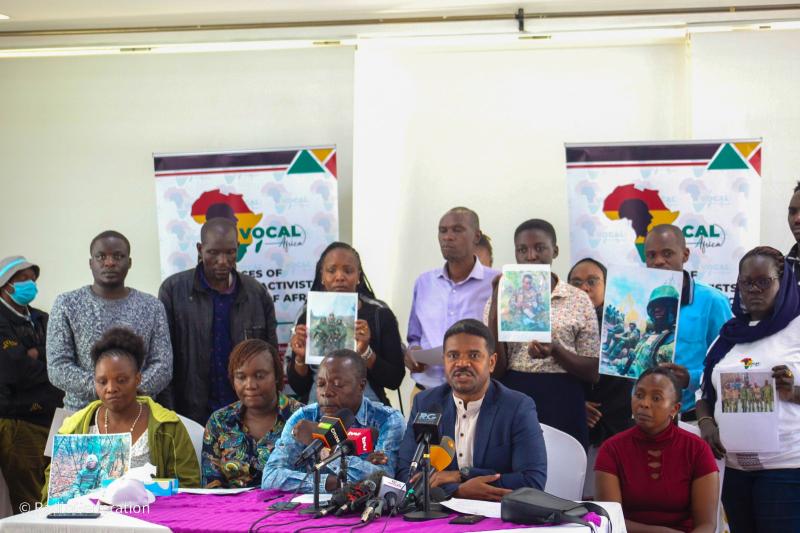
VOCAL Africa, led by their CEO Hussein Khalid and affected families, said Kenyans had been lured, deceived and, or coerced into dangerous military engagements, after travelling abroad in search of work.
Families of Kenyans allegedly recruited into the Russian army have called on the government to act, warning that citizens were deceived with promises of work abroad.
Rights group VOCAL Africa said the issue is a national crisis, with deaths reported and many families left without support or information.
In a press statement issued on Tuesday in Nairobi, human rights group VOCAL Africa, led by their CEO Hussein Khalid and affected families, said Kenyans had been lured, deceived and, or coerced into dangerous military engagements, after travelling abroad in search of work.
The group said a government policy aimed at helping Kenyans find employment overseas had been misused by criminal networks, who exploited unemployment and desperation.
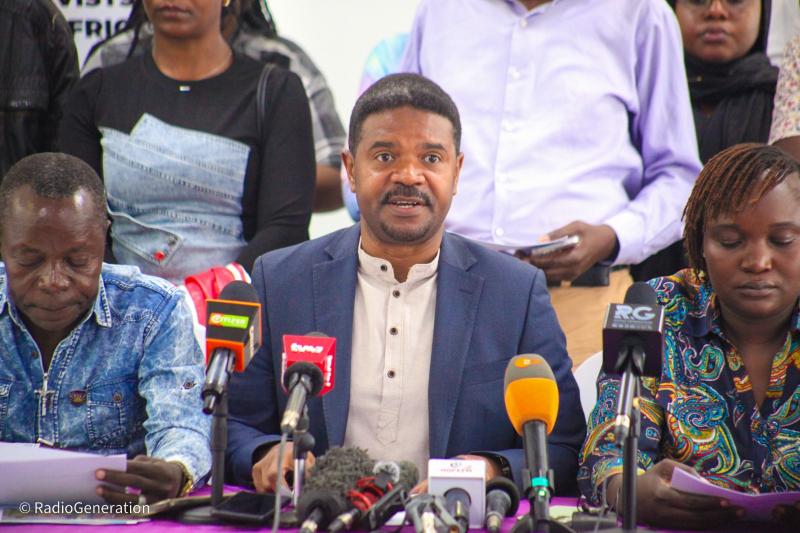 VOCAL Africa CEO Hussein Khalid addressing the media in Nairobi on Tuesday, January 27, 2026.PHOTO/Mohammed Islam/RG
According to the statement, victims were promised legitimate jobs, only to find themselves in active combat zones, including recruitment into the Russian army, “often without full knowledge or informed consent”.
“This is a national crisis. Kenyans have been trafficked into war,” the statement said. “Families are grieving, some Kenyans have lost their lives, others remain stranded in hostile conditions with no access to help.”
VOCAL Africa said the situation exposed a serious failure of protection and oversight by the government, stressing that the state’s responsibility to its citizens does not end at the border. “Citizenship does not end at the border,” the statement added.
Since the Russia–Ukraine war expanded in 2022, reports emerged that foreign recruitment networks have been targeting economically vulnerable Kenyans with promises of high-paying jobs abroad, only for some to end up enlisted in the Russian army or labour forces tied to the conflict.
According to the Kenyan government, more than 200 of its citizens may have joined the Russian military since the conflict began, with recruitment networks described as active in both Kenya and Russia.
Officials say the recruitment often occurs under the guise of legitimate employment opportunities, with young men promised non-combat roles, travel and high salaries before being misled or coerced into signing contracts that lead to active military service.
The situation has drawn increasing concern from Nairobi, with the Ministry of Foreign Affairs warning that some recruited Kenyans have been injured, detained in military camps or stranded in conflict areas.
In September 2025, a multi-agency security operation in Athi River rescued 21 Kenyans who were reportedly being processed for deployment.
Speaking during the meeting at a Nairobi hotel, several families shared personal testimonies of loss and uncertainty.
Grace Gathoni, whose husband was killed in the Russia-Ukraine war last year, said her attempts to seek help had gone unanswered.
She said she lost her husband on November 27 and had repeatedly contacted the State Department for Diaspora Affairs.
According to her testimony, “the government keeps on telling her to wait,” as she pleaded with President William Ruto to help repatriate her husband’s body.
Another parent, Peter Kariuki, said his 28-year-old son, a trained driver, was recruited into the Russian army in July 2025.
“I used to communicate with him on WhatsApp through a strange Russian number,” he said.
After training, communication stopped, and weeks later he learned his son had broken his right hand.
Kariuki said his son told him that “more than 500 Kenyans have been recruited in the Russian Army to help in the Russia-Ukraine War”.
Pauline Rume, a mother from Kilifi County, said her husband left home on October 11 2025 after securing a driving job in Russia.
She said he had signed a one-year contract, “only to be recruited in the Russian Army.”She added: “Our kid can’t go to school now because the father is no longer sending money back home.”
VOCAL Africa’s Rapid Response Officer, Fredrick Ojiro Odhiambo, said the organisation was supporting affected families while seeking clarity.
“We are working with the affected families to ensure that the families are protected. We want to deduce our facts right. We are engaging with our partners to ensure that these families are protected,” he said.
The group issued a list of demands, including the creation of a national hotline, dedicated desks at the Ministry of Foreign and Diaspora Affairs and Kenya’s embassy in Russia, and action against recruitment agents involved.
They also called for verified statistics on Kenyans travelling to Russia and state-facilitated repatriation of both survivors and the remains of those who have died.
“We remind the Government of Kenya that protecting the lives, dignity and welfare of its people is not optional,” the statement said. “The responsibility is clear. The duty is non-negotiable. The time to act is now.”
Government action has included diplomatic and consular efforts to bring affected citizens home.
By late 2025, Kenya had safely rescued and repatriated 18 of its nationals from Russia who had been caught up in the war, some with serious injuries, according to official reports.
The returnees were brought home through coordinated work by the Ministry of Foreign and Diaspora Affairs and Kenya’s embassy in Moscow, which issued emergency travel documents and provided support.
Kenyan authorities have also vowed to crack down on unscrupulous recruitment agents, arresting at least one individual linked to trafficking citizens under false job offers.
Foreign Affairs officials have urged Kenyans to verify overseas employment opportunities through accredited bodies such as the National Employment Agency and the Ministry of Labour to avoid exploitation.
The government’s response reflects a broader effort to safeguard its citizens abroad, involving diplomatic engagement, rescue and repatriation operations, and regulatory warnings against illegal recruiters, but concerns remain about the true scale of recruitment and the welfare of those still abroad.




Comments
Sign in with Google to comment, reply, and like comments.
Continue with Google