A look into Ruto, Sakaja's Sh80 billion plan to fix Nairobi
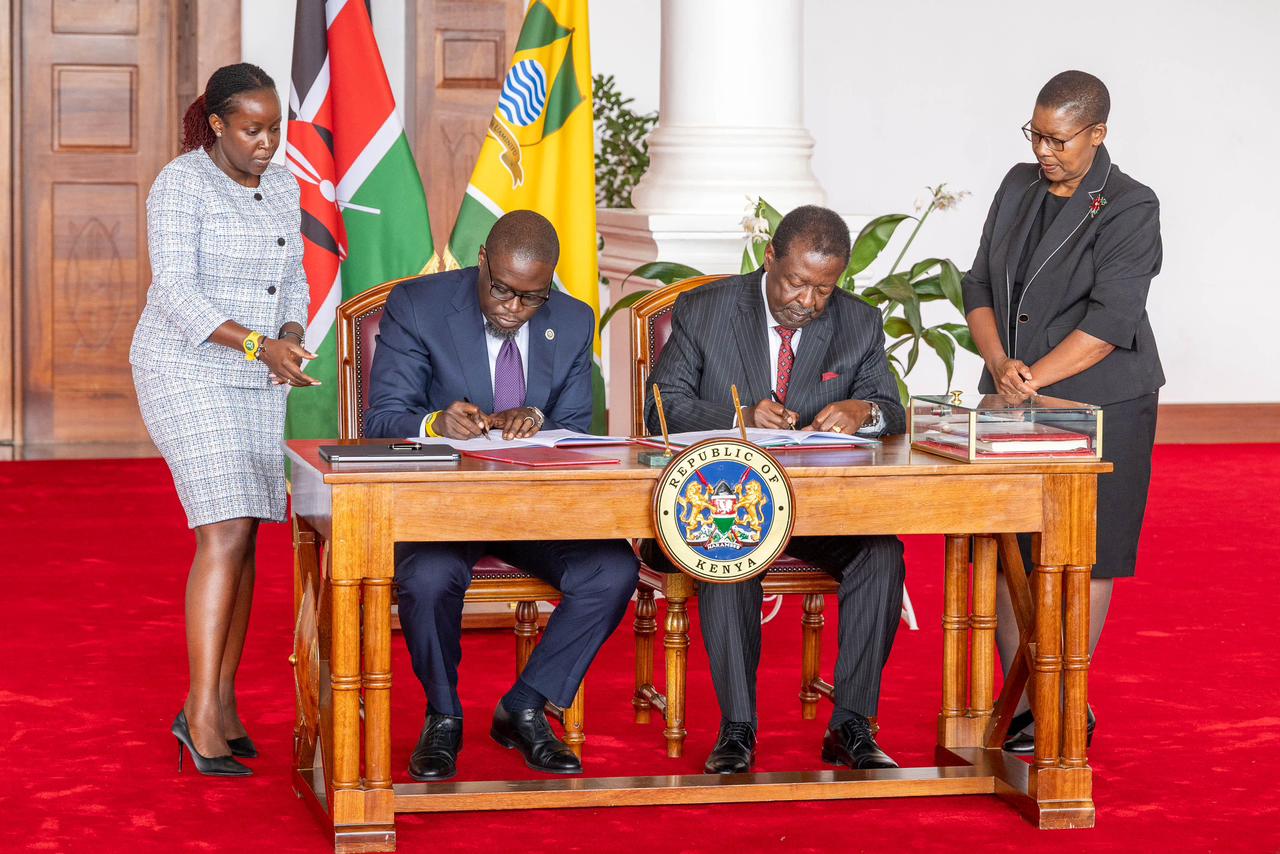
The agreement becomes the second formal intervention by the central government in Nairobi since devolution began. Although counties enjoy constitutional autonomy in self-administration, and Article 187 provides for transfer of functions, this arrangement leans on Article 189, which requires cooperation between the two levels of government.
In a city where traders brace for losses whenever it rains and entire neighborhoods slip into darkness after sunset, a new Sh80 billion deal now promises relief.
At State House on Tuesday, President William Ruto, joined by leaders of the Nairobi County Assembly, several Cabinet Secretaries and Principal Secretaries, unveiled a far-reaching cooperation agreement between the National Government and Nairobi City County.
The framework seeks to repair broken systems and reposition the capital as a city that works for its residents.
The agreement becomes the second formal intervention by the central government in Nairobi since devolution began. Although counties enjoy constitutional autonomy in self-administration, and Article 187 provides for transfer of functions, this arrangement leans on Article 189, which requires cooperation between the two levels of government.
Ruto moved quickly to dismiss talk of a takeover. “This is not a transfer of functions…I have no interest in running Nairobi, let Sakaja and his people do their work,” he said, maintaining that the county retains its mandate.
Governance Structure and Oversight
The cooperation deal is aimed at strengthening county functions and improving efficiency in service delivery. It follows the 2020 intervention when former President Uhuru Kenyatta brought in retired Major-General Mohamed Badi to run Nairobi Metropolitan Services after former Governor Mike Sonko handed over key functions.
Unlike that arrangement, the current format does not create a parallel agency. Instead, a steering committee has been formed to guide implementation. It will be chaired by Prime Cabinet Secretary Musalia Mudavadi, with Governor Johnson Sakaja serving as vice chair.
Members include Interior CS Kipchumba Murkomen, Treasury CS John Mbadi, Cabinet Secretaries responsible for Lands, Environment, Energy and Water, alongside two attorneys. The committee will sit quarterly.
An implementation committee chaired by Sakaja will handle execution on the ground.
The agreement states that it will take effect fourteen days after signing and remain in force for an initial 24 months, subject to renewal. It will now be forwarded to the Nairobi County Assembly to facilitate public participation within 14 days. Either side may terminate it through mutual consent or by issuing a six-month notice.
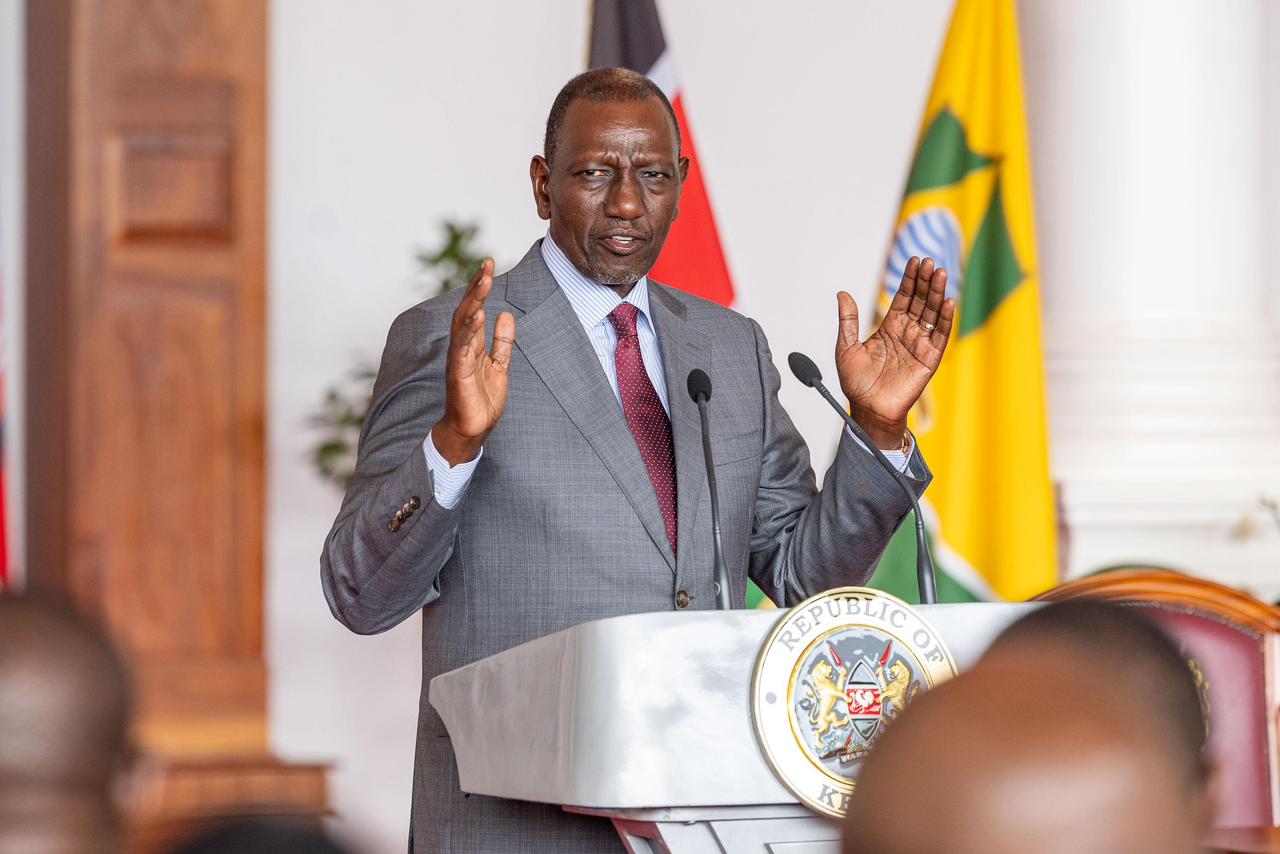 President William Ruto speaking at State House, Nairobi on February 17, 2026.PHOTO/PCS
Financing Debate and Capital Demands
Even as Nairobi recorded more than Sh12.1 billion in own-source revenue in the 2024/25 financial year, questions have persisted about its financial management and ability to meet the demands of a fast-growing capital.
Under the pact, the National Government will inject Sh80 billion, nearly four times what the county received in the current financial year. Both levels of government will jointly agree on financing modalities and funding sources for each project.
“The fiscal and operational framework of the county’s financing was not designed for a capital city of this scale and responsibility. Nairobi carries national, regional and global obligations, but is funded largely through the same formula as other counties,” Ruto said, arguing that the funding model must reflect the city’s unique status.
Governor Sakaja said the capital has not fully benefited from its position. “In the 13 years of devolution, Nairobi City County has not had the opportunity to benefit and leverage from its uniqueness as a capital city to get special attention to get support and resources for its people.”
Roads and Flood Control
Flooding remains one of Nairobi’s most visible challenges. The President directed that Sh1 billion be specifically allocated for drainage upgrades.
“We will provide Sh1 billion dedicated to drainage improvement. We all know what happens to Nairobi City when it rains, and my instructions to both the Ministry of Infrastructure and Roads and Housing are that we do not want a flooded city this year,” he said.
“You have to move with speed that we do what we have to do. If there will be any flooding, it should be minimal; by next year, we should have corrected the problem that we have.”
The broader roads, bridges and drainage programme carries Sh8.7 billion. Sh2 billion will complete Phase One of Kenya Urban Roads Authority projects within two months. Phase Two, covering 57 kilometres, begins in April with Sh1.7 billion, while Phase Three valued at Sh5 billion will be processed within the current financial year.
A Sh5 billion Mobility and Safety Programme, supported by Sh3.7 billion from the county, will further expand road networks across wards.
Water and Sewer Expansion
To tackle water shortages and leakages, Sh2.1 billion will be invested at Ng’ethu Treatment Plant to stop daily losses estimated at 50,000 cubic litres. Another Sh3 billion will strengthen supply along the Gigiri-Shauri Moyo corridor. Long-term projects such as Maragua IV and Northern Collector II are being mobilised to secure future stability.
On sanitation, Sh9 billion has been set aside for a 27-kilometre sewer line in the northern corridor. Further funding will support treatment capacity and wider sewer expansion across the city, alongside last-mile connectivity.
Lighting and Electricity Reform
Out of roughly 70,000 street lights in Nairobi, only about 21,000 are functional. Sh3.7 billion will modernise and expand the network.
“We will complete 10,000 and install an additional 40,000 light points,” Ruto said, adding that solar systems will be introduced to reduce power costs.
Illegal power connections, particularly in informal settlements, will also be dismantled. “It is not right that some residents in some parts of Nairobi live in darkness,” he said.
“If there are illegal power connections, we should do away with them and conduct legal connections because illegal connectors are charging residents more than what the rest of Nairobians are paying.”
Sh1.5 billion will fund transformers and last-mile connectivity to regularise supply.
Waste Management and Security
The pact allocates Sh4 billion toward waste management facilities, including land for recovery centres and transfer stations, with additional national support for circular waste systems.
Security measures are also part of the framework, with plans to establish a Nairobi Metropolitan Police Unit to work alongside city enforcement officers in restoring order.
The cooperation agreement signals both support and scrutiny for City Hall, which has faced years of administrative and financial challenges. While leaders insist it is collaboration rather than control, the scale of funding and national oversight underscores the pressure to deliver results.
With the agreement now headed to the County Assembly for public participation, Nairobi residents will be watching closely to see whether this latest intervention finally delivers the reliable services and stability the capital has long demanded.




Comments
Sign in with Google to comment, reply, and like comments.
Continue with Google