Communication Authority unveils draft rules to overhaul internet telephony services
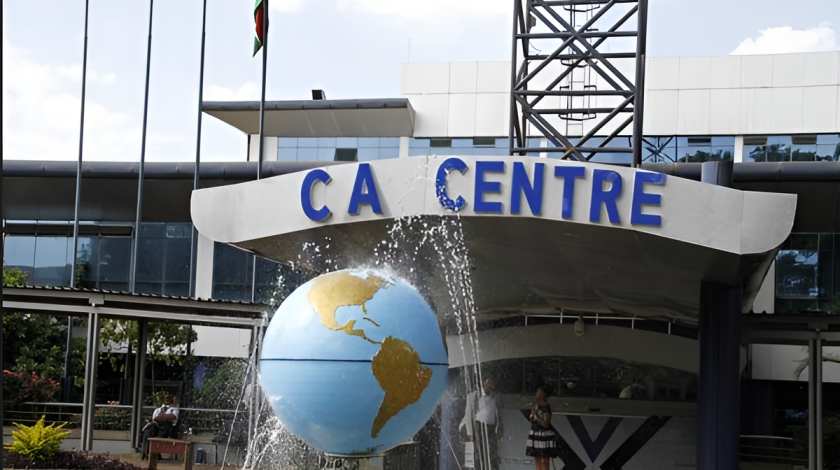
The regulator explained that the draft guidelines are designed to support its broader mandate in overseeing telecommunications, cyber security, broadcasting and consumer protection
Kenya’s communications regulator has unveiled a fresh set of draft rules that could reshape how commercial internet calls are offered and managed in the country, and is now seeking views from the public and industry players before the framework is finalised.
In a notice issued on Tuesday, the Communications Authority of Kenya invited ICT stakeholders and members of the public to review the Draft Technical and Operational Guidelines for Commercial Internet Telephony Services, 2026. The proposed framework is set to replace the 2005 rules that have guided Voice over Internet Protocol services for the past two decades.
In its notice, the Authority stated that the new document is intended to “replace Guidelines for the implementation and provision of Voice over Internet Protocol (VoIP) services, 2005.” It said the changes are part of efforts to align regulation with developments in the sector and to strengthen oversight within Kenya’s fast-growing digital communications space.
The regulator explained that the draft guidelines are designed to support its broader mandate in overseeing telecommunications, cyber security, broadcasting and consumer protection. The document outlines requirements on licensing, technical deployment, service quality, caller identification and compliance obligations for providers.
The framework focuses on a hybrid internet telephony model, where calls either begin on traditional telephone networks and end on IP networks, or originate on IP systems and terminate on conventional networks. End-to-end IP services that are self-provisioned are not included under the proposed rules.
According to the draft, the guidelines aim to close technical and operational gaps within the current Unified Licensing Framework while ensuring that all providers operate within a clear regulatory structure.
Under the proposals, companies offering commercial internet telephony services within Kenya will be required to obtain an Application Service Provider licence. Operators involved in the termination, transit or origination of international internet calls must hold an International Gateway Systems and Services licence. The Authority says this structure will provide clarity and ensure proper supervision of cross-border voice traffic.
The draft also sets out strict technical standards. Providers will be required to deploy services using Internet Protocol Version 6 and related emerging technologies built on the same platform.
To safeguard quality, the guidelines introduce detailed Quality of Service measures such as Differentiated Services Code Point marking, priority queuing, traffic shaping, jitter buffers and class-based queuing. The minimum performance targets include packet loss below 1 percent, one-way delay under 150 milliseconds, latency below 100 milliseconds and jitter under 20 milliseconds. The Authority notes that these benchmarks are in line with international standards, including those of the International Telecommunication Union for real-time voice communication.
Traceability is another key feature of the draft. Systems must allow authorities to trace the IP address of the originating call, review airtime top-up patterns, access IMEI numbers registered on networks and monitor settlement patterns between interconnected operators.
The guidelines also introduce firm caller identification rules. All commercial internet calls must display valid Caller Line Identification information, and only calls with valid CLI data will be allowed for transmission or termination.
Numbering resources assigned to providers must be used strictly within Kenya and cannot be transferred to other countries. In addition, numbers designated for local internet telephony termination must be configured within the systems of licensed Kenyan operators.
Under the proposed regime, calls between subscribers of Kenyan telephony providers will be treated as local calls, regardless of where the users are physically located, and will attract local interconnect rates. However, calls originating from non-Kenyan providers to Kenyan subscribers will be classified as international and subject to commercial interconnect rates.
Commercial internet telephony providers will be required to deliver only calls with valid CLI, operate networks in line with the guidelines and ensure subscriber registration complies with existing telecommunications regulations.
At the same time, operators of Public Switched Telephone Networks and Public Land Mobile Networks will be expected to terminate only calls with valid CLI, block those without proper identification and flag or report suspected manipulated or invalid identifiers.
Once adopted, the 2026 guidelines will formally repeal the 2005 VoIP framework, bringing an end to the earlier regulatory model.
The Communications Authority has asked stakeholders to submit written comments via email by March 30, 2026, as indicated in the notice. The draft documents are available on the Authority’s website under open consultations.
According to the regulator, the reforms are intended to foster innovation, encourage fair competition and strengthen consumer protection as Kenya’s digital communications sector continues to evolve.




Comments
Sign in with Google to comment, reply, and like comments.
Continue with Google