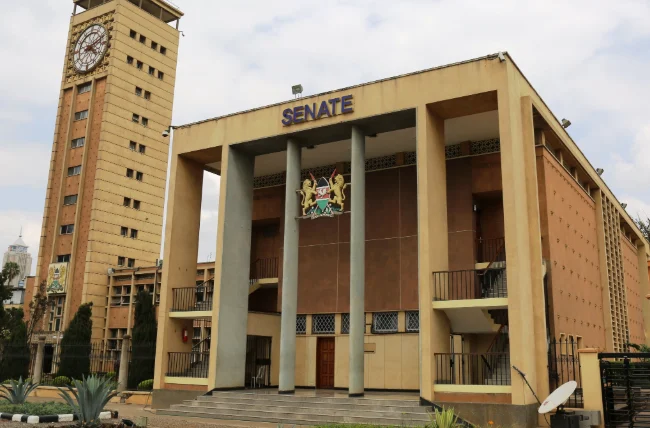
County hospitals across the country are facing mounting pressure as delays in health insurance payments, unresolved claims, and staffing gaps continue to strain service delivery and push facilities into financial distress, according to a Senate report that warns of a fragile system in need of urgent correction.
The report by the Senate County Public Investment and Special Funds Committee points to widespread disruptions in the management of claims under the Social Health Authority, noting that hospitals are struggling to keep operations steady due to delayed reimbursements and frequent rejection of submitted claims, even where documentation has been provided.
“The combined effect of delayed payments, rejected claims and systemic inefficiencies has severely undermined service delivery in our public hospitals,” the report states.
The committee notes that many facilities continue to experience rejected claims without clear reasons, while responses on disputed submissions often arrive late, leaving hospitals without a clear way forward. This has been worsened by transition challenges from the National Health Insurance Fund to SHA, which disrupted payment systems and slowed down claim processing.
“There is a high rate of claim rejections despite the health facilities providing adequate supporting documentation,” committee notes “Feedback on rejected claims is often delayed well beyond the statutory period, leaving facilities without recourse.”
In several counties, the financial pressure is already visible in unpaid balances running into millions of shillings. In Makueni County, Makueni County Referral Hospital is owed Sh35.29 million, Makindu Subcounty Level 4 Hospital has Sh50.59 million pending, while Sultan Hamud Subcounty Level 4 Hospital is waiting for Sh34.80 million in outstanding claims.
The report also highlights a deeper backlog linked to both SHA and the defunct NHIF, with some payments remaining unsettled for years. In Laikipia, Nanyuki Teaching and Referral Hospital is still waiting for old claims tied to discontinued NHIF programmes, with no formal communication from SHA on how the issue will be resolved.
“The failure to recover these amounts adversely affects the hospitals’ ability to procure medicines and meet operational obligations,” the report states.
Senators are now urging immediate action from the National Treasury to settle verified NHIF arrears, estimated at up to Sh10 billion, warning that continued delays risk further weakening already strained health facilities. They also want SHA to enforce strict timelines for payments and improve transparency in how claims are handled.
“The Principal Secretary for the National Treasury… should urgently settle all verified NHIF arrears or develop a clear, time-bound repayment framework within three months,” the committee recommends.
Beyond financial pressure, the report also highlights severe staffing shortages across county hospitals, noting that many facilities are operating below the minimum requirements under the Kenya Quality Model for Health (KQMH). The lack of specialists and essential health workers is further limiting service delivery and increasing pressure on existing staff.































Comments
Sign in with Google to comment, reply, and like comments.
Continue with Google