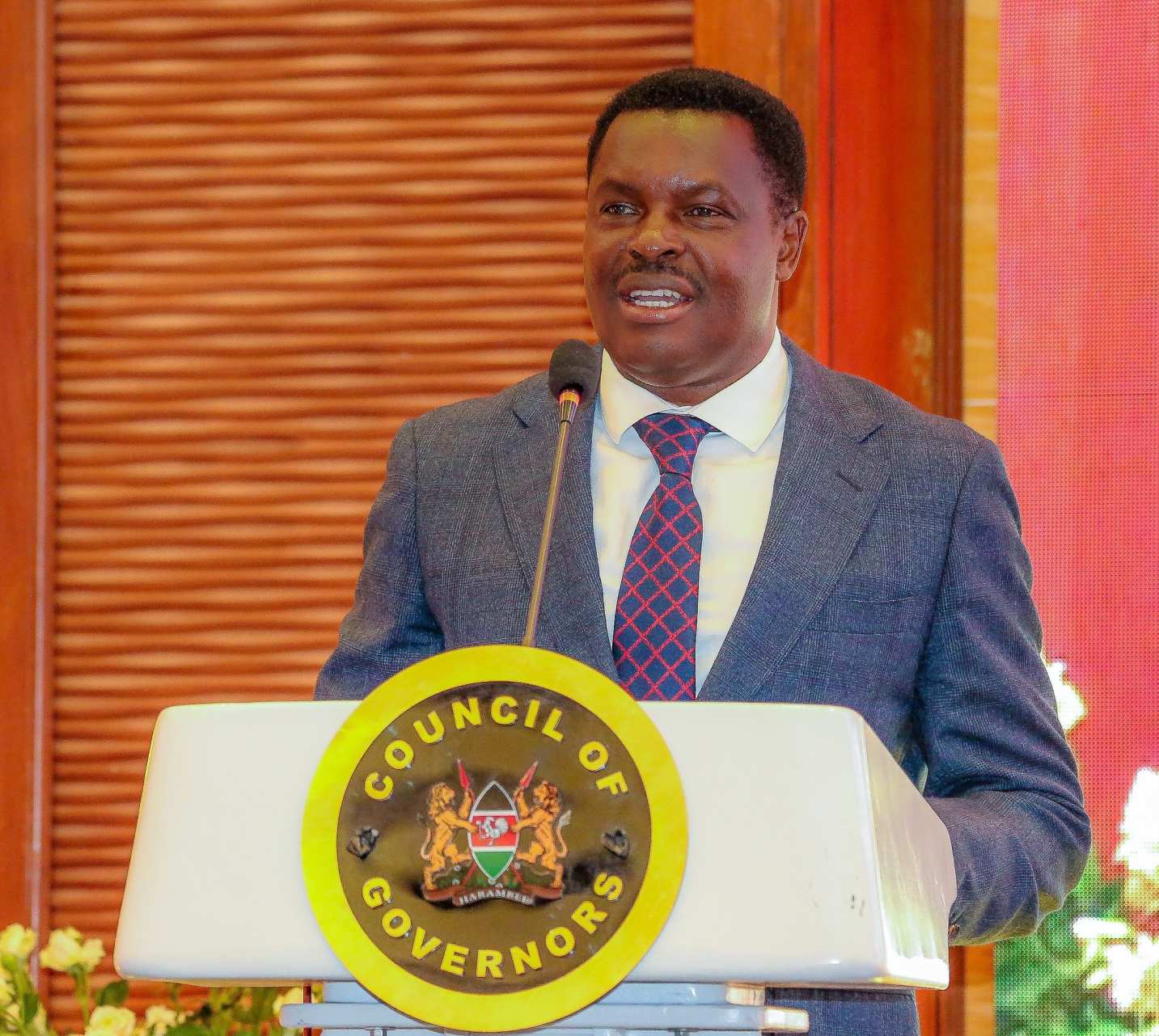
Tharaka Nithi Governor Muthomi Njuki has urged the national government to share park revenues with counties that experience the direct impact of wildlife, saying local communities shoulder the brunt of human–animal conflicts but gain little from tourism.
He stressed that Tharaka Nithi, which borders Meru National Park extensively, deserves a fair deal similar to arrangements in Narok and Kajiado counties with Maasai Mara and Amboseli parks.
“We have Meru National Park, the longest boundary of all the counties that border Meru National Park is the Tharaka Nithi county boundary,” Njuki said.
“That is why we have asked the President that when he is considering the other counties that have national parks for partnership, we are the people who suffer the most consequences when elephants stray from the park.”
The governor noted that residents frequently face crop destruction and injuries when animals leave the park, yet the county does not benefit financially. Njuki emphasized that a partnership would recognise the critical role local communities play in keeping wildlife contained and reducing conflicts.
“So if there are people who deserve partnership, are the people of Tharaka Nithi,” he said.
“We do not want to have the whole park, but we want to share the revenue between the Ministry of Tourism and us, Tharaka Nithi county, us who are preventing elephants from straying from the park.”
Njuki made the remarks during Jamhuri Day celebrations at the new Kajiunduthi Stadium in Muthambi Ward, Maara Constituency.
He encouraged local leaders to champion the proposal at the national level, specifically calling on Maara MP Kareke Mbiuki, chair of the National Assembly Tourism and Wildlife Committee, to support the initiative.
The governor also condemned rampant deforestation in Kiera Hills and other parts of the county, calling out those cutting indigenous trees.
“We have people who are cutting indigenous trees in Kiera Hills and other hills around here,” he said.
“Those cutting trees are the ones making Tharaka Nithi start becoming a desert.”
He questioned why government officials have allowed forest destruction to continue, noting that all hills and forests are public land.
“There’s not a single mountain that has an individual’s title deed. That mountain belongs to the government 100 per cent, so how are people getting into government land and cutting trees?”
County Commissioner David Gitonga backed Njuki, warning that anyone involved in illegal logging or charcoal burning would face tough consequences.
“If you are found destroying trees in the forest, be on the lookout, I will personally be on the frontline to come deal with you,” Gitonga said, citing repeated fires in Kiera Hills. He also raised concerns about improperly issued charcoal permits and called for a more active county environment committee.
In addition to environmental issues, Gitonga highlighted a worrying rise in teenage pregnancies, describing it as criminal and unacceptable.
“How does a child below 18 years get pregnant?” he asked, referencing the Children Act. He said over 100 cases had been reported and warned that investigations would follow.
“I’m warning you, we will follow up on those cases, I will come for you,” he said, noting that parents would also be held accountable where minors were involved.
Both leaders stressed the need for close collaboration between county and national governments to protect natural resources, safeguard children, and promote development for Tharaka Nithi residents.































Comments
Sign in with Google to comment, reply, and like comments.
Continue with Google