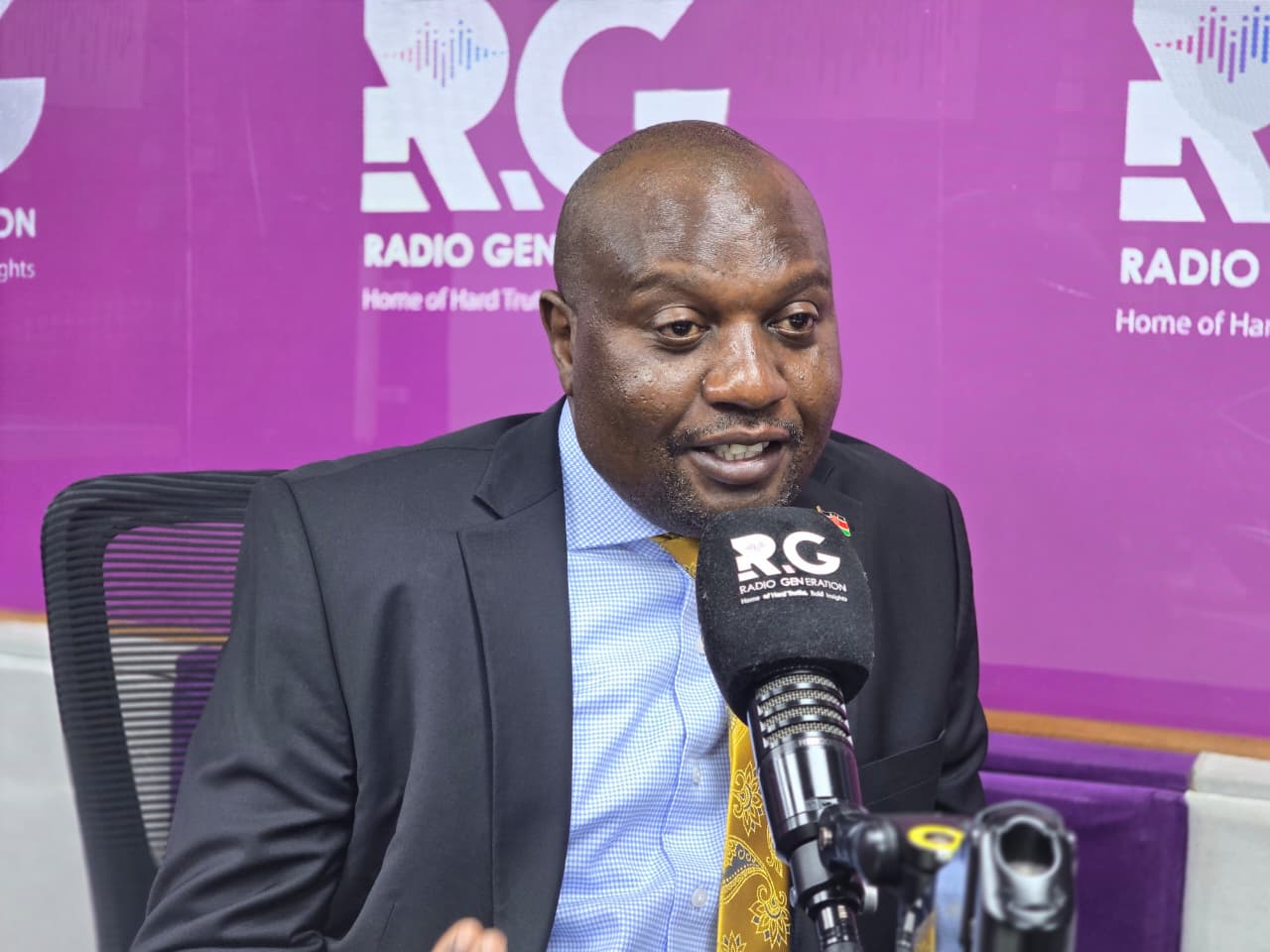
Despite a surge in media outlets across the country, radio continues to hold a central role in shaping public opinion and influencing culture, Media Council of Kenya CEO David Omwoyo has said.
Speaking on Radio Generation on Wednesday, Omwoyo highlighted the enduring power of radio even as the media space becomes increasingly crowded.
“In this country, cumulatively, surprisingly, we have about 700 media houses. That is literally a marketplace.If you had one or two people speaking, they had more space. A crowd of them shouting at you — yes, there’s a bit of dilution. But radio still has that power," he said.
Omwoyo explained that radio presenters retain considerable influence, often setting trends beyond traditional news coverage. “In this city, we know fashion is dictated by certain presenters of programs, and a lot of what we do is dictated by the media,” he said, noting that audiences tend to develop deep trust in specific voices who build strong personal brands.
However, the expansion of platforms has also contributed to declining trust in the media overall.
“We live in the post-truth era. We don’t have the monopoly of voice now,” Omwoyo said, contrasting today’s media environment with the past when outlets like VOK and a few international broadcasters dominated the airwaves.
He warned that the proliferation of radio stations has allowed some operators without proper training, fact-checking, or capacity to weaken the credibility of the sector.
“When you crowd the market that way… people have a way of passing blanket judgments,” he added, likening the situation to other sectors where the presence of “charlatans” erodes public confidence.
Despite these challenges, Omwoyo believes credible journalism still stands out. “Ideally credible media remains. That’s why I told you that radio is still my medium. I have places I go to for authentic information. I go for authentic radio voices,” he said.
He also highlighted the rise of voice cloning and impersonation as an unexpected sign of trust in established broadcasters. “When you see people trying to clone your voice or pretending to be you, then you are an authentic guy and you’re credible,” he noted.
“They are riding on your credibility because they know people will trust that voice.”
Omwoyo concluded that even in a crowded and fast-changing media space, Kenya still has enough trustworthy presenters and media houses capable of anchoring public confidence in a post-truth era.































Comments
Sign in with Google to comment, reply, and like comments.
Continue with Google