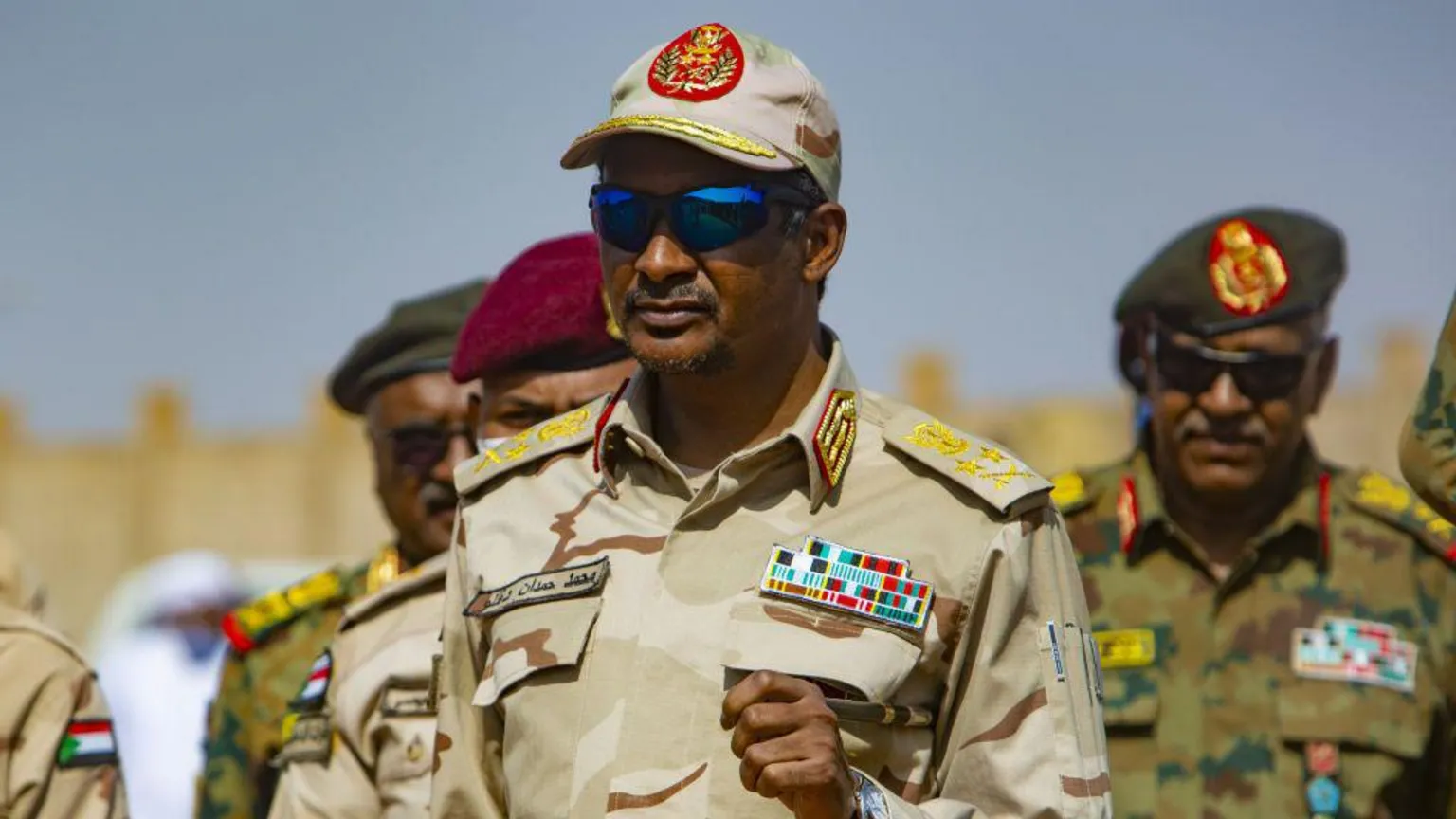
Sudan’s Rapid Support Forces (RSF) has accepted a humanitarian ceasefire proposal from the United States and its allies, signalling a rare opening for relief efforts in a country where conflict has devastated millions.
The Sudanese army, however, has yet to respond, leaving uncertainty over whether fighting will pause after months of siege, starvation, and displacement.
In a statement on Thursday, the RSF said it had agreed to the truce plan initiated by the US, United Arab Emirates, Saudi Arabia, and Egypt.
The group said it made the decision “to address the catastrophic humanitarian consequences of the war” and allow the urgent delivery of aid to civilians trapped in conflict zones.
The proposal seeks a three-month humanitarian truce that would pave the way for a lasting ceasefire and the return to civilian governance. The RSF’s declaration comes amid growing pressure from the international community following reports of widespread atrocities in areas under its control.
The paramilitary group recently captured the city of el-Fasher in western Darfur after an 18-month blockade that cut off food and medical supplies. UN agencies have confirmed famine conditions in the city, where thousands have died of hunger and disease.
Humanitarian appeals to deliver aid were repeatedly denied during the siege, worsening what the UN describes as the world’s largest hunger crisis, with more than 24 million Sudanese now facing acute food shortages.
The RSF said it was also ready to take part in discussions aimed at ending hostilities and addressing the root causes of Sudan’s internal conflicts. It added that the truce was an opportunity to “create the appropriate environment for a just and comprehensive peace.”
Sudan’s Defence Minister Hassan Kabroun, speaking on state television earlier this week, thanked the US for its peace efforts but insisted the military was preparing to continue its campaign against the RSF. “Our preparations for war are a legitimate national right,” he said, underscoring the government’s position.
In Nairobi, Sudan’s chargé d’affaires Mohamed Osman Akasha told the BBC that the government would only consider ending hostilities if the RSF laid down its arms, surrendered its leaders, and was disbanded.
“The only thing that I know is the government of Sudan, the people of Sudan are very determined to defeat this militia,” he said.
Meanwhile, aid organisations are warning that the humanitarian situation could worsen even if a ceasefire takes effect. Islamic Relief said a network of volunteer-run community kitchens that have fed millions in hard-to-reach areas is collapsing due to shortages and exhaustion.
One volunteer warned that most kitchens could close within six months.
More than 60,000 people have already fled el-Fasher since it fell to the RSF, with survivors recounting horrific scenes as the city was overtaken. “We saw people murdered in front of us. We saw people being beaten. It was really terrible,” said Ezzeldin Hassan Musa, one of the escapees.
RSF leader Gen Mohamed Hamdan Dagalo has since ordered an investigation into “violations” by his fighters, and the group released footage it claims shows a soldier’s arrest.
The UN Human Rights Council is set to hold an emergency session on November 14 to review the situation in el-Fasher and assess accountability for reported atrocities.






























Comments
Sign in with Google to comment, reply, and like comments.
Continue with Google