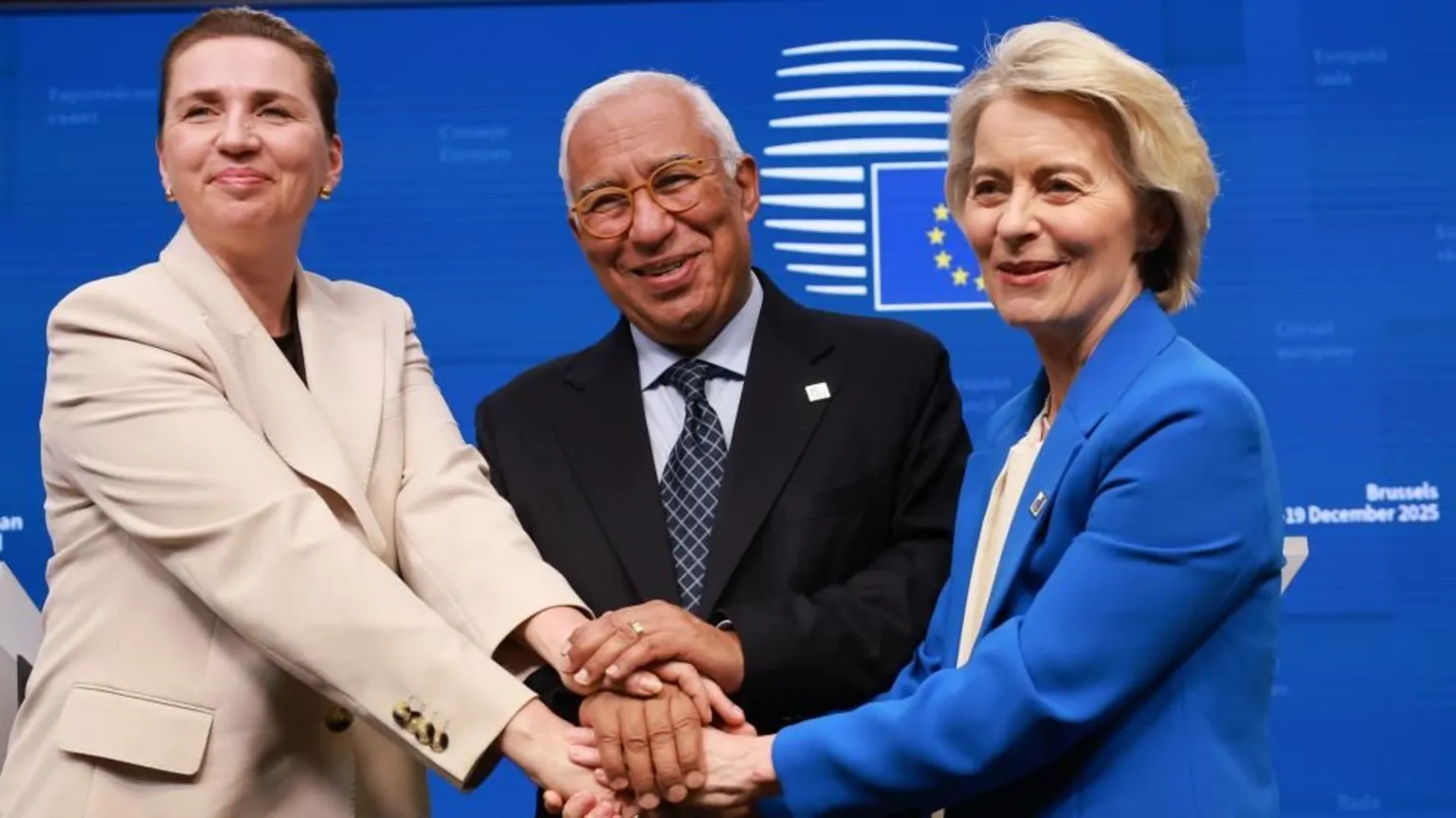
European Union leaders have agreed to provide Ukraine with a €90 billion loan to support its military and economic needs over the next two years, but they stopped short of using frozen Russian assets.
The decision came after more than a day of intensive negotiations at a summit in Brussels, highlighting the EU’s effort to maintain unity while offering Kyiv a critical financial lifeline.
EU chief Antonio Costa confirmed the deal on X, stating: "We committed, we delivered," emphasizing that the loan will be backed by the bloc’s common budget. Ukrainian President Volodymyr Zelensky had called for the use of €200 billion held in frozen Russian assets, but Belgium, which holds most of the funds, insisted on liability guarantees that other countries were unwilling to accept.
French President Emmanuel Macron suggested that Europe should consider reopening dialogue with Russian President Vladimir Putin, saying: "I believe that it's in our interest as Europeans and Ukrainians to find the right framework to re-engage this discussion."
He added that European leaders should explore ways to pursue this "in coming weeks."
Belgian Prime Minister Bart De Wever said the EU’s choice to provide the loan through borrowing rather than tapping frozen Russian assets helped avoid "chaos and division," adding: "We remained united." The loan comes as Ukraine faces a severe cash shortage, with Zelensky warning that without funding by spring, the country may "have to reduce production of drones."
The EU estimates that Ukraine will need an additional €135 billion over the next two years to stay financially stable, with the cash crunch expected to begin in April. German Chancellor Friedrich Merz, who supported the idea of using frozen Russian funds, said the agreement sends a "clear signal" to Moscow.
Russian officials had cautioned EU leaders against using their assets, but Polish Prime Minister Donald Tusk stressed the importance of acting decisively, saying leaders had to "rise to this occasion."
The loan provides Kyiv with a critical financial buffer amid ongoing international diplomacy.
US President Donald Trump is advocating for a swift resolution to the conflict, with US and Russian officials scheduled to meet in Miami this weekend to discuss a possible peace plan.
Kremlin envoy Kirill Dmitriev is expected to meet Trump envoys Steve Witkoff and Jared Kushner, while Zelensky confirmed that Ukrainian and US delegations would hold new discussions on Friday and Saturday. He said Ukraine seeks further details from Washington on guarantees that would prevent another Russian invasion.






























