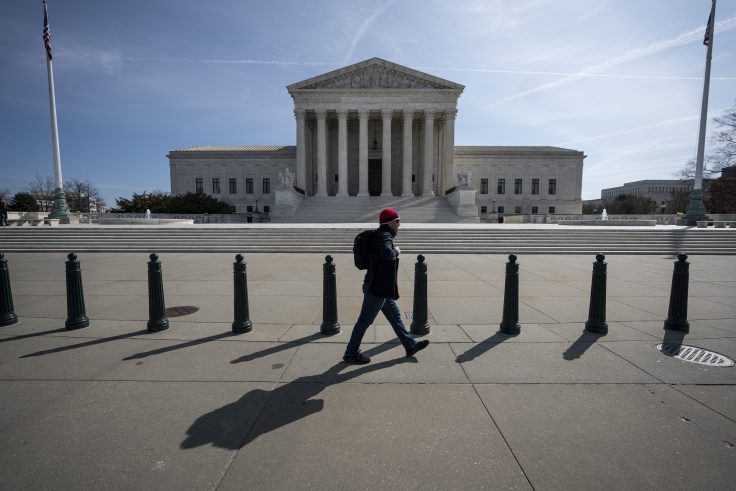
US President Donald Trump has voiced strong concern over a looming Supreme Court ruling that could strike down his global tariffs, warning that such a decision would create serious complications for the country.
Speaking on social media on Monday, Trump highlighted the difficulties the government would face if businesses were allowed to seek refunds for duties collected over the past year. The ruling, which could come as soon as Wednesday, is being closely watched by businesses, investors, and legal experts alike.
Trump explained that determining the exact amounts owed and who should receive them would be an extremely complex task.
"It would take many years to figure out what number we are talking about and even, who, when, and where, to pay," he said, stressing the potential for long-term confusion.
The president has repeatedly criticized the legal challenges against his trade measures, which argue that he overstepped his authority. On Truth Social, he delivered a blunt warning: "WE'RE SCREWED" if the court does not uphold his tariffs.
The tariffs, first announced in April last year, have been challenged by several small businesses and multiple US states. The challengers argue that the president does not have the legal power to impose taxes on imports, claiming that only Congress can establish such levies under the Constitution.
If the Supreme Court rules against the administration, the government could be required to return billions of dollars collected under the tariffs. Recent data shows that tariffs imposed under the International Emergency Economic Powers Act have brought in more than $130bn.
While this represents a significant portion of tariff revenue, it is only a small part of the federal government’s overall income.
Trump has argued that issuing refunds would create serious strain.
"Refunds would be almost impossible for our Country to pay," he said.
"Anybody who says that it can be quickly and easily done would be making a false, inaccurate, or totally misunderstood answer to this very large and complex question," he added.
Two lower courts previously found that Trump exceeded his authority in imposing these global tariffs. As the case moves to the Supreme Court, businesses and investors are closely monitoring how the 6-3 conservative court will rule.
During a November hearing, several justices questioned the White House’s rationale for the tariffs, including whether they were truly necessary to restore American manufacturing and correct trade imbalances.
Trump has insisted that the duties are crucial for national security and economic strength, warning that a loss would leave the country financially vulnerable for years.
The White House has indicated it may use other legal avenues if the court rules against the tariffs, such as a law that allows the president to impose tariffs of up to 15% for a limited period of 150 days.
Trump has repeatedly framed the tariffs case in dramatic terms, saying a loss would weaken the US in global trade negotiations and threaten national security.
Meanwhile, many businesses hope the court will strike down the measures, arguing that they have increased costs and disrupted operations both domestically and internationally.
Legal experts challenging the tariffs argue that the 1977 law invoked by the Trump administration never mentions tariffs. They contend that only Congress has the power to create taxes, and that the trade issues cited by the White House do not qualify as emergencies.
At the hearing, Supreme Court Justice Amy Coney Barrett warned that any process to issue refunds could become a "complete mess", a concern Trump has echoed in his posts. Some businesses told the BBC that even if refunds are paid, they would not compensate for the disruptions and higher costs caused by the tariffs.