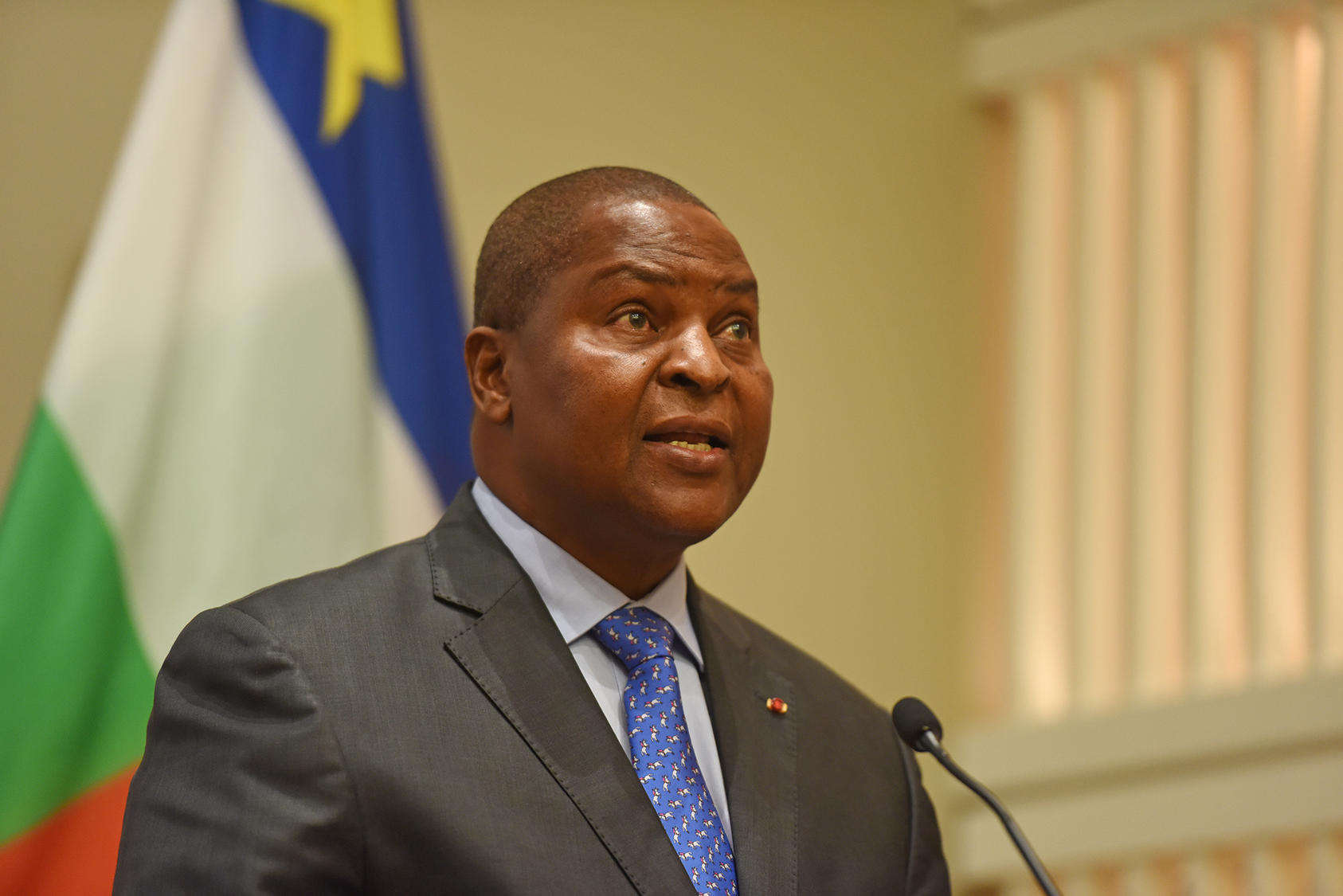
Provisional results from the Central African Republic presidential election indicate that President Faustin-Archange Touadéra has secured another term in office, extending his leadership of the country after a vote that was marked by controversy and an opposition boycott.
The election, held on December 28,2025 recorded more than 2.4 million registered voters. While observers described the process as largely peaceful, the vote was affected by logistical setbacks, including delays in delivering election materials and flaws in the voter register.
The election authority announced late on Monday, January 5, 2025 that Touadéra received 76% of the ballots cast. Former prime minister Anicet-Georges Dologuélé followed with 15%, while Henri-Marie Dondra, also a former prime minister, finished with 3%.
The outcome was widely anticipated after the main opposition coalition refused to participate, arguing that the conditions did not allow for a credible vote. That coalition, known as BRDC, had warned in advance that the election would not be fair.
Following the announcement of the provisional results, Dologuélé and Dondra both rejected the figures and called for the election to be cancelled. On Friday, Dologuélé said there had been "a methodical attempt to manipulate" the outcome.
Authorities have rejected all accusations of fraud and maintain that the process was conducted lawfully. The Constitutional Court is expected to examine any complaints and has until 20 January to issue a final ruling.
Touadéra, a 68-year-old former mathematics professor, based his campaign on claims of restoring security in a country that has experienced years of conflict. Violence escalated in 2013 after armed groups seized power and removed then-President François Bozizé, plunging the nation into prolonged instability.
In response, the government turned to foreign allies, including Russian mercenaries and Rwandan soldiers, to support its security efforts. The Central African Republic later became one of the first African countries where Wagner, a Russian mercenary group, began operating to protect the government.
A peace agreement signed in 2019 between the state and 14 armed groups helped calm tensions, though six of those groups later withdrew from the deal. Despite the agreement, insecurity remains a concern in several parts of the country.
Touadéra’s continued stay in power has drawn criticism, particularly after a new constitution adopted in 2023 removed presidential term limits, allowing him to seek another mandate.
The Central African Republic remains one of the poorest countries on the continent, even though it has valuable natural resources such as diamonds and uranium. According to the United Nations, nearly half of the population relies on humanitarian assistance.
Political analysts believe Touadéra’s victory could further strengthen Russia’s influence in the country, as Moscow has provided security support in exchange for access to resources including gold and diamonds.































Comments
Sign in with Google to comment, reply, and like comments.
Continue with Google