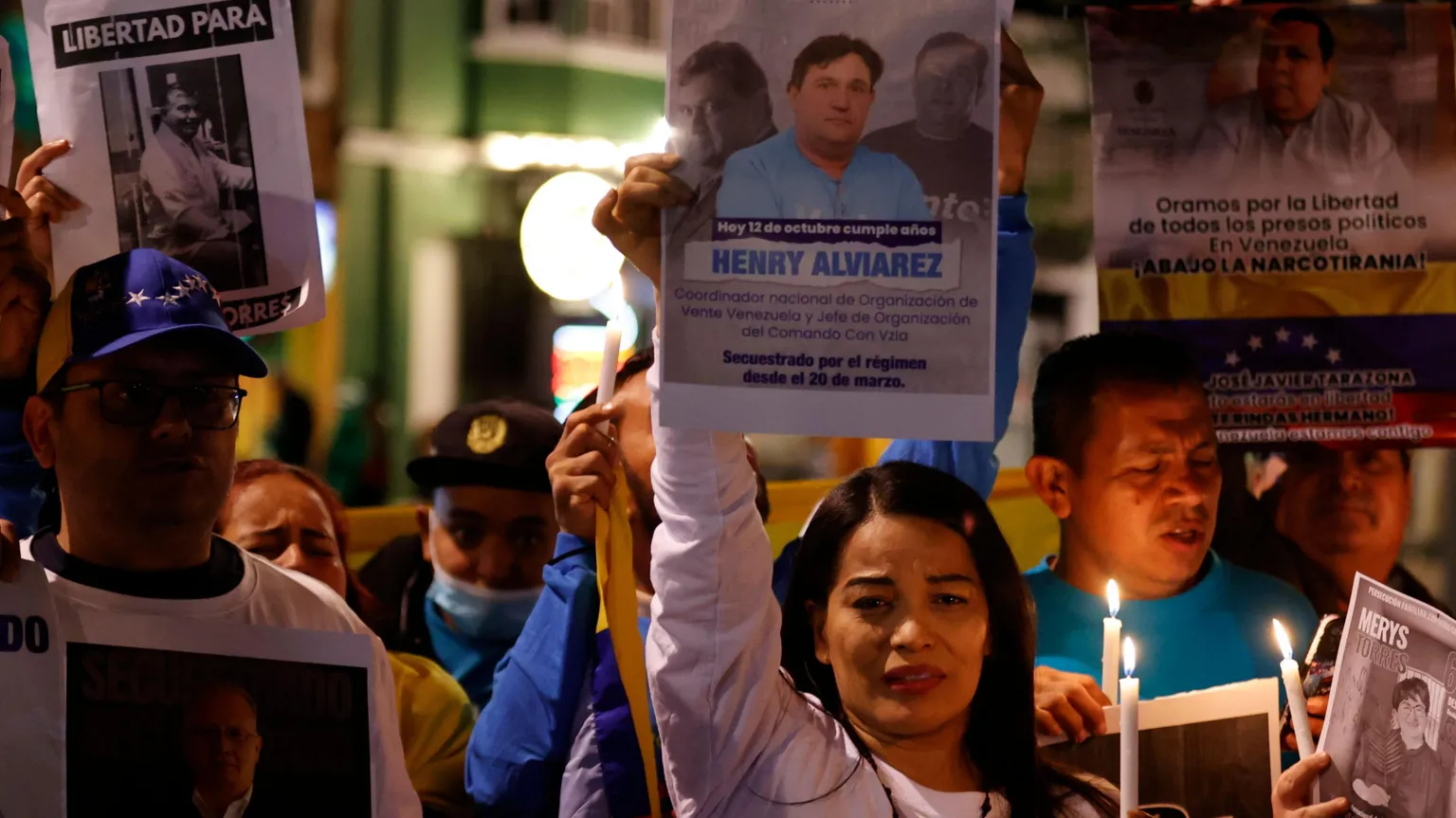
The Venezuelan government has begun freeing people detained for political reasons, a move officials say is aimed at easing divisions and promoting peace amid heightened tensions in the country.
Spain confirmed that five of its citizens, including one dual national, were among those released. Rights activist Rocio San Miguel is thought to be included in this group. Her release marks the first publicly confirmed case from the new wave of detainee releases.
The announcement follows a dramatic US operation in Caracas on Saturday, during which President Nicolas Maduro was taken to New York to face drug trafficking charges.
Washington has long demanded the release of Venezuela’s political prisoners, especially at times when protests, elections, or crackdowns draw international attention.
Jorge Rodriguez, president of Venezuela’s National Assembly and brother to interim president Delcy Rodriguez, said on state television that “a significant number” of detainees would be freed immediately. He did not provide details about names or exact numbers.
Hundreds of people are still believed to be held as political prisoners in Venezuelan jails, with only a small fraction released to date. Rodriguez said the move was made in the interest of “national unity and peaceful coexistence”.
San Miguel, a security and defence expert with in-depth knowledge of Venezuela’s armed forces, was arrested in February 2024 at Maiquetia airport near Caracas. Authorities accused her, a vocal critic of Maduro, of plotting to kill the president at the time and charged her with treason, conspiracy, and terrorism.
Venezuelan human rights groups, some of whose members are themselves imprisoned, welcomed the announcement but urged careful monitoring, citing previous failed promises.
Despite being a key ally of Maduro, Delcy Rodriguez’s interim government has shown a willingness to engage with the United States following his capture. The administration has also made public declarations about the country’s direction under the new circumstances.
Attention is now focused on El Helicoide, a notorious prison where between 50 and 80 political prisoners are reportedly held. US President Donald Trump announced the facility’s closure after Maduro’s capture.
El Helicoide is known internationally for detaining alleged political opponents, with human rights groups reporting torture through beatings and electrocution. Provea, a rights organization, cautioned that closing the prison should not divert attention from other detention centres that continue operating across Venezuela.
Opposition leader and Nobel Peace Prize winner Maria Corina Machado, whose allies remain in custody, has repeatedly demanded the release of all political prisoners.
For years, Venezuela’s opposition and human rights organizations have claimed the government arrests critics to silence dissent. They say the situation worsened following the disputed 2024 election, with more activists, journalists, and political opponents facing legal action.
Attorney General Tarek Saab and other government officials continue to deny the existence of political prisoners, insisting that all detainees were arrested for real criminal offences.



























Comments
Sign in with Google to comment, reply, and like comments.
Continue with Google