Polish authorities have identified two Ukrainian citizens as the main suspects behind two recent railway sabotage incidents, Prime Minister Donald Tusk said, revealing long-standing ties between the individuals and Russian intelligence.
One of the suspects had already been convicted in absentia for sabotage in Ukraine, Tusk told parliament.
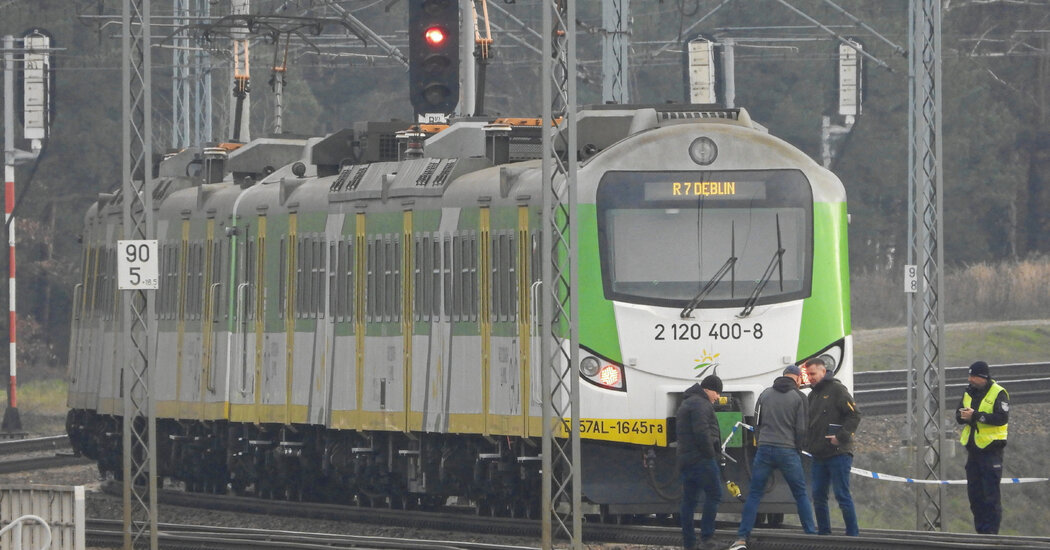
On Monday, the prime minister inspected the site near Mika, southeast of Warsaw, where an explosion over the weekend damaged the rail line connecting Poland to Ukraine. He described the event as an "unprecedented act of sabotage." A second incident near Pulawy forced a fully loaded passenger train to stop abruptly after overhead cables were damaged.
Initially, officials suggested that a foreign intelligence service was likely behind the attacks. A spokesperson for the minister responsible for special services later said that "everything points to them being Russian special services."
Tusk stressed that the aim of the sabotage was to trigger a serious rail accident. He withheld the suspects’ identities to protect the ongoing investigation but noted that one lives in eastern Ukraine while the other resides in Belarus.
Both had entered Poland from Belarus during the autumn and have since returned through the Terespol crossing, near the Ukrainian border.
According to Tusk, the first attack occurred on 15 November at roughly 21:00 (20:00 GMT), when a military-grade C4 explosive detonated near Mika as a freight train passed.
CCTV footage captured minor damage to a wagon floor, unnoticed by the train driver. He also noted that an earlier attempt to derail a train with a steel clamp had failed.
The second act, on 17 November, involved a train carrying 475 passengers that had to brake suddenly due to damaged infrastructure, Tusk said. He announced plans to increase the alert level on certain railway lines.
Since last year, authorities have detained 55 individuals suspected of involvement in sabotage activities, with 23 remanded in custody.
The prime minister said Russia’s goal is to create panic and fuel anti-Ukrainian sentiment among Poles, who are hosting over one million Ukrainian war refugees.
"I want to emphasise that what the Russian authorities care about is not only the direct effect of this type of action, but also the social and political consequences of the fact that this action is taking place," he said. "This of course means disorganisation, chaos, panic, speculation and uncertainty."
Poland, a NATO and EU member, has become a key hub for aid delivery into Ukraine since the Russian invasion in February 2022.
In September, Tusk reported three Russian drones were shot down in Polish airspace during overnight strikes on Ukraine, and authorities recorded 19 incursions in total. Some drones forced temporary closure of four airports, including Warsaw Chopin. Russia denied targeting any Polish facilities.































Comments
Sign in with Google to comment, reply, and like comments.
Continue with Google