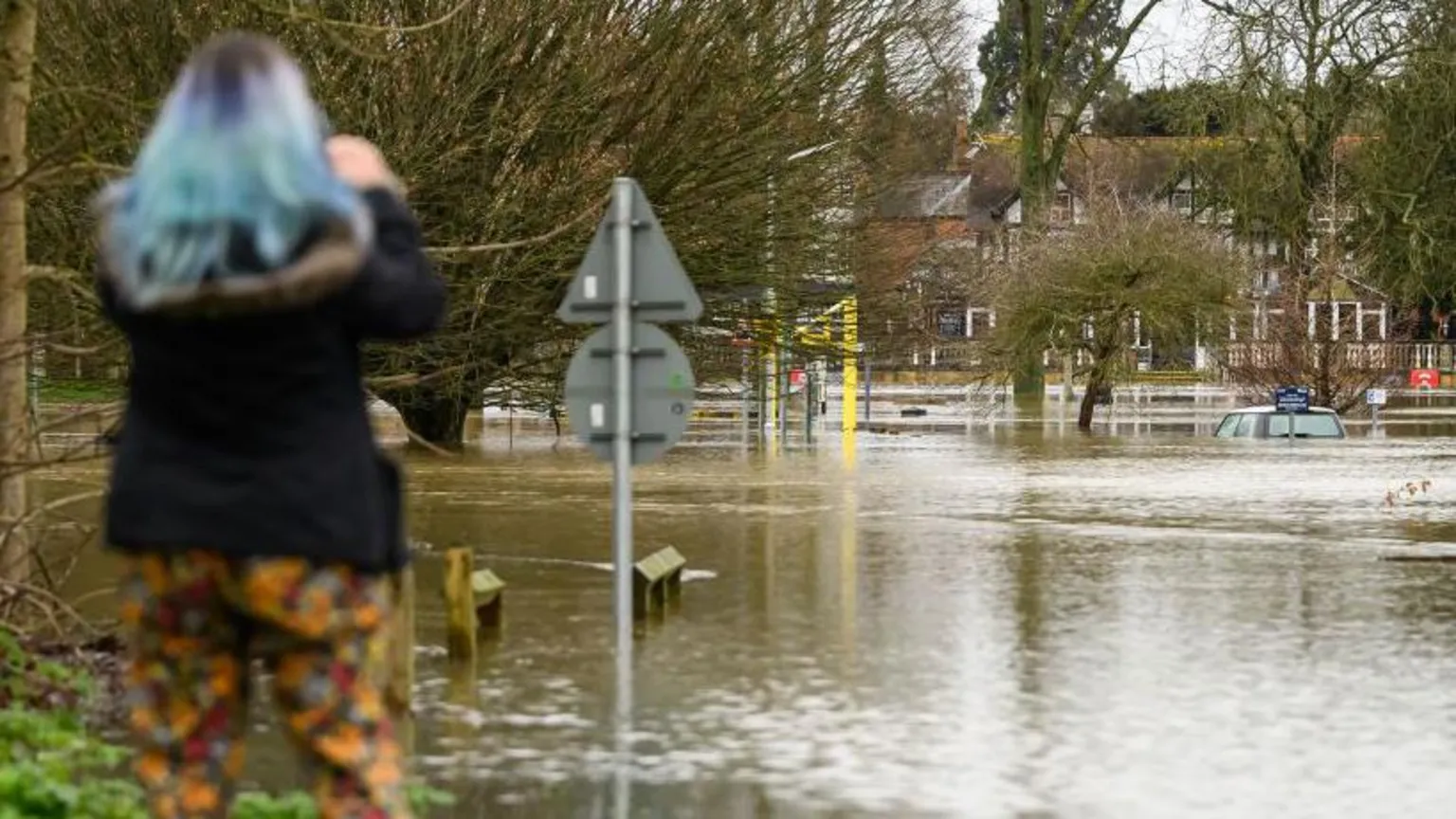
Thousands of flood defences across England were found to be below the required standard just as Storm Bram brought heavy rain and strong winds to the country, raising concerns about the protection of homes and businesses.
A recent analysis reveals that of nearly 98,000 defences inspected by the Environment Agency, almost 9% were not fully effective due to erosion, damage, or overgrowth.
Among the defences, 6,498 were considered "high consequence," meaning that their failure could have a severe impact on communities. Overall, around 8,500 structures were not functioning as intended at the start of winter. While the Department for the Environment, Farming and Rural Affairs says investments since 2024 have strengthened the network, the condition of defences varies greatly across regions.
North Tyneside, Brentwood in Essex, and Hart in Hampshire recorded the highest proportion of below-standard defences, with over 40% in poor condition.
In the Thames corridor, which stretches through Oxfordshire, Surrey, and Greater London, one in five defences was failing to meet the required standards, affected by a combination of heavy rainfall and tidal surges.
Storm Bram triggered dozens of flood warnings, with flooding reported in riverside areas in York, along the M66 in Greater Manchester, and in Devon and Cornwall, where train services were disrupted.
Flood defences in England include man-made walls, embankments, storm drains, and natural high ground, all of which are regularly inspected by the Environment Agency.
"Any flood defence that is not operating as close to 100% efficiency as possible is of a concern," said Dave Throup, a former Environment Agency area manager for the Midlands. "It's difficult to say why that is happening. Is it a lack of money? Or is it the bashing that these flood defences have taken over the last three or four years as a result of many very large flood incidents? It's very difficult to pull that apart."
Defences are given a condition score out of five during inspections, reflecting cracks, leaks, overgrown vegetation, or blocked drains and sluices. The Environment Agency noted that even defences with lower scores may still function correctly.
Floods minister Emma Hardy said the Labour government had inherited the defences in the "poorest condition on record" after "years of under-investment." She added: "Our immediate response was to redirect £108m into maintenance and repair works. But this is just the start. We're investing at least £10.5bn – the largest programme ever – in flood defences until 2036. This will build new defences and repair assets across the country, protecting our communities for decades to come."
Despite these efforts, the Environment Agency aims for only 2% of high consequence defences to fall below the required condition, compared with the current figure of nearly 9%.
Past failures have highlighted the risks, including the 2019 collapse of a 1968 embankment near Wainfleet, Lincolnshire, which led to the evacuation of over 600 homes.
Ownership and maintenance responsibilities also affect the reliability of flood defences. High consequence structures maintained by third parties were found to be about 45% more likely to fail than those overseen by the Environment Agency.
Only a third of defences are regularly maintained by the agency, with the rest managed by private entities or local councils.
Residents in Leicestershire faced the threat of flooding in January when a privately owned pond intended to protect their Grange Park estate overflowed.
"If everyone hadn't pulled together, I don't want to think what could've happened," said engineer Katie Anderson, who helped residents dig trenches to divert floodwater. Confusion over responsibility meant calls to the water company, council, and developer initially went unanswered.
Experts warn that ongoing climate change and wetter winters make it harder to maintain defences. Professor Hannah Cloke OBE from the University of Reading emphasized the importance of investing in catchment management, such as tree planting and creating hollows to slow rainwater entering rivers.
"We can maintain our flood defences, we can try and protect property, but actually, if we can catch the rain where it falls that can really help in terms of making sure that we don't have the floodwaters running downstream," she said.
The Environment Agency confirmed that protecting communities remains a top priority.
"Each year, we complete up to 165,000 inspections of flood assets across the country and have recently redirected £108m into repairs and maintenance. This will help to ensure the strongest protection for nearby communities," an agency spokesperson said.































Comments
Sign in with Google to comment, reply, and like comments.
Continue with Google