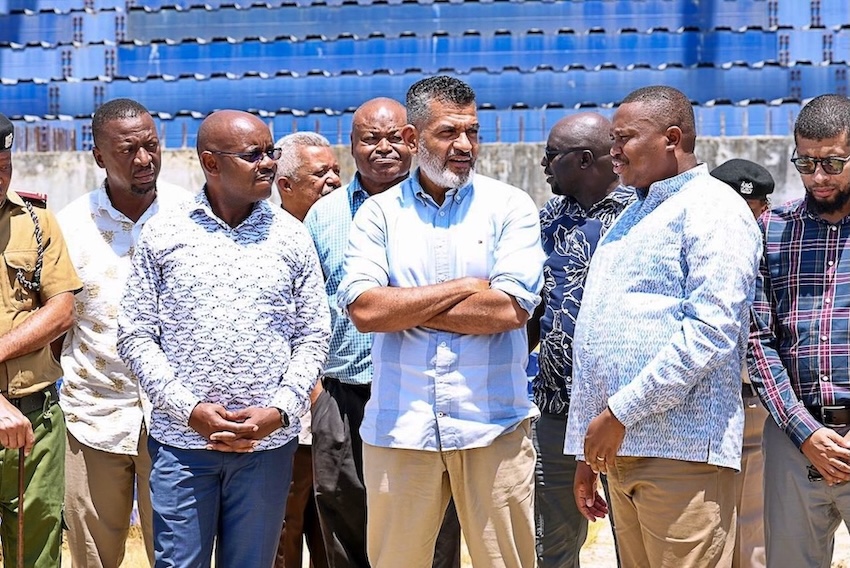
A fresh wave of optimism has swept through Mombasa’s sporting community after the national government announced it will resume work on the long-abandoned Mombasa Municipal Stadium. Once a proud local landmark, the site has lain dormant for more than a decade — until now.
From Ruins to Revival
The old stadium was torn down, and reconstruction began under former Governor Hassan Joho, but the project stalled and left the Coast without a major matchday arena. On Wednesday, an inspection by senior officials signalled a turning point: construction will restart, backed by both national and county authorities, ending years of uncertainty for fans and local clubs.
Government Steps In and Sets Deadlines
Sports Principal Secretary Elijah Mwangi confirmed that preparatory work is complete and that the Ministry of Defence, working with the county, will ensure the stadium’s completion. Mwangi framed the move as a partnership of purpose: the national government will step in to finish what was left unfinished and deliver a venue worthy of the region. He also spoke about the potential that the stadium holds, especially being a major tourism hub. “Mombasa is a tourist city. With the right stadium and existing infrastructure such as roads, port and airport, this facility can attract international players and events, not just sports but other business opportunities,” he said.
The officials said the project forms part of a broader national strategy to expand sports infrastructure, support talent development and drive sports-led economic growth across the country.
Bigger, Bolder, Built for the Coast
The revamped stadium will be a regional showpiece. Capacity will rise to 15,000 seats, making it the largest stadium on the Kenyan Coast and a clear upgrade from the typical 10,000-seat venues in the area. Mwangi said the facility could serve as an alternative venue for AFCON matches, and pledged to propose it to CAF once the works are complete.
Design highlights: officials describe the structure as a heavy-steel build with a distinctive architectural profile — a low-altitude stadium with a look that will stand out on the national stage.
Kenya Defence Forces to Oversee Works
The Kenya Defence Forces, under the Ministry of Defence, will take charge of the construction process. Defence Principal Secretary Patrick Mariru stressed that the project is not starting from scratch — between 30 and 45 per cent of the work is already done — and a final account will be drawn up within a week to determine the exact status.
“We expect that within one week the final account for this stadium will be done, after which the Ministry of Defence will come in and engage a contractor to finish the remaining work within 12 months,” PS Mwangi said.
“It may not have a standard running track due to the original design, but it will be an ultra-modern stadium with a canopy, media centre, commercial shops and modern sports infrastructure,” he added.
County Commitment and Local Training Hubs
Mombasa Governor Abdulswamad Sharif Nassir pledged the county’s cooperation, promising to settle outstanding liabilities so the contractor can transition smoothly to the Defence Ministry. The governor also urged national support to expand training infrastructure across the county.
The governor said the county has already advertised for the construction of Mwahima Stadium and Ziwani Stadium, which will be implemented fully by the county government.
“While we have the main AFCON stadium, we will also have training grounds, which will be used as training grounds for the visiting teams as well as Mombasa youth, He said.
What This Means for the Coast
For local fans, clubs and businesses, the stadium’s revival is more than concrete and steel — it’s a promise of renewed pride, economic activity and a chance to host continental football. With the government’s intervention and a tight one-year deadline, Mombasa could soon reclaim its place on Kenya’s sporting map and offer a fresh stage for AFCON drama.































Comments
Sign in with Google to comment, reply, and like comments.
Continue with Google