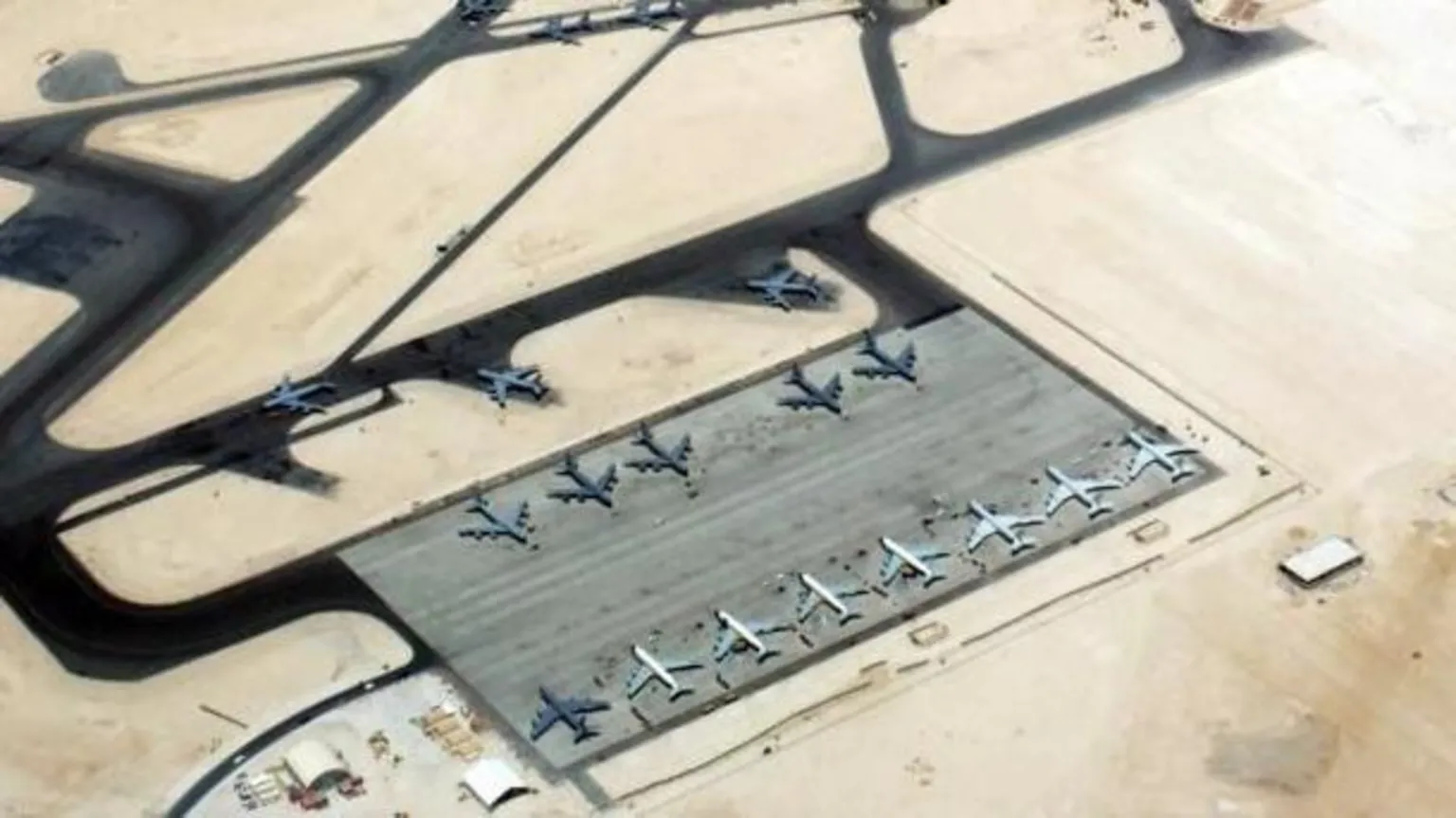
The United States and the United Kingdom have started reducing their presence at the Al-Udeid air base in Qatar as tensions rise over Iran’s harsh crackdown on anti-government demonstrations.
The move comes while Washington considers potential responses, including military options, as President Donald Trump warned of strong measures if executions of protesters proceed.
Officials told CBS that the US withdrawal is a "precautionary measure," while reports suggest some UK personnel are being removed as well. The Qatari government said the actions taken by the US are "in response to the current regional tensions," highlighting concerns over the security of military installations.
The British embassy in Tehran has been temporarily closed and will operate remotely, while the US embassy in Doha has urged staff to limit travel to the air base and exercise heightened caution.
Human rights organizations report that more than 2,400 protesters have been killed during Iran’s crackdown, underlining the seriousness of the unrest.
Qatari authorities stated they remain committed to "implement all necessary measures to safeguard the security and safety of its citizens and residents," including protection of vital infrastructure and military facilities.
A UK Ministry of Defence spokesperson declined to confirm reports of personnel reductions, citing operational security.
Al-Udeid is the largest US military base in the Middle East, hosting roughly 10,000 US staff and about 100 from the UK. It is unclear how many personnel will be withdrawn.
Earlier this week, Trump said the US could take "very strong action" if Iran executes protesters, though he later added that officials had been told "on good authority" that killings are ending and no executions are planned.
Trump said of these reports: "We're going to watch and see what the process is," when asked whether military intervention is off the table. Reuters noted that although some personnel were instructed to leave, there is no indication of a mass withdrawal like the one seen before last year’s Iranian strike.
Iran’s Foreign Minister Abbas Araghchi cautioned the US president not to "repeat the same mistake that you did in June," warning that failed actions would yield the same outcome. Meanwhile, the US Mission to Saudi Arabia has also advised staff and citizens to avoid non-essential travel to military sites in the region.
European nations are taking similar precautions. Italy and Poland urged their nationals to leave Iran, while Germany issued an advisory for flights to avoid Tehran due to rising conflict risks.
Iran has accused the US of trying to create a justification for military action, with parliament officials warning that US and Israeli military and shipping facilities could become targets in retaliation.
The protests, which started in late December, began over the collapse of Iran’s currency and escalating living costs but quickly transformed into demands for political change, challenging the clerical establishment more than any event since the 1979 Islamic revolution.
The Human Rights Activists News Agency (HRANA) reports at least 2,403 deaths, including 12 children, with over 18,000 arrests despite an ongoing internet blackout.
Amnesty International has described the killings as "mass unlawful killings committed on an unprecedented scale," urging the international community to recognize the "crimes committed by security forces" during the protests.