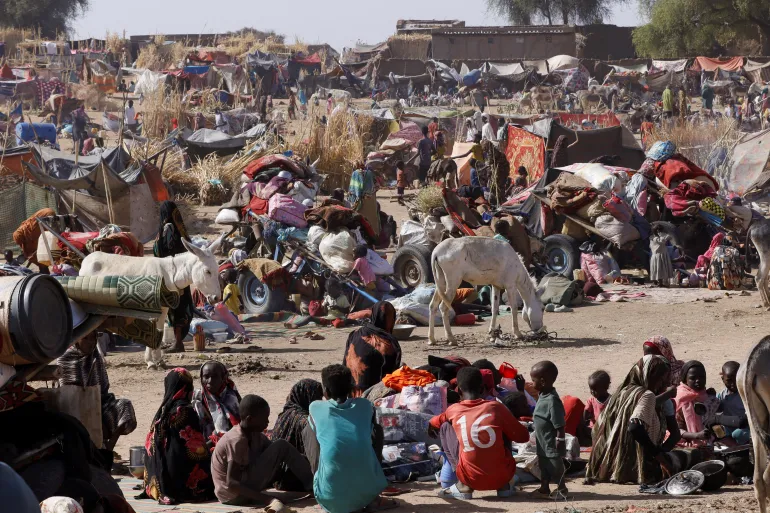
Sudan’s food emergency has escalated into confirmed famine in two war-hit regions, deepening fears for millions already struggling to survive as conflict, economic collapse and aid blockages choke off supplies.
A new alert from the Integrated Food Security Phase Classification Famine Review Committee shows that hunger has now reached the most severe category in El Fasher in North Darfur and Kadugli in South Kordofan, where families have been cut off, displaced and left with almost no support.
The update released on Monday notes that fighting and sieges have left entire communities trapped without food or medical services. El Fasher, which has faced nearly a year and a half of blockade by the Rapid Support Forces, fell to the group last week. Reports point to deadly assaults and widespread suffering inside the town, although communication networks are down, limiting access to verified information.
In Kadugli, violence between the RSF and the Sudanese army has also made escape impossible for residents who have endured months of isolation and hunger.
The review warns that famine conditions will likely remain until at least January 2026, with starvation-related deaths already happening. The situation is just as alarming in Dilling, where the committee could not gather evidence due to insecurity but believes famine is unfolding there too.
With fighting intensifying in surrounding areas, more people continue to flee towards safer locations, stretching already limited resources.
The update says the shift in control of El Fasher on October 26 triggered a wave of displacement and heightened needs.
“Since 26 October, the change in control of El Fasher town has resulted in widespread human suffering and further displacement towards Tawila and other neighbouring areas, exacerbating humanitarian needs in and around El Fasher,” the snapshot reads. It cautions that the danger could spread quickly, especially across 20 locations in Darfur and Kordofan expected to receive those escaping violence.
As of September 2025, the IPC estimates that 21.2 million people in Sudan faced serious food shortages, almost half the population. This includes 6.3 million individuals in emergency hunger and 375,000 experiencing catastrophic deprivation.
While some areas such as Khartoum and Al Jazirah have seen better access for aid, conditions in Darfur and Kordofan have collapsed further.
“In September, a staggering 3.6 million people in these regions faced Emergency (IPC Phase 4) and nearly 370,000 faced Catastrophe (IPC Phase 5)—accounting for 98 per cent of the total population in this phase nationwide,” IPC said.
Harvests expected soon could provide minor relief in a few regions, but analysts say insecurity in North Darfur and the Nuba Mountains will prevent recovery there.
The committee forecasts that more than 19 million people will still be in crisis or worse early next year. “During the post-harvest and pre-lean season (February–May 2026), acute food insecurity is projected to worsen slightly as food stocks deplete and conflict intensifies along frontlines,” the IPC noted. “An estimated 19.1 million people (41 per cent) are expected to face IPC Phase 3 or above, including 4.9 million people (11 per cent) in IPC Phase 4 and 146,000 people in IPC Phase 5.”
The IPC urged unhindered aid access and a halt to fighting, blaming rising food prices, currency collapse and blocked routes for the escalating crisis. “Only a cessation of hostilities can prevent further loss of life and help contain the extreme levels of acute food insecurity and acute malnutrition,” the IPC said.






























Comments
Sign in with Google to comment, reply, and like comments.
Continue with Google